A secret nobody outside Tito’s inner circle knew existed
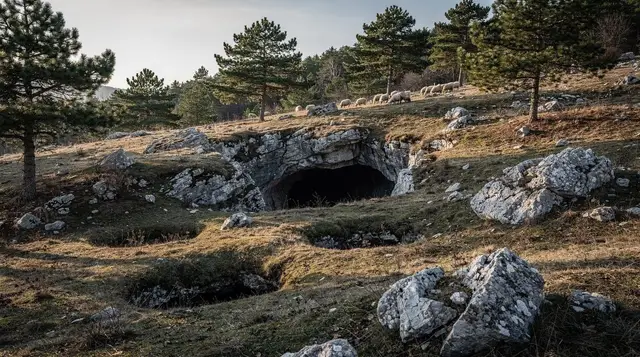
For 26 years, a mountainside outside Konjic hid one of Europe’s best-kept military secrets. Between 1953 and 1979, Yugoslav engineers and army units excavated 6,500 square metres of tunnels, offices and living quarters beneath solid rock, under the codename D-0 ARK - Domicile Zero, Atomsko Ratno Sklonište, or Nuclear War Shelter Zero. The project consumed an estimated 4.6 billion US dollars over its construction and was compartmentalised so tightly that most senior Yugoslav army officers never knew its exact location or full scale. It was designed to shelter President Josip Broz Tito, up to 350 of the country’s top political and military leadership, for six months in the event of a nuclear war.
It was never used for its intended purpose. The bunker’s existence only became public knowledge after the breakup of Yugoslavia, and the site passed to the Bosnian armed forces before opening to the public in 2011. Today it sits about an hour’s drive from Sarajevo, near enough for a half-day excursion, and it remains one of the most talked-about stops on the best day trips from Sarajevo.
What you’ll actually see inside
The bunker is entered through an unmarked tunnel mouth in the hillside, and the scale only becomes clear once you’re inside: a network of corridors, blast doors weighing several tonnes, and around a hundred rooms spread across multiple levels. Guides walk small groups through a fixed route rather than letting visitors wander, partly for safety and partly because large sections of the complex remain closed or unrestored.
Highlights on the standard route include Tito’s personal suite, kept close to how it would have looked in use, with its own bedroom, bathroom and office; a hall built for meetings of the Yugoslav leadership, with a long table and period furnishings; the ventilation and filtration systems designed to withstand a nuclear blast and keep the shelter self-sufficient; and stretches of bare, undecorated tunnel that make the sheer effort of digging into a mountain by hand and machine in the 1950s and 60s obvious in a way no description does. Signal and communications rooms, dormitories for support staff, and storage areas round out the tour, though guides vary in how much of the technical detail they cover depending on group interest.
Photography is generally allowed without flash, though rules can shift depending on which art installations are on display at the time - ask your guide before you start shooting rather than assuming.
Not a war museum: it’s an art space too
This is the point that catches out visitors who come expecting a conventional Cold War museum with glass cases and information panels. Since 2011, D-0 ARK has hosted the Biennale of Contemporary Art, and several of the bunker’s larger halls now function as gallery space, sometimes with pieces installed for years and sometimes with rotating exhibitions timed to the Biennale’s cycle. The result is a hybrid: original 1970s military fittings sitting alongside contemporary sculpture, video art or sound installations, occasionally in the same room.
Reactions to this are genuinely mixed. Visitors focused purely on Cold War and Yugoslav military history sometimes find the art distracting from the story they came for, and a handful of reviews describe the mix as confusing rather than additive. Visitors with an interest in art and unconventional exhibition spaces tend to rate it more highly, precisely because so few galleries in the world occupy a functioning nuclear bunker. Neither reaction is wrong - it’s simply worth knowing in advance which kind of visit you’re signing up for, since the guided format means you can’t skip to just one or the other.
| What’s on the standard route | Roughly how long |
|---|---|
| Entrance tunnel and blast doors | 10-15 minutes |
| Tito’s personal suite | 15-20 minutes |
| Leadership meeting hall | 10-15 minutes |
| Ventilation and technical systems | 10-15 minutes |
| Current art installations | 15-25 minutes |
| Corridors and remaining sections | 15-20 minutes |
Total visit time for most guided groups runs 1.5 to 2 hours, not including the drive.
Getting there from Sarajevo
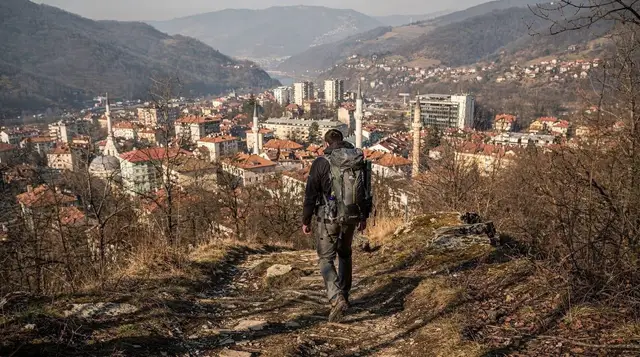
The bunker sits outside Konjic town, roughly 60 km from Sarajevo, which works out to about an hour by car on a reasonable road. Most independent visitors either rent a car in Sarajevo and combine the bunker with a stop in Konjic itself, or book a seat on an organised tour that handles the drive.
For anyone without a car, day trips without a car covers the practical options, but the short version for the bunker specifically is that a guided tour is the simplest route - regular buses reach Konjic’s town centre, but the site itself is outside town and not realistically walkable, and you still need a pre-booked tour slot to get inside regardless of how you arrive. Driving yourself gives more flexibility on timing, useful if you also want to see Konjic’s Ottoman bridge or continue on to Jablanica and Boračko Lake afterwards.
Booking a guided tour
Because D-0 ARK has no independent access, the tour itself is the whole logistics question. Two broad options exist. The first is booking directly with the site for entry only, which costs less (around 15-20 KM, roughly 8-10 EUR) but requires you to arrange your own transport from Sarajevo and time your arrival to a scheduled slot. The second is a bundled day tour that includes return transport from Sarajevo, typically combined with Mostar or another stop in the region, running around 60-90 KM (30-45 EUR).
Group size matters more here than at most sites in this guide. Because the bunker’s corridors are narrow and guides cap group numbers for safety, slots fill up during the summer months, and July and August weekends in particular can sell out days ahead. Booking in advance is worth the small effort even if you’re normally comfortable turning up on the day elsewhere in Bosnia and Herzegovina.
For visitors coming from Sarajevo, a full-day tour that pairs the bunker with Mostar’s old town highlights covers both the transport and the entry slot in one booking, which removes the coordination problem entirely. For a longer day that adds the Tunnel of Hope museum on the way back into Sarajevo, a combined itinerary taking in the bunker, Mostar and the Tunnel of Hope is worth comparing on price against booking each stop separately - it usually works out similar or cheaper once transport is accounted for.
What to combine it with
Konjic sits almost exactly between Sarajevo and Mostar, which makes the bunker a natural stop on the way to or from either city rather than a dedicated round trip on its own. A few realistic combinations:
- Konjic town: the 1682 Ottoman bridge and the old quarter make a pleasant hour before or after the bunker, without needing to plan a separate excursion just for the town.
- Jablanica: another 20-30 minutes down the road, where the Battle of the Neretva museum and the destroyed bridge cover a different, earlier chapter of the region’s wartime history, plus the roadside restaurants known for roast lamb.
- Boračko Lake: a glacial lake a short detour from Konjic, good for an hour of quiet scenery if the underground visit feels intense and you want daylight and open air afterwards. A guided day trip that adds a stop at Boračko Lake packages this combination directly.
- Mostar: the bunker works well as a stop on the drive to or from Mostar, rather than as an add-on to a Sarajevo-only day - see Mostar day trip from Sarajevo for how the timing usually works.
If your interest in the bunker is really about the wider story of secrecy, power and the Yugoslav state, it pairs conceptually with Sarajevo’s 1984 Olympics legacy and the broader Yugoslav heritage guide, both of which sit in Sarajevo itself and can be folded into a longer stay using the Sarajevo-Mostar 3 days itinerary or a full Bosnia history week.
For a different angle on Cold War and wartime history and international politics, a Sarajevo-based tour tracing the rise and fall of Yugoslavia covers ground the bunker only hints at, using sites within the city itself.
Practical tips before you go
The tunnels stay cool and slightly damp year-round, noticeably colder than outside in summer - bring a light layer even in August. Floors are uneven concrete in places, so trainers or walking shoes beat sandals. Mobile signal disappears once you’re underground, which is worth knowing if you’re using a phone to navigate or coordinate a pickup. Toilets exist near the entrance but not throughout the route, so plan accordingly before the tour starts.
Guides generally work in Bosnian, English and sometimes German; confirm the language of your specific slot when booking rather than assuming, particularly for smaller independent bookings outside the main tour operators. The site is not step-free - narrow doorways, uneven surfaces and stairs make it unsuitable for wheelchair users or anyone with significant mobility limitations, and this isn’t something that can be worked around on site.
Finally, treat the art installations as part of the experience rather than an obstacle to it. Guides who cover both the military history and the current exhibitions in the same tour tend to get the best reviews - if a particular room’s artwork doesn’t interest you, it’s worth asking the guide to move the conversation back to the bunker’s original purpose rather than sitting through it in silence.
Tito’s Bunker: questions before you book
Can you visit Tito’s Bunker without a guide?
No. D-0 ARK is only open through scheduled guided tours, whether booked directly with the site or as part of a day tour from Sarajevo or Mostar. There is no ticket booth for independent walk-ins, and turning up without a booking usually means waiting for the next available slot or being turned away in peak season.
How much does it cost to visit D-0 ARK?
Entry with a local guide at the site runs around 15-20 KM per person, about 8-10 EUR. A full day tour from Sarajevo that bundles transport, the bunker and usually Mostar or Konjic costs more, typically 60-90 KM (30-45 EUR), which is often better value once you factor in the return drive.
Is Tito’s Bunker worth visiting if you’re not into Cold War history?
Yes, though for a different reason. Since 2011 the bunker has hosted the Biennale of Contemporary Art, and several rooms now show permanent and rotating installations alongside the original Yugoslav-era fittings. Visitors expecting a straight military museum sometimes find this mix jarring; visitors interested in art and unusual spaces tend to enjoy it more for exactly that reason.
How do you get from Sarajevo to the bunker without a car?
The easiest option is a guided day tour that includes transport, since public buses to Konjic don’t run directly to the bunker’s rural location outside town. If you’re set on going independently, a taxi from Konjic’s bus station to the site is workable, but you’ll still need a pre-booked tour slot to get inside.
Is the bunker cold inside - what should you wear?
Yes. The tunnels sit under a mountainside and stay cool and slightly damp year-round, noticeably colder than the temperature outside in summer. Bring a light jacket even on a hot day, and wear shoes with grip - some floors are uneven concrete.
Can you combine the bunker with Mostar in one day?
Yes, and most organised tours are built around exactly that combination. Konjic sits roughly midway between Sarajevo and Mostar, so a single day trip typically covers the bunker in the morning and Mostar’s old town in the afternoon rather than trying to add Konjic town itself, which needs its own time.