Fojnica: Bosnia's medical spa town
Is Fojnica worth visiting instead of Ilidza's thermal spa?
Fojnica is around 50km and an hour to an hour and fifteen minutes from Sarajevo, and its Reumal institute is built around multi-day medical cures for rheumatology and post-trauma rehabilitation rather than a quick soak. Day access to the pools is possible and costs roughly the same as Ilidza, but a supervised cure with treatments and half board runs noticeably more, and some of the older hotel buildings need checking before you book a night.
A medical spa first, a resort second
Fojnica sits in a narrow valley about 50km from Sarajevo, an hour to an hour and fifteen minutes’ drive via Kiseljak. It has a thermal spring, a large pool complex, and a specialist medical institute, Reumal, that has treated rheumatology and post-traumatic rehabilitation patients for decades. That last part matters more than the brochures let on: Fojnica was never built as a weekend escape the way Ilidza was. It was built as a place people go for a course of treatment, and the pricing, the pace, and even the architecture still reflect that.
None of this rules out a shorter visit. Day access to the pools exists and doesn’t require booking anything in advance. But if you’re coming from Sarajevo expecting a quick, cheap soak followed by lunch, Ilidza or a hammam session in the city will serve you better and cost less. Fojnica makes more sense for travellers who actually want a multi-day thermal stay, who have a specific rheumatological or rehabilitation reason to be there, or who are passing through on the road towards Travnik and Jajce and want to break the journey with a night at the springs and a stop at the Franciscan monastery next door.
Getting there from Sarajevo
The drive out of Sarajevo runs west through Kiseljak before turning north into the Fojnica valley. It’s a straightforward road, mostly two lanes, and the hour-to-an-hour-and-fifteen-minute estimate holds outside of rush hour and winter snow. In poor weather, add time and drive cautiously; the last stretch climbs gently and can ice over in December and January.
Public transport is the weak point. There’s no train to Fojnica, and bus services from Sarajevo run infrequently, often requiring a change. Realistically, that turns an hour’s drive into most of a day if you rely on buses alone. Most visitors either rent a car, hire a driver for the day, or join a guided tour that covers the wider Vranica-Fojnica area rather than travelling there specifically for the spa. If you’re not driving yourself, our notes on driving in Bosnia and day trips without a car cover the alternatives in more detail.
One legitimate way to see the area without organising transport yourself is a guided day trip that takes in Prokoško Lake on Mount Vranica, with a food tasting included along the way. Prokoško sits above Fojnica on the same massif, and the drive up passes close to the town, so it’s a reasonable way to see the region even if the spa itself isn’t on the itinerary.
Cure or day visit: know which one you’re booking
The single most useful thing to understand about Fojnica before you book anything is that it operates on two different tracks, and they aren’t interchangeable.
Day access. You can turn up, pay an entrance fee, and use the pools for a few hours. This is the closest Fojnica gets to a normal spa outing, and it’s priced roughly in line with a day at Ilidza. No referral, no consultation, no advance booking required beyond checking the institute’s current opening hours.
A supervised cure. This is what Fojnica was actually built for. A cure programme typically runs several days to two or three weeks, and it bundles accommodation, half board, and a schedule of treatments — balneotherapy, physiotherapy, mud or peloid applications, depending on the programme — prescribed after an initial consultation with medical staff on site. This is the track aimed at people managing rheumatic conditions, recovering from orthopaedic surgery, or dealing with post-traumatic mobility issues, and it’s priced and structured accordingly.
The two tracks share the same pools and the same address, which is exactly why confusion happens. A traveller who books a room expecting an Ilidza-style short stay can end up in accommodation and at a pace built around a medical programme they never asked for. Before you book anything beyond a single day visit, confirm in writing whether you’re booking straightforward accommodation with pool access, or a treatment package with a set schedule — the two are priced and run very differently.
What it costs
| Type of visit | What’s included | Approximate price |
|---|---|---|
| Day pool access | Entry to the thermal pools only | 25-35 KM (13-18 EUR) |
| Single treatment (add-on) | One physiotherapy or balneotherapy session | Varies by treatment; ask on site |
| Multi-day cure, per day | Half board, room, and a supervised treatment schedule | 80-120 KM (41-61 EUR) per day |
| Multi-day cure, full stay (7-14 nights) | As above, for the length of the programme | Several hundred to over a thousand KM |
These figures are order-of-magnitude, not a quote — treatment programmes vary by condition, room category, and season, and prices change. Ask for a current, written price list before booking anything beyond a day visit, and confirm exactly what’s bundled into the daily rate versus billed separately. What’s consistent is the gap with Ilidza: a day at the pools costs about the same in both places, but a proper multi-day stay at Fojnica, with medical supervision built in, costs meaningfully more than an equivalent number of nights near Ilidza would, because you’re paying for staff time and treatment, not just water and a room.
The accommodation: check before you book a night
This is the part worth being blunt about. Fojnica’s spa complex includes hotel buildings that date, in places, from its original construction as a socialist-era medical institute. Some rooms have been renovated to a reasonable standard; others haven’t, and can feel dated — worn fittings, older bathrooms, furniture that’s clearly decades old — even where the treatment facilities themselves are up to date. This isn’t true of every room or every building, but it’s common enough that you shouldn’t assume otherwise.
Before booking a night, ask specifically which building and room category you’re being offered, and look at recent photos or reviews for that exact room type rather than generic images of the complex. If a renovated wing exists, it’s usually worth the modest price difference. If you’re only in Fojnica for a day visit to the pools, none of this matters — but if you’re committing to several nights of a cure, it’s worth five minutes of checking before you pay a deposit.
The Franciscan monastery next door
A short walk from the spa complex is the Fojnica Franciscan Monastery, one of the oldest in Bosnia and still an active community. Its real significance is in the archive: the monastery holds the original Ahdnama, the charter Sultan Mehmed II granted to the Bosnian Franciscans in 1463, guaranteeing them freedom of religion and protection under Ottoman rule shortly after the fall of the medieval Bosnian kingdom. It’s a genuinely important document in Bosnia’s religious history, not a minor curiosity, and it’s one of the reasons the monastery has functioned continuously for over five centuries.
The monastery has a small museum of religious art, manuscripts and archival material, worth thirty to forty-five minutes if you have any interest in the country’s Ottoman-era history or its Catholic communities. It pairs naturally with a spa visit precisely because it’s so close — there’s no separate journey involved, just a short walk from the pool complex. If monastic history interests you more broadly, our guide to Bosnia’s monasteries covers the other sites worth knowing about, including Tvrdoš near Trebinje.
What’s nearby: Prokoško Lake and the road north
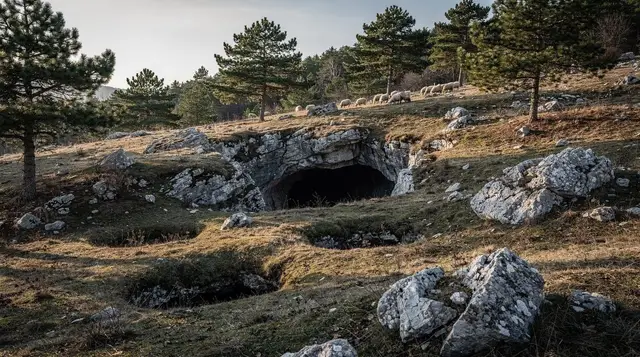
Fojnica sits at the base of Mount Vranica, and Prokoško Lake — a glacial lake at around 1,635m, ringed by wooden shepherd’s huts still in seasonal use — is the area’s best hiking destination. It’s not a walk you’d do straight after a treatment session; it requires a proper half-day and reasonable fitness. But if you’re combining a day visit to the spa with an interest in the mountains rather than a full cure, it’s the natural pairing, and it’s covered by the same guided trip mentioned above.
Fojnica also sits on the route north towards Travnik and Jajce, which is worth knowing if you’re planning a longer loop out of Sarajevo rather than a there-and-back day. Travellers doing that route sometimes break the drive with a few hours at Fojnica’s pools before continuing on.
Guided options covering that corridor include a day trip to Travnik with free time built in to explore the old town and fortress, and for a longer loop, a private day trip covering both Jajce and Travnik in one outing. Neither stops at Fojnica itself, but both pass through the same corridor and give a sense of whether the wider region suits a longer visit. Our Jajce and Travnik day trip guide has the detail on that route if you’re planning it independently.
If you’d rather stay in Sarajevo
Not every traveller needs to leave the city for a thermal or spa experience. Ilidza’s spa is 12km out, reachable by tram, and better suited to a half-day visit without the planning that a Fojnica trip requires. Sarajevo itself also has hammam and bathhouse options if what you actually want is heat and steam rather than a medicinal spring — see our guide to hammams and bathhouses in Sarajevo, or book a private hammam and spa session in the city itself if you’d rather not travel at all.
For a wider comparison of the region’s thermal spas near Sarajevo, including how Fojnica, Ilidza and the smaller local springs stack up against each other, that guide lays out the options side by side.
Practical notes before you go
Bring a swimsuit, sandals and a towel — some day-visitor areas provide towels, others don’t, so check when you arrive rather than assuming. If you’re booking a cure, ask what documentation or medical history the institute wants in advance; some treatment programmes require a consultation on the first day before a schedule is confirmed, which can eat into a short stay if you’re not expecting it.
Winter visits bring the same air-quality caveat that applies to the whole Sarajevo basin: Fojnica’s valley setting means it can also collect inversion haze in December and January, so it’s not automatically a clean-air escape from the city in that season, even though the mountain air at altitude on Vranica usually is. Spring and early autumn are the more comfortable windows for combining pools, the monastery, and any walking nearby.
Finally, treat this as a genuine day-or-more commitment rather than a quick add-on to a Sarajevo city break. Between the drive, the monastery, and time at the pools, a worthwhile visit takes the better part of a day even without booking a cure — and if a cure is what you’re after, plan for several nights and confirm accommodation and pricing in writing before you travel.
If your time in Bosnia is limited and you’re weighing where a spa day fits against everything else, our round-up of the best day trips from Sarajevo and family-friendly day trip options put Fojnica in context against Mostar, Konjic and the mountains. And if you’re still deciding where to base yourself for the trip overall, where to stay in Sarajevo is the place to start.
Fojnica spa: frequently asked questions
How far is Fojnica from Sarajevo, and how do I get there?
It’s around 50km, about an hour to an hour and fifteen minutes by car via Kiseljak. There’s no direct train, and bus connections are infrequent and involve a change, so most visitors drive, hire a driver for the day, or join a guided tour that passes through the wider Fojnica-Vranica area.
What’s the difference between Fojnica and Ilidza’s thermal spa?
Ilidza is 12km from central Sarajevo, easy to reach by tram, and geared towards a half-day or evening visit to the pools. Fojnica is further out, historically run as a medical institute for rheumatology and post-traumatic rehabilitation, and its pricing and pace assume a multi-day stay rather than a quick dip.
Can I visit Fojnica’s pools for just a day, or do I need to book a cure?
Day access to the pools is available and doesn’t require booking a cure programme. It’s the multi-day medical packages, with treatments, meals and accommodation bundled together, that need advance booking and a consultation on arrival.
How much does a stay at the Fojnica spa cost?
Day pool access runs roughly 25 to 35 KM, similar to Ilidza. A multi-day cure with supervised treatments and half board costs noticeably more, typically in the range of 80 to 120 KM per day depending on the treatment programme and room category, so it’s worth requesting a written price list before you commit to several nights.
Is the hotel accommodation in Fojnica any good?
It varies by property. Some of the spa’s own hotel buildings date from the socialist-era institute and haven’t been fully renovated, so rooms can feel dated even where the treatment facilities are modern. Check recent photos and reviews for the specific building and room category before booking a night, rather than assuming the whole complex is uniform.
What is the Fojnica Franciscan Monastery, and is it worth visiting?
It’s one of Bosnia’s oldest Franciscan monasteries, and its archive holds the original Ahdnama, the 1463 charter in which Sultan Mehmed II guaranteed religious freedom to Bosnia’s Franciscans. The monastery has a small museum of religious art and manuscripts and sits a short walk from the spa, making it an easy add-on rather than a separate trip.
Can I combine Fojnica with other day trips from Sarajevo?
Fojnica sits close to Prokoško Lake on Mount Vranica and on the road towards Travnik and Jajce, so it works well as a stop on a longer loop rather than a there-and-back trip on its own. Combining a pool visit with the monastery and a walk is realistic in half a day if you’re not booking a cure.
Do I need a car to get to Fojnica?
It’s the practical way to get there. Public transport exists but involves infrequent buses and a change, which eats most of a day for what’s otherwise an hour’s drive. Renting a car or joining a guided tour that covers the wider area is the more reliable option if you don’t want to self-drive.
Wellness & spa experiences on GetYourGuide
Verified deep-linked GetYourGuide tours. Book through these links and we earn a small commission at no cost to you.
GetYourGuide does not provide a product photo for this activity — the image shows the meeting point, photographed by us.