Family day trips from Sarajevo
What are the best day trips from Sarajevo with young children?
Ilidza and Vrelo Bosne (12 km, 25 minutes) is the easiest, with a flat tree-lined path and a horse carriage option. Konjic and the Tito bunker (about an hour) suits curious kids and teens who like a hands-on museum. Visoko (30 km, 40 minutes) works for the tunnels and the walk up the hill, not for the pyramid claim itself.
Picking day trips that actually work with children
Sarajevo sits in a valley ringed by mountains, which makes the city itself easy to explore on foot but complicates anything further out: roads climb and wind, and a distance that looks short on a map can mean an hour of switchbacks. With children in the car, the honest measure is not “what can be seen in a day” but “how much driving can a five-year-old tolerate before and after the thing you actually came to see.” That rules out several of the region’s best-known sights and points firmly toward a short list of trips that are genuinely comfortable with young kids, plus one or two that work once children are old enough to sit through a longer museum visit.
This guide covers four realistic options, all reachable and back from Sarajevo in a single day without rushing: Ilidza and Vrelo Bosne, Konjic and the Tito bunker, and Visoko. It also explains, with the actual drive times, why Mostar and the Kravice waterfalls are better saved for a trip without toddlers.
Ilidza and Vrelo Bosne: the easy one (12 km, 25 minutes)
This is the trip to do first, and often the only one you need with children under six. Ilidza is a leafy spa suburb at the western edge of Sarajevo, a straightforward 25-minute drive or a tram ride to the end of line 3 followed by a short walk. At the end of it is Vrelo Bosne, the spring where the Bosna river rises from the ground in a cluster of pools fed by an underground aquifer beneath Mount Igman.
The approach is along the Velika aleja, a 3.5-kilometre avenue of plane trees planted more than a century ago, wide, flat and shaded, which makes it genuinely manageable with a buggy or with children who tire on uneven ground. You do not have to walk the whole thing: bicycles are available to rent near the entrance, and horse-drawn carriages (fijaker) run the length of the avenue for anyone who would rather sit than walk, which is often the deciding factor for a family with a toddler and an older child who wants to run ahead. At the spring itself, the water divides into channels and small footbridges, ducks and swans are usually around, and there are benches and cafes at the entrance for a coffee while children look at the water.
Budget the whole outing at two to three hours including the drive, which leaves the rest of the day free in Sarajevo. It is also the one trip on this list you can genuinely do without a car: tram to Ilidza, then walk or take the small tourist train that runs along the avenue in season.
If a slower, drink-and-view kind of afternoon back in the city appeals more than a spring, a relaxed evening of garden meze and skyline views in Sarajevo is a gentler alternative that needs no drive at all.
Konjic and the Tito bunker: for curious kids and teens (about an hour)
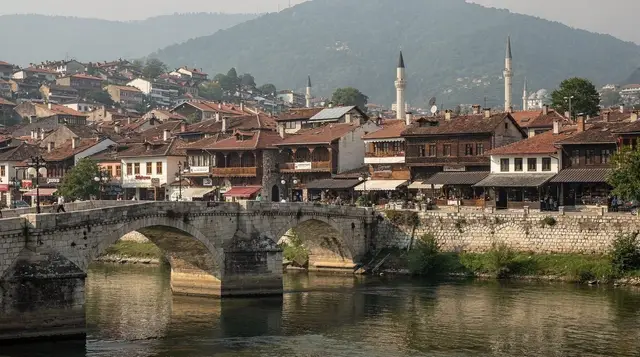
Konjic sits roughly an hour from Sarajevo along the Neretva valley, an easy, mostly two-lane drive that is far less winding than the road to Mostar. The town itself has a handsome Ottoman bridge from 1682, but the reason families make the trip is the Tito bunker, officially D-0 ARK: 6,500 square metres of tunnels, blast doors and living quarters carved into the mountainside between 1953 and 1979 as Yugoslavia’s nuclear-war shelter for its leadership. It opened to the public in 2011 and now doubles as a contemporary art space, with installations set into its corridors and Tito’s own preserved suite still intact.
This is the one on the list that plays best with older children and teenagers: the scale of the tunnels, the Cold War hardware, and the sheer strangeness of the place tend to hold attention better than another church or viewpoint. Younger children can manage it too, but the tour is guided, walks at a fixed pace and lasts close to an hour underground, which is a lot to ask of a three-year-old.
Book ahead: tours run on a schedule rather than on demand, and turning up unannounced risks a wait or a missed slot. Our Tito bunker visiting guide has the current booking routine in detail, and the wider Konjic day trip guide covers the town itself if you want to add lunch by the river before heading back.
Total time from Sarajevo door to door, with the tour, comfortably fits inside a normal day: allow around four to five hours all in, including the drive both ways.
Visoko: go for the tunnels, be honest about the hill (30 km, 40 minutes)
Visoko is the shortest drive on this list, 30 kilometres and about 40 minutes from Sarajevo, which makes it tempting to slot in almost casually. It was once the capital of the medieval Bosnian kingdom, and it is now known internationally for a claim that needs to be stated plainly: the so-called Bosnian pyramids are not pyramids. The scientific and archaeological consensus is unanimous that Visocica hill and the surrounding formations are natural, and Bosnia’s own archaeological authorities have publicly rejected the pyramid project’s claims. Nothing here has been peer-reviewed or accepted by any geological or archaeological body.
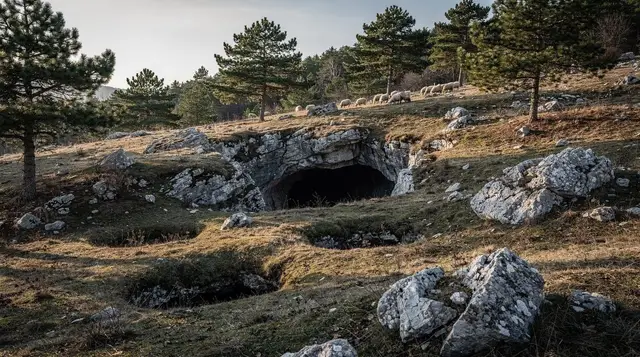
That does not mean the trip is a write-off with children. The Ravne tunnels, a network of passages beneath the hill promoted as part of the same project, make an easy, low-stakes half-hour underground walk that most kids enjoy regardless of what they are told about their origin, and the walk up Visocica hill itself offers a decent view over the town and valley for very little effort.
Treat it the way you would a roadside curiosity: worth a stop, presented to children as a story rather than an established fact, and not worth building a whole day around. Ninety minutes to two hours at the site, plus the short drive, is enough. Our Visoko pyramids day trip guide goes into the history and the debate in more depth if older children ask questions on the way home.
What to skip with young children: Mostar and Kravice
Two of the region’s best-known sights do not belong on a family day-trip list with toddlers or young children, and it is worth saying so directly rather than letting anyone plan a day around them and regret it.
Mostar is 130 kilometres away, a drive of two hours fifteen minutes to two hours thirty each way. That is four and a half to five hours in a car seat before you account for time at the Stari Most itself, and it turns what should be a relaxed visit into an endurance exercise for both children and parents. The Kravice waterfalls are further still, close to three hours each way, which realistically rules out a comfortable same-day return with young kids.
Both destinations are genuinely worth seeing, and both work far better once children are old enough to handle a long car journey, want to swim at Kravice in summer, or are simply more interested in the sights than in how long the drive takes. For that stage, see our separate Mostar day trip from Sarajevo and Kravice and Blagaj day trip guides, and our broader notes on travelling Bosnia with teenagers, which covers exactly this kind of longer excursion.
The four trips, compared
| Trip | Distance | Drive time | Best for | Car needed |
|---|---|---|---|---|
| Ilidza and Vrelo Bosne | 12 km | 25 min | All ages, including toddlers and buggies | No — tram works |
| Konjic and the Tito bunker | 60 km | 1 hour | Older kids and teens, curious minds | Recommended |
| Visoko and the Ravne tunnels | 30 km | 40 min | A short, honest curiosity stop | Recommended |
| Mostar (for comparison) | 130 km | 2 h 15–2 h 30 | Teens and adults, not toddlers | Yes |
| Kravice (for comparison) | 180 km | 3 hours | Teens and adults, summer swimming | Yes |
The landmine rule, every time you leave a marked path
Sarajevo itself is a safe city with low petty crime and no particular risk to visitors. The one serious hazard in the wider countryside is different: Bosnia and Herzegovina still has areas with suspected unexploded landmines left from the 1990s war, covering tens of square kilometres, mostly away from roads, villages and maintained trails. None of the sites in this guide sit in a mined area, and none of them ask you to leave a paved path, a maintained walkway or a staffed attraction.
The rule to teach children before any of these trips, and to repeat every time you are outdoors beyond the city, is simple: stay on marked paths and in visited areas, respect any yellow or red warning signage without exception, and if you plan hiking beyond these day trips — into the hills around Lukomir or the Rakitnica canyon, for instance — go with a guide. Our landmine safety guide for hiking in Bosnia covers this in full and is worth reading once, even if none of these particular day trips require it.
Practical notes: driving, renting and timing it right
All three main trips are comfortable as half-day or three-quarter-day outings, which means you can realistically combine Ilidza with an afternoon back in Sarajevo, or add lunch in Konjic to that trip without turning it into a marathon. Roads to all three are paved and in reasonable condition; the drive to Konjic follows the Neretva valley and is more scenic than stressful, while Visoko is a short hop on the main road north.
If you are not driving yourselves, a rental car is the simplest option for Konjic and Visoko: see our car rental in Sarajevo guide for the practical side, and our driving in Bosnia notes for road conditions and what to expect at junctions and roundabouts. Bring cash in convertible marks for tolls, parking and any small cafes along the way, since cards are unreliable outside the city centre.
If a guided option suits your family better than self-driving, a farm visit built around animals and open space, like the guided day trip to three working farms near Sarajevo, keeps the youngest children engaged without asking them to sit through a museum tour, and a gentler walking route through Sarajevo’s old mahala neighbourhoods is worth keeping in reserve for a day when nobody wants to get back in the car at all.
For a broader planning view that goes beyond day trips, our Sarajevo with kids guide covers the city itself, and if you are building a longer stay, the Bosnia with kids, five days itinerary slots these same trips into a fuller week.
Family day trips from Sarajevo: common questions
Is Mostar a good day trip with young children?
Not really. It is 2 hours 15 minutes each way, so a return trip eats most of the day in a car seat. If your children are teenagers or you are travelling without toddlers, it works well; otherwise see our separate guide for older kids.
Are the Bosnian pyramids at Visoko real?
No. The scientific community is unanimous that Visocica hill and its neighbours are natural formations, and Bosnia’s official archaeological institutions have rejected the pyramid claim. The Ravne tunnels underneath are still worth a short visit as a curiosity, but present it to children as a story, not as fact.
Do I need to worry about landmines on a family day trip?
Only if you leave marked paths and visited areas. Bosnia and Herzegovina still has areas with suspected unexploded mines from the 1990s war, mostly in rural and forested terrain away from roads and official trails. Stick to paved paths, marked walking routes and staffed sites, and you and your children are not at any particular risk.
Is the Tito bunker frightening for children?
It is more strange than frightening. D-0 ARK is a 6,500 square metre Cold War bunker built into a mountain, now used partly as a contemporary art space, with long tunnels, blast doors and Tito’s preserved suite. Children old enough to sit through an hour-long guided tour usually find it fascinating rather than unsettling; it is not built around the siege or the war and does not carry that weight.
Can we do these day trips without a car?
Ilidza is easy without a car, reached by tram and a short walk into Vrelo Bosne. Konjic and Visoko are harder without a car: Konjic has bus and rail connections but the bunker sits outside town, and Visoko’s tunnels are a taxi ride from the bus station. A rental car or a private driver makes both trips far simpler with children and their gear in tow.
What should we pack for these trips with kids?
Comfortable shoes for gravel and cobbles, water, snacks (options thin out once you leave Sarajevo), a light jacket even in summer since Bjelasnica’s foothills are cooler, and cash in convertible marks, since small sites and rural cafes rarely take cards.
Family-friendly tours on GetYourGuide
Verified deep-linked GetYourGuide tours. Book through these links and we earn a small commission at no cost to you.
GetYourGuide does not provide a product photo for this activity — the image shows the meeting point, photographed by us.