Hammam and bathhouses in Sarajevo
Can you still visit a historic hammam in Sarajevo?
Only a handful of Ottoman-era hammam buildings survive in Sarajevo, and few operate as working public baths the way many still do in Istanbul. Most visitors today book a hammam-style scrub-and-steam session at a hotel or dedicated spa rather than a centuries-old bathhouse, so check what you are actually booking before you go.
An Ottoman institution, not a modern invention
When Isa-beg Ishakovic founded Sarajevo around 1462, a hammam was not an optional extra bolted onto a hotel - it was core infrastructure, built alongside the mosque, the bazaar and the caravanserai as part of the same charitable endowment (vakuf). Gazi Husrev-beg’s foundation, which gave the city its great mosque in Bascarsija in 1531, funded a bathhouse to go with it, because washing before prayer and communal bathing were part of daily life, not a treat. Understanding that context matters more than the scrub itself: a hammam in Sarajevo is a fragment of Ottoman urban planning that happened to survive, more than a wellness product.
That history is worth knowing before you book anything, because it sets expectations correctly. This is not Marrakech or Istanbul, where working hammams number in the dozens and locals still use them as ordinary weekly routine. Sarajevo’s Ottoman bathing culture took a heavy hit across the twentieth century - changing habits, plumbed housing, the 1992-1996 siege - and what is left is thin.
What actually survives today
Be honest with yourself about this before you go looking: few of Sarajevo’s historic hammam buildings still operate as working public baths. Several survive as buildings - domed roofs with the small star-shaped skylights typical of Ottoman bath architecture are still visible around the old town - but continuous operation as a bathhouse is the exception. Some historic hammam structures have been restored and repurposed for exhibitions, cultural events or storage rather than bathing, which is a perfectly reasonable use of a listed building but means you cannot simply turn up and book a scrub there the way you could in Istanbul’s Cagaloglu or Suleymaniye hammams.
This is the single most important thing to get right on this page: do not expect an abundant choice of historic bathhouses. If a listing or a driver tells you a specific “authentic Ottoman hammam” is open for bathing, verify it directly with the venue before building a day around it - status and opening patterns change, and a building’s history does not guarantee it is currently taking bathers.
What does reliably exist is a smaller, more modern category: hotel spas and dedicated wellness centres in and around the city that offer a hammam-style treatment - steam room, body scrub, foam wash - as part of their spa menu. These are not historic sites. They borrow the ritual, sometimes the tiled aesthetic, and market it as “hammam” because the word carries weight in a city with this heritage. That is not a complaint - it is simply what is actually bookable for most visitors, and it is worth knowing which one you are getting.
Historic hammam building vs hammam-style spa treatment
| Historic hammam building | Hotel or spa hammam treatment | |
|---|---|---|
| Age | Ottoman-era structure, often 16th century | Modern building or renovated room |
| Heritage status | May be a protected monument | None claimed |
| Current bathing use | Rare - many are closed to bathers or repurposed | This is their normal business |
| What you get | A building to look at, sometimes no admission | A steam-and-scrub session, roughly an hour |
| Booking | Often not possible as a bath | Straightforward, bookable in advance |
| Typical price | Not applicable if closed to bathing | Roughly 40-80 KM (about 20-40 EUR) for a classic package |
What a classic session actually involves
A standard hammam-style session in Sarajevo follows the same basic sequence wherever you book it, historic building or modern spa: time in a heated steam room to soften and open the skin, followed by a full-body scrub with a coarse mitt called a kese that lifts dead skin in visible rolls, then a foam wash, usually with olive-oil soap. Some packages add an oil massage or a face mask on top. Expect the classic version to run around an hour, with extended packages stretching to ninety minutes or two hours once a massage is folded in.
On price: budget roughly 40 to 80 KM (about 20 to 40 EUR) for a standard scrub-and-steam package at most Sarajevo spas offering the treatment, more if you add a massage. That is an order of magnitude, not a fixed rate - packages, timing and what counts as “classic” vary between operators, so confirm the exact price and inclusions when you book rather than assuming.
a private hammam-style spa session, booked in advance rather than found by knocking on doors is the most reliable way to actually get this experience in Sarajevo, precisely because so few historic bathhouses are open to walk-in bathers. Booking ahead also solves the gender-hours question below, since a private session sidesteps the scheduling entirely.
Separate hours for men and women - check before you go
Historically, hammams in Ottoman cities ran on separated bathing: either distinct sections for men and women within the same building, or the same rooms used on alternating days or hours. Some Sarajevo venues still follow a version of this - fixed hours for men, different hours for women - while others operate mixed sessions or take bookings by appointment regardless of gender. There is no single citywide rule, and hours can change between visits, so always confirm the current schedule for your gender directly with the venue before you turn up, rather than assuming continuity with what a guidebook or a friend’s trip reported.
Pairing a hammam with Bascarsija
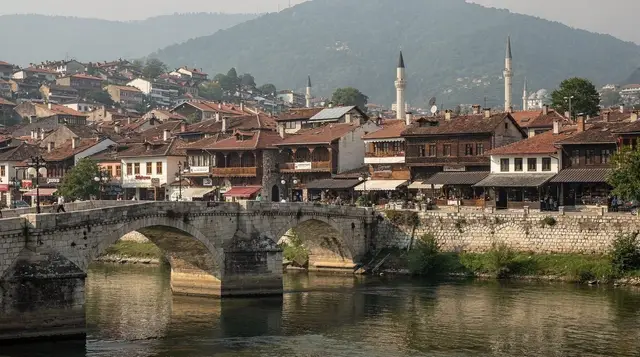
Whatever you book, the old quarter around it is worth the same afternoon. The domed roofline of the hammam tradition sits a short walk from the Gazi Husrev-beg mosque that many of these baths were originally endowed to serve, the Sebilj fountain that is Bascarsija’s default meeting point, and the copper workshops of Kazandziluk still hammering out trays and coffee sets by hand. Our Bascarsija walking guide and our notes on mosque etiquette cover the rest of that district in more depth than a spa page should.
If you would rather see the mahala - the traditional residential neighbourhoods climbing the hillsides above the bazaar - as a guided walk rather than working it out yourself, a walking route through Sarajevo’s old mahala neighbourhoods covers the steep lanes, wooden houses and small mosques that the bazaar crowds usually miss, and it is a natural companion to a hammam afternoon since both sit inside the same Ottoman-era footprint of the city.
Our Ottoman houses guide and four faiths walk round out that same pocket of the city if you have a full day rather than an afternoon; a Jewish-heritage-focused version of the same district is also bookable as a guided tour of Sarajevo’s Jewish quarter and synagogue for anyone wanting the multi-faith angle explained by a local guide rather than pieced together from plaques.
If you would rather have water than steam
A hammam is a dry-and-steam ritual with no natural water source behind it - do not confuse it with Sarajevo’s actual thermal spas. Ilidza, at the western edge of the city, and Fojnica, further out, are built around real hot springs and centre on swimming pools rather than a steam chamber and a scrub mitt. Our guides to thermal spas near Sarajevo, the Ilidza spa specifically, and Fojnica’s spa cover that different category properly.
For a day that blends the two worlds - nature, history and a soak - a full-day trip combining history, nature and a thermal water pool outside the city is the more honest way to get a “hot water” experience alongside sightseeing, rather than expecting an urban hammam session to double as a swim. Our Vrelo Bosne guide covers the spring itself if you want the walk without the pool.
Etiquette and practicalities
Most spas offering hammam-style treatments provide towels, slippers and the scrub mitt as part of the package, so you do not need to bring your own kit. A swimsuit is optional at most modern venues but not universal - some prefer bathers go without one inside the steam room, others require one - so ask when booking rather than guessing on arrival. Tipping follows the same rough pattern as elsewhere in the city: rounding up or adding roughly 10% for good service is normal, not obligatory. Cash is a sensible backup even where cards are taken, in line with the rest of Bosnia and Herzegovina’s cash-first habits outside the biggest hotels.
One more honest note: because so few historic hammams operate as working baths, do not plan a Sarajevo day trip or itinerary slot specifically around visiting one as a heritage site unless you have confirmed, close to your travel dates, that it is currently open to bathers. Treat the building history as context you carry with you into a modern spa session, not as a guarantee of what you will find behind a specific door in Bascarsija.
Sarajevo hammam FAQ
Is there still a working Ottoman hammam in Sarajevo?
A few hammam buildings from the Ottoman period survive in and around Bascarsija, but continuous operation as a public bath is the exception, not the rule. Some historic hammam buildings have been restored for exhibitions or events rather than bathing. Confirm current status before planning a visit around one specific building.
What is the difference between a hammam and a hotel spa in Sarajevo?
A historic hammam is a purpose-built Ottoman bathhouse with a domed steam room, heated stone platform and a centuries-old function tied to the mosque complex it served. A hotel or spa “hammam experience” borrows the ritual - steam, scrub, foam wash - inside a modern building, usually with no heritage claim of its own. Both are legitimate; only one is a historic site.
How much does a hammam session cost in Sarajevo?
A standard scrub-and-steam session runs roughly 40 to 80 KM (about 20 to 40 EUR) at most spas offering the treatment, with longer or add-on packages costing more. Confirm the current rate and what is included - scrub, steam, massage - when you book, since packages vary between operators.
How long does a hammam session take?
Expect around an hour for a classic package: time in the steam room followed by a body scrub (kese) and a foam wash. Packages that add a massage or oil treatment run longer, typically 90 minutes to two hours.
Are hammam hours separated by gender in Sarajevo?
Some venues run separate sections or alternating hours for men and women, following the historic hammam pattern; others operate mixed or by appointment only. This varies by establishment and changes over time, so always check hours for your gender before turning up.
What should I bring to a hammam in Sarajevo?
Most spas provide towels, slippers and the scrub mitt as part of the package. Bring a swimsuit if you would rather not go without one, since practice varies by venue, and bring cash as a backup even where cards are accepted.
Is a hammam session the same as the thermal pools at Ilidza or Fojnica?
No. A hammam is a steam-and-scrub ritual in a heated room with no natural water source involved. Ilidza and Fojnica are naturally fed thermal spas built around actual hot springs, a different experience with swimming pools rather than a steam chamber. See our guides to Ilidza and Fojnica if you want the thermal-water version.
Is it worth booking a hammam experience in Sarajevo, or better to wait for Istanbul?
If Istanbul is also on your route, its hammams are more numerous, more historic and more competitively priced, so it makes sense to wait. If Sarajevo is your only stop, a hotel or spa hammam session is a reasonable, honestly modern way to try the ritual - just don’t expect a centuries-old public bathhouse experience to go with it.
Wellness & spa experiences on GetYourGuide
Verified deep-linked GetYourGuide tours. Book through these links and we earn a small commission at no cost to you.
GetYourGuide does not provide a product photo for this activity — the image shows the meeting point, photographed by us.