Rakija and Herzegovina wine: Žilavka and Blatina
Can you visit Tvrdoš monastery and taste Herzegovina wine as a day trip from Sarajevo?
Trebinje and Tvrdoš monastery sit 240 km and around four hours from Sarajevo each way, too far for a single day trip. Most visitors taste Žilavka and Blatina wine, and are offered rakija, on a Mostar or Blagaj day trip instead, or add Trebinje as a stop on a longer Herzegovina route.
Herzegovina is wine country, not Bosnia’s mountains. The limestone hills around Mostar, Čitluk and Ljubuški hold a warmer, drier microclimate than Sarajevo’s valley, and two grape varieties grown almost nowhere else in the world, Žilavka and Blatina, have been cultivated there since at least Roman times.
Alongside the wine sits rakija, the home-distilled fruit brandy offered as a welcome gesture from monasteries to mosques to private homes across the whole country. This guide covers both honestly: what the wine actually tastes like, why Tvrdoš monastery near Trebinje matters to that story, and why a Sarajevo-based visitor should usually taste this wine on a Mostar day trip rather than plan a special journey to Trebinje itself.
Tvrdoš, the monastery that kept Herzegovina’s wine alive
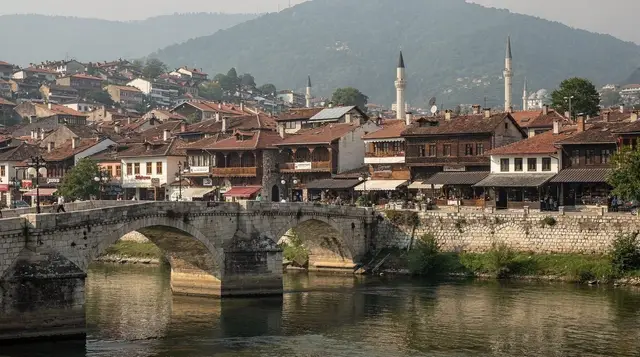
Tvrdoš monastery sits a few kilometres outside Trebinje, on the bank of the Trebišnjica river, and its wine tradition predates the current stone buildings. Monastic winemaking here goes back centuries, interrupted by war and by decades of state control of vineyard land under Yugoslavia, and resumed in earnest after the monks recovered their land in the 1990s. Today Tvrdoš produces both Žilavka and Blatina under its own label, sold in the monastery shop and, increasingly, in wine bars and restaurants around Trebinje and Mostar.
Visiting Tvrdoš is a monastery visit first and a wine stop second. The church itself dates to the medieval period, rebuilt after wartime damage, and the working vineyards run down toward the river below the monastery walls. Tastings are offered to visitors during opening hours, and buying a bottle directly supports the monastery rather than a distributor. Trebinje itself, with its plane-tree-shaded main square and the hilltop monastery of Hercegovačka Gračanica looking down over the town, rewards the extra time if you do make it this far south.
Žilavka: Herzegovina’s native white
Žilavka is the signature white grape of the Mostar basin, grown on the hillsides around the city and further south toward Čitluk and Stolac. The name comes from žila, “vein,” a reference to the fine veining visible on the ripe grape skin. It produces a dry, medium-bodied white with good acidity, a mineral edge from the limestone soil, and a distinctive bitter-almond note on the finish that is the variety’s clearest signature. Serve it cold with river fish, soft cheese, or the grilled vegetables that appear on most Herzegovina restaurant menus in summer.
Quality varies a great deal between producers. Large cooperative Žilavka, sold cheaply across Bosnia and Herzegovina, is thin and forgettable. Small producer bottles from the villages around Mostar and Čitluk, including Tvrdoš’s own, are a different drink entirely: concentrated, dry, and worth seeking out by name rather than buying whatever is on the house list.
Blatina: the region’s structured red
Blatina is Herzegovina’s principal red grape, grown on the same warm limestone slopes as Žilavka, particularly around Čitluk, Ljubuški and Mostar itself. It ripens late and needs a hot, dry autumn to reach full structure, which is exactly what the Herzegovina climate provides. The result is a medium-to-full-bodied red with dark fruit, moderate tannin and, in good vintages, enough structure to age a few years in bottle. It pairs naturally with the lamb and grilled meats that dominate Herzegovina cooking, particularly lamb cooked ispod sača, under the traditional metal dome.
Blatina is often blended with small amounts of other local varieties to soften it, and single-varietal bottlings from serious producers are the ones worth paying more for. As with Žilavka, the gap between an ordinary bottle and a good one is large, and asking a restaurant or wine shop for a recommendation by producer, not just by grape name, is worth the extra question.
| Variety | Colour | Character | Best paired with |
|---|---|---|---|
| Žilavka | White | Dry, mineral, bitter-almond finish | River fish, soft cheese, grilled vegetables |
| Blatina | Red | Medium to full body, dark fruit, firm tannin | Lamb, grilled meats, ispod sača dishes |
Rakija: the drink you will be offered before you ask for it
Rakija is a fruit brandy, distilled at home or by small producers across Bosnia and Herzegovina, most commonly from plums, in which case it is called šljivovica. Grapes, pears, quince and apricots are also distilled, and strength commonly runs at 40 percent alcohol or higher, occasionally well above it in home-made batches. Offering a small glass, poured before a meal or on arrival, is one of the most consistent gestures of hospitality across the whole country, from a Trebinje monastery to a Sarajevo mountain hut to a private home in any village along the way.
Declining is not rude. A small sip, or a polite “hvala, ne mogu” (thank you, I can’t), is understood everywhere, and no one expects a visitor to match a host’s pace. What is worth knowing is that rakija is rarely sold as a tourist product with a fixed price the way wine is: it is homemade, given rather than purchased, and quality varies enormously from one household to the next. Some wineries and tasting tours in the villages around Mostar do pour a rakija alongside the wine as part of a set tasting, which is the more predictable way to try it if you want a comparison rather than a single unplanned glass.
Why Trebinje is not a Sarajevo day trip
This needs saying plainly. Trebinje and Tvrdoš monastery sit 240 km from Sarajevo, around four hours’ drive each way on winding roads through Herzegovina and the edge of Montenegro’s hinterland. An honest day trip there and back is roughly eight hours of driving alone, before any time actually spent tasting wine or seeing the monastery. It is not a reasonable single-day excursion from Sarajevo, and any tour or itinerary that markets it as one is not being straight with you.
The practical alternative is to taste Herzegovina wine where the grapes actually grow, in and around Mostar, which is a genuinely workable day trip at 130 km and around two and a half hours from Sarajevo. Vineyards and tasting rooms cluster in the villages between Mostar and Čitluk, well within reach of a half-day tacked onto a Mostar visit, and several operators run dedicated wine and rakija workshops from Mostar itself.
If Trebinje and Tvrdoš genuinely matter to you, the better plan is to treat the region as a multi-day route rather than a single outing: a night in Mostar, a stop at Počitelj or Blagaj on the way, and Trebinje added as a stop on a longer loop, ideally on the way toward or back from the coast, rather than as an out-and-back from Sarajevo.
| From Sarajevo | Distance | Drive time | Realistic as a day trip |
|---|---|---|---|
| Mostar | 130 km | 2h15–2h30 | Yes |
| Blagaj (via Mostar) | ~140 km | 2h30 | Yes |
| Kravice waterfalls | 180 km | 3h | Yes, long day |
| Trebinje / Tvrdoš monastery | 240 km | 4h | No — plan as an overnight or a coast route stop |
Tasting wine and rakija on a Mostar day trip
A wine or rakija tasting is now a standard add-on to a Mostar day trip from Sarajevo, and it is the most efficient way to try both without the Trebinje detour. A typical format takes visitors to a small family estate or cellar in the hills around Mostar or Čitluk, walks through a short explanation of Žilavka and Blatina, and pours several glasses of each alongside local cheese, cured meat and bread. Some operators combine the tasting with a wider Herzegovina circuit that also covers Blagaj, Počitelj and the Kravice waterfalls, which suits visitors who want the full regional picture in one long day rather than a narrower wine-only stop.
a half-day wine and rakija workshop from Mostar covers the tasting side directly, with a producer walking through both grape varieties and pouring a rakija alongside them. For a route built specifically around the vineyards, a guided tour of the old town and surrounding wine villages stops at working estates between tastings, and a premium wine route through Herzegovina’s signature estates goes further into producer-led tastings for visitors who want fewer stops and more depth at each one.
Travelling from Sarajevo itself, rather than starting in Mostar, a full-day Mostar and Herzegovina tour with lunch from Sarajevo removes the transport question entirely and typically folds in a wine or rakija stop alongside the main sightseeing. It is the single most practical option for a Sarajevo-based visitor who wants Herzegovina wine on the itinerary without renting a car or working out train times.
Combining wine with the rest of Herzegovina
Most visitors do not taste wine as a stand-alone outing; it sits inside a wider Mostar day trip from Sarajevo alongside the Stari Most, Blagaj’s dervish tekke at the source of the Buna, and the ottoman terraces of Počitelj. A route that adds the Kravice waterfalls and a swim in summer, covered in detail in our Kravice and Blagaj day trip guide, leaves less room for a proper sit-down tasting but works well if wine is one stop among several rather than the point of the day.
Travellers who want Trebinje and Tvrdoš specifically, rather than the closer Mostar vineyards, should read our dedicated Trebinje from Sarajevo guide before committing to the route, since it lays out realistic timing for treating Trebinje as an overnight stop rather than a rushed return drive. For visitors continuing on toward Konjic or Međugorje as part of a longer Herzegovina loop, wine tastings slot in naturally as a stop between destinations rather than a separate excursion.
a Kravice waterfalls day trip that includes a rakija tasting is the option worth flagging for anyone who wants both the swim and the drink in one outing without a dedicated wine stop, and a full Ottoman-heritage day through Mostar and Blagaj works for visitors prioritising the historic sites first and treating any wine or rakija offered along the way as a bonus rather than the itinerary’s focus.
Getting there without a tour
Independent travellers heading to Mostar for wine tasting on their own can take the train, one of the more scenic rail routes in Europe, or drive; both options are covered in our driving in Bosnia and Sarajevo to Mostar transport guides.
A rental car, arranged through our car rental in Sarajevo guide, is the only practical way to reach the smaller vineyard villages around Čitluk and Ljubuški directly, since public transport does not serve them. Visitors without a car should read day trips without a car before assuming a tasting is reachable independently; for most, a guided tour genuinely is the simpler route to the vineyards themselves.
Wine and rakija in Sarajevo itself
Tasting does not strictly require leaving Sarajevo. Most restaurants in the city carry at least one Žilavka and one Blatina from producers around Mostar or Trebinje, and better wine bars stock small-estate bottles, including Tvrdoš’s own, by the glass. Our Sarajevo food guide covers where wine fits alongside the city’s cevapi, burek and grilled meat, and rakija is offered informally in guesthouses and at family-run restaurants across the city without needing to seek it out specifically. Herzegovina wine and rakija are, in that sense, already part of Sarajevo’s table even before a trip south.
Practical notes
Bosnia and Herzegovina’s currency is the convertible mark (KM, code BAM), fixed to the euro at 1 EUR = 1.95583 KM, close enough to two-to-one to convert in your head. Pay in KM at wineries, monasteries and restaurants; euros are sometimes accepted around Mostar but at a poor rate. A restaurant meal with a glass of wine typically runs 12–25 KM (roughly €6–13), and bottles bought directly from producers or the Tvrdoš monastery shop cost well under what equivalent-quality wine sells for across the border in Croatia, one of the genuine value arguments for drinking Herzegovina wine while you are here rather than waiting to find it at home.
Frequently asked questions about Herzegovina wine and rakija
Is Trebinje and Tvrdoš monastery doable as a day trip from Sarajevo?
Not honestly. It is 240 km and around four hours each way by road, so a return trip alone is eight hours of driving. Visitors based in Sarajevo taste Herzegovina wine on a Mostar or Blagaj day trip instead, or stop in Trebinje while travelling on to the coast or Dubrovnik.
What is the difference between Žilavka and Blatina?
Žilavka is the white grape of the Mostar basin, dry and mineral with a bitter almond note on the finish. Blatina is the main red grape of the same limestone hills around Čitluk and Ljubuški, medium-bodied with dark fruit and firm tannin. Both are native to Herzegovina and grown almost nowhere else.
What is rakija, and will I be expected to drink it?
Rakija is a home-distilled fruit brandy, usually made from plums (šljivovica) and often 40 percent alcohol or higher. Offering a small glass is a genuine gesture of welcome across Bosnia and Herzegovina, at monasteries, mosques, homes and guesthouses alike. Declining politely, or taking a token sip, is entirely acceptable.
Can you taste wine at Tvrdoš monastery itself?
Yes. Tvrdoš, just outside Trebinje, has produced wine continuously since the monks re-established vineyards after Yugoslav-era state control ended, and the monastery shop sells bottles and pours tastings for visitors during opening hours.
Where can I taste Herzegovina wine without going all the way to Trebinje?
Mostar and the villages around it, including Blagaj and the vineyards near Čitluk, sit within a wine-tasting workshop or half-day tour from the city, and Mostar itself is roughly 130 km and two and a half hours from Sarajevo.
Is Herzegovina wine served in Sarajevo restaurants?
Widely. Most Sarajevo restaurants with a wine list carry at least one Žilavka and one Blatina from producers around Mostar, Čitluk or Ljubuški, so tasting the region’s wine does not strictly require the trip south.
How should I get from Sarajevo to a Herzegovina wine tasting?
A guided day tour from Sarajevo that includes Mostar and a rakija or wine stop removes the driving question entirely. Independent travellers usually rent a car or take the train to Mostar and arrange tastings locally, since public transport does not reach the vineyard villages directly.
Sarajevo food & drink tours on GetYourGuide
Verified deep-linked GetYourGuide tours. Book through these links and we earn a small commission at no cost to you.
GetYourGuide does not provide a product photo for this activity — the image shows the meeting point, photographed by us.