Sarajevo food: what to eat and what it costs
What should I eat in Sarajevo, and how much does it cost?
Start with ćevapi (8-12 KM for ten with somun), burek (3-5 KM), a slow-cooked dish like begova čorba or dolma, and a bosanska kafa. A full restaurant meal runs 12-25 KM, well below equivalent prices in Croatia.
What Sarajevo eats, in one table
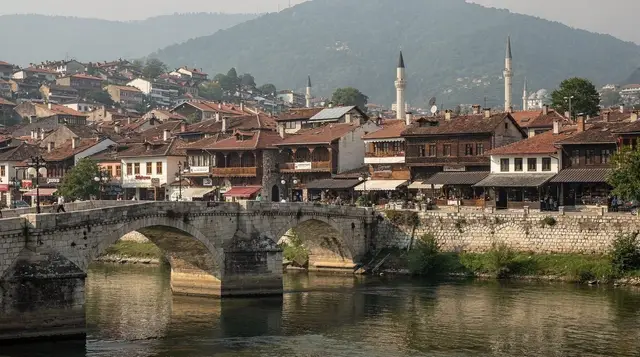
Sarajevo’s food culture sits at the meeting point of Ottoman, Central European and local mountain traditions, and it shows on every menu: grilled meat next to filo pastry, thick stews next to Viennese-style cakes, Turkish-style coffee next to Austrian coffeehouses. Rather than pick one dish to chase, it helps to know the categories first, what each one costs, and which page covers it properly - this guide is the index, not the last word on any single dish.
| Category | What it is | Typical price | Where to read more |
|---|---|---|---|
| Ćevapi | Grilled minced-meat rolls in somun bread | 8-12 KM for ten | Best ćevapi in Sarajevo |
| Burek and cousins | Baked filo pies: meat, cheese, potato, spinach | 3-5 KM a portion | Sarajevo burek guide |
| Slow-cooked dishes | Begova čorba, dolma, japrak, sogan-dolma | 8-15 KM a bowl | Below on this page |
| Pastries and sweets | Tufahija, baklava, hurmašice | 3-6 KM a piece | Bosnian sweets guide |
| Bosnian coffee | Slow-brewed in a džezva, unfiltered | 2-3 KM | Bosnian coffee ritual |
| Beer, wine, rakija | Sarajevsko, Herzegovina wines, plum brandy | 3-5 KM a beer | Sarajevo brewery and beer |
That last column matters: this page stays deliberately general, so it can point you to a dedicated guide for the dish you actually care about rather than trying to cover ćevapi joints or burek bakeries by name here.
Ćevapi: the dish everyone comes for
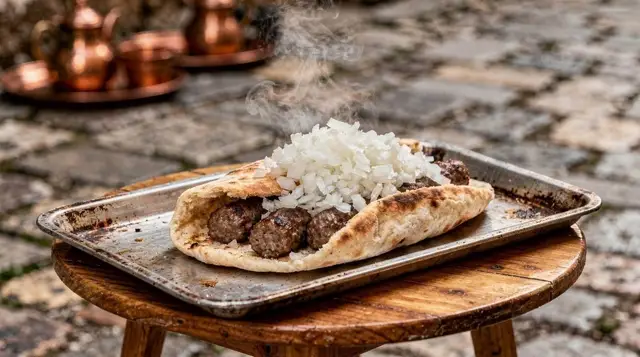
Ćevapi are small grilled rolls of minced beef or beef-and-lamb, served on somun, a soft, slightly leavened flatbread, with raw onion and a smear of kajmak, a clotted cream. Sarajevo’s convention is to serve them by the count of ten - order “deset ćevapa” and you get ten rolls in one somun, which is a full meal for most appetites. A portion of ten runs 8-12 KM, occasionally more in the busiest streets of Baščaršija, less a short walk away. Ordering fewer than ten is unusual and sometimes simply not offered; if you are not hungry, share a portion rather than ask for five.
The dish is simple enough that quality varies mainly on three things: the grind and fat ratio of the meat, whether the somun is baked fresh that day, and how busy the grill is when you sit down - a ćevabdžinica running at full pace produces better food than one standing half-empty at 3pm. None of that is something to judge from a menu, which is why a name-by-name comparison belongs on its own page rather than a paragraph here: see best ćevapi in Sarajevo for specific recommendations across price points.
Burek, and the pastries everyone gets wrong
This is the single most common food mix-up visitors make in Sarajevo, and it is worth getting right before you order. Outside Bosnia, “burek” is often used as a catch-all for any filled filo pastry. In Bosnia, it means one thing only: the version filled with minced meat, coiled into a spiral or layered in a round tin and baked, then cut into wedges and dusted with a little cheese-and-cream mixture called pavlaka or a spoon of yoghurt on the side. Ask for burek and expect meat.
The other fillings have their own names, always:
| Name | Filling |
|---|---|
| Burek | Minced meat |
| Sirnica | Cheese |
| Krompiruša | Potato |
| Zeljanica | Spinach, usually with cheese |
A tray of any of these, cut into a generous wedge, costs 3-5 KM at a burekdžinica (a bakery specialising in the pastry) and is sold by weight or by the piece depending on the shop. It is standard breakfast food in Sarajevo, sold from early morning, and traditionally eaten with a small glass of plain yoghurt to cut the richness rather than with coffee. For opening hours, the best neighbourhoods to find it fresh, and how to order by weight, see the Sarajevo burek guide and the separate Sarajevo breakfast guide.
Slow-cooked dishes: the food locals actually cook at home
Beyond the grill and the bakery counter sits a category that tourists see far less often, because it is mostly home food and aščinica fare - small canteen-style kitchens that serve a rotating daily menu of stews and casseroles rather than a fixed printed menu. This is where Sarajevo’s Ottoman inheritance is clearest:
- Begova čorba (“bey’s soup”) - a rich chicken and vegetable soup thickened with a roux and a little cream, traditionally the opening course of a proper Bosnian meal.
- Dolma - vegetables, usually peppers or courgettes, hollowed out and stuffed with minced meat and rice, cooked slowly in a light tomato broth.
- Japrak - the same stuffing wrapped in vine or cabbage leaves rather than packed into a vegetable, closer to what other Balkan cuisines call sarma.
- Klepe - small boiled meat dumplings served with a garlic-yoghurt sauce, similar in spirit to ravioli or manti.
- Sogan-dolma - onions stuffed with minced meat, sweeter and more delicate than the pepper or courgette versions.
- Ispod sača - lamb or veal slow-roasted under a sač, a domed metal lid covered in embers, traditionally a mountain-village technique now found in a handful of Sarajevo restaurants and widely on menus around Konjic and Jablanica.
A bowl of any of these runs 8-15 KM at an aščinica, a little more as a restaurant main. These kitchens are unglamorous by design - point at what looks good in the tray rather than expect an English menu - and they are consistently the best-value hot meal in the city.
Sweets, pastries and the coffee that goes with them
Bosnian desserts lean sweet and syrup-soaked, closer to the wider Ottoman pastry tradition than to Central European baking, though Austro-Hungarian influence shows up too in the city’s older coffeehouses. Tufahija is a whole poached apple, cored and filled with a walnut paste, topped with whipped cream - Sarajevo’s best-known dessert and worth trying at least once.
Baklava needs no introduction, though the Bosnian version is typically less sweet and less oil-heavy than versions found further south. Hurmašice, small syrup-soaked sponge fingers, and tulumba, fried and syrup-dipped batter, round out most dessert counters. Expect 3-6 KM a piece. The full range, and where to find the better versions, is covered in the Bosnian sweets guide.
None of it is really separable from bosanska kafa, Bosnian coffee: finely ground coffee simmered slowly in a copper džezva, served unfiltered so the grounds settle at the bottom of a small fildžan cup, alongside a cube of rahat lokum and a sugar cube meant to be nibbled between sips rather than stirred in. A cup costs 2-3 KM, an espresso closer to 2-2.50 KM, and both are treated as an excuse to sit for twenty minutes rather than a quick stop. The full ritual, and why locals bristle slightly at “Turkish coffee” as a label, is its own page: the Bosnian coffee ritual.
Beer, wine and rakija
Sarajevsko, brewed in the city since 1864, is the default draught beer almost everywhere, at 3-5 KM a glass; the historic brewery itself is worth a stop and has its own guide at Sarajevo brewery and beer. For wine, look south: Herzegovina, the drier, warmer region around Mostar, produces Blatina, a full-bodied red, and Žilavka, a crisp white, both increasingly available by the glass in Sarajevo restaurants and far more widely around Mostar and Trebinje itself.
Rakija, usually distilled from plums (šljivovica), is less something you order with a meal and more something offered as a welcome drink or a way to close one - refusing it outright is fine, but a small polite sip is the more common response. A day trip built around Herzegovina’s wine country pairs naturally with this side of the food scene: see the Herzegovina culinary and cultural day trip from Sarajevo for a guided version that covers tastings alongside Mostar and Blagaj. The full picture on wine and rakija is at rakija and Herzegovina wine.
What a day of eating actually costs
Put the categories together and a realistic day of eating in Sarajevo looks like this:
| Meal | Typical choice | Price |
|---|---|---|
| Breakfast | Burek or sirnica wedge, plain yoghurt | 4-6 KM |
| Coffee break | Bosanska kafa | 2-3 KM |
| Lunch | Ten ćevapi with somun | 8-12 KM |
| Afternoon coffee | Espresso, one sweet | 5-8 KM |
| Dinner | Restaurant main, e.g. begova čorba plus a dish | 20-35 KM |
| Drink with dinner | Sarajevsko or a glass of Blatina | 3-5 KM |
That totals roughly 42-69 KM (about 21-35 EUR) per person for a full, unrushed day of eating well, including a sit-down dinner - and it is easy to spend less by skipping the second coffee stop or eating at an aščinica instead of a restaurant. The same standard of meal in Dubrovnik or Split typically costs 30-50% more; Sarajevo, and Bosnia and Herzegovina generally, is genuinely one of the cheaper food destinations in this part of Europe, not just cheap relative to Western Europe.
For a fuller cost breakdown across a whole trip, not just meals, see the cost of a day in Sarajevo and Sarajevo on a budget; for how the wider trip compares, Bosnia vs Croatia trip sets out the numbers side by side.
Where to actually eat, and guided ways in
This page stays deliberately general on addresses - the specifics belong on dedicated pages - but two starting points are worth naming. Baščaršija, the old Ottoman bazaar, is where most first meals happen, dense with ćevabdžinice, burek bakeries and coffeehouses within a few minutes’ walk of the Sebilj fountain; a slower, better-oriented first pass is covered in the Baščaršija walking guide. For produce, cheese, honey and the kind of stalls locals actually shop at rather than tourist-facing ones, Markale Market is the working city market a short walk from the centre, with its own guide at Markale market guide.
For a structured, guided introduction rather than working it out alone, a walking food tour through Grbavica - a residential neighbourhood rather than the tourist centre - covers several stops and dishes in one outing: the Grbavica guided walking food tour is built around exactly that. Closer to Baščaršija itself, the Old Town food tasting tour through Sarajevo’s city market pairs market stops with tastings in the historic core.
Either is a reasonable way to sample burek, ćevapi, sweets and coffee in one go rather than guessing where to start; a fuller comparison of the food-tour options in the city is at Sarajevo food tours compared, and a budget-tiered list of restaurants is at Sarajevo restaurants by budget.
Food shows up outside the city too. A day trip into the highlands around Bjelašnica combines a guided walk with a home-cooked lunch, a good way to try mountain cooking rather than city cooking - the highlands path guided hike with lunch is built for exactly that pairing. Ramadan is worth planning around if your visit overlaps it: iftar turns Baščaršija into its most social self after sunset, covered in Ramadan in Sarajevo.
Vegetarian and vegan travellers
Bosnian cuisine reads as meat-heavy, and much of it is, but it is not a dead end for vegetarians. Sirnica, krompiruša and zeljanica are meat-free by definition, dolma and japrak are sometimes made in rice-and-vegetable-only versions worth asking about directly, and Sarajevo’s newer restaurants - as distinct from the traditional aščinica kitchens - increasingly carry a proper vegetarian or vegan main rather than a token salad. Vegan is harder, mainly because kajmak, yoghurt and pavlaka appear across the board, but it is workable with some asking ahead. The specifics, including which neighbourhoods have the most reliable options, are in vegetarian and vegan Sarajevo.
Frequently asked questions about eating in Sarajevo
Is ćevapi the same as burek?
No. Ćevapi are grilled minced-meat rolls served in flatbread; burek is a baked filo pie. In Bosnia, burek specifically means the meat-filled version - pies filled with cheese, potato or spinach have their own names and are never called burek locally.
What is the difference between burek, sirnica, krompiruša and zeljanica?
All four are the same coiled or layered filo pastry, baked in a round tray and cut into wedges. Burek is filled with minced meat, sirnica with cheese, krompiruša with potato, and zeljanica with spinach and cheese. Ordering “burek” for a cheese pie in Sarajevo will get you corrected, politely.
How much does a meal cost in Sarajevo?
A bosanska kafa is 2-3 KM, ten ćevapi with somun is 8-12 KM, and a sit-down restaurant main is 12-25 KM. A full day of eating well, including a coffee break and a proper dinner, comfortably fits under 50 KM per person.
Is Sarajevo cheaper than Croatia for food?
Yes, noticeably. A restaurant meal in Sarajevo typically costs 30-50% less than the equivalent in Dubrovnik or Split, and street food and market snacks are cheaper still. It is one of the clearest financial reasons to add Bosnia and Herzegovina to a Balkan itinerary.
What is bosanska kafa, and is it the same as Turkish coffee?
Bosanska kafa is finely ground coffee simmered in a džezva and served unfiltered with the grounds settled at the bottom, poured into a small fildžan cup with a cube of rahat lokum and a sugar cube to sip alongside. The method is close to Turkish coffee, but the ritual, the cup and the accompaniments are distinctly Bosnian, and locals notice the difference.
Are there vegetarian options in Sarajevo?
Yes, more than the meat-heavy reputation suggests. Sirnica, krompiruša and zeljanica are all meat-free, dolma and japrak can come in vegetable-only versions, and Sarajevo’s newer restaurants increasingly list a vegetarian main, though asking ahead at traditional aščinica-style kitchens is still sensible.
What should I drink with dinner in Sarajevo?
Sarajevsko is the local pilsner and a safe, inexpensive default at 3-5 KM a glass. For wine, look for Herzegovina’s Blatina (red) and Žilavka (white), both from vineyards around Mostar. Rakija, usually plum-based, is offered as a welcome or closing drink rather than something ordered mid-meal.
Sarajevo food & drink tours on GetYourGuide
Verified deep-linked GetYourGuide tours. Book through these links and we earn a small commission at no cost to you.
GetYourGuide does not provide a product photo for this activity — the image shows the meeting point, photographed by us.