Baščaršija shopping guide: what to buy, where, and how much to pay
What is the best way to shop in Baščaršija?
Walk the whole bazaar before buying anything: browse the shops clustered around the Sebilj, then follow Kazandžiluk and the side streets a few minutes further out, where the same hand-hammered copper and silver often costs less. Bring cash in KM, expect a little room to negotiate on handmade items only, and check whether a piece is stamped 'made in' somewhere else before paying local-craft prices for it.
An Ottoman bazaar that is still a working market
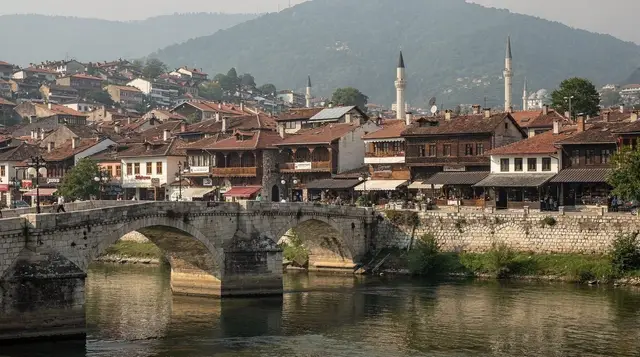
Baščaršija was founded around 1462 by Isa-beg Ishakovic, the Ottoman governor who laid out Sarajevo’s first mosque, bathhouse and marketplace within a few years of each other. Six centuries on, it is still organised the way an Ottoman bazaar was meant to be: by trade, street by street, rather than as one undifferentiated souvenir strip. Coppersmiths sit near coppersmiths, tailors near tailors, spice sellers near spice sellers. Knowing that layout is the difference between wandering in circles and shopping with a plan.
This guide covers the bazaar as a whole - what is sold where, what a fair price looks like, and how to avoid paying local-craft prices for something that was made somewhere else entirely. For copper specifically, Coppersmiths of Kazandžiluk goes deeper into that one street; for a broader view of what counts as genuine Bosnian craft, see the souvenir guide.
How the bazaar is laid out
Everything in Baščaršija radiates from the Sebilj, the wooden Ottoman-style fountain built in 1891 that has become the bazaar’s unofficial living room - the point everyone uses to meet, regroup, or simply get their bearings before setting off again. From there, the trades fan out along a handful of narrow, mostly pedestrian streets:
- Kazandžiluk, running south-east from the Sebilj, is the coppersmiths’ street - the name literally means the street of the kazandžije, the coppersmiths. Workshops here still hammer sheet copper into coffee sets, trays and bowls, some of them visible from the pavement.
- Kujundžiluk, just off the main square, is traditionally the jewellers’ and silversmiths’ street, filigree work and engraved rings alongside costume jewellery.
- Ćurčiluk, once the furriers’ street, now mixes textiles, scarves, leather goods and general souvenir shops.
- The stalls and small shops directly around the Sebilj and along the approach from Ferhadija sell a bit of everything - lokum, spices, magnets, printed scarves - aimed squarely at the passing crowd.
The Gazi Husrev-bey Mosque sits at the edge of this commercial quarter, and its covered market building, the Bezistan, still houses shops today. A short circuit that follows Ferhadija in from the Catholic cathedral end, loops through the square by the Sebilj, and comes back out along Kazandžiluk covers the core of the bazaar in under an hour without doubling back - a route also laid out in more detail in the Baščaršija walking guide and the Austro-Hungarian walk along Ferhadija, which explains where the Ottoman quarter gives way to the 19th-century town.
Copper and jewellery around Kazandžiluk
Copperware is the craft Baščaršija is best known for, and it is worth understanding what you are actually buying. Hand-hammered copper - dishes, coffee trays, džezva (the long-handled pot bosanska kafa is brewed in), decorative plates - is made by cutting and shaping sheet copper, then finishing the surface with a hand tool, which leaves small, slightly irregular hammer marks across the metal. That irregularity is the tell: a genuinely handmade piece is never perfectly even.
Machine-stamped copies, many imported, have a flawless, repeating pattern pressed into thinner metal in a single step. They are not fakes exactly - nobody is claiming they are hand-forged - but they are often displayed and priced next to the real thing without much distinction made for the shopper. If a shop stocks twenty identical trays, they were not hammered by hand one at a time.
A rough price guide for genuine hand-hammered copper, small pieces to full sets:
| Item | Typical price (KM) | Roughly in EUR |
|---|---|---|
| Small decorative bowl or dish | 20-40 KM | 10-20 EUR |
| Single coffee cup (fildžan) | 15-30 KM | 8-15 EUR |
| Small tray | 30-60 KM | 15-30 EUR |
| Traditional džezva (coffee pot) | 40-80 KM | 20-40 EUR |
| Full coffee set (džezva, tray, two cups) | 80-150 KM | 40-77 EUR |
| Silver-plated or engraved set | 150 KM+ | 77 EUR+ |
Since the KM is fixed to the euro at 1 EUR = 1.95583 KM, halving a KM price gets you the euro figure closely enough to compare on the spot. Kujundžiluk’s jewellers work in a similar range for filigree earrings and pendants, usually 20-60 KM for simple silver pieces, more for anything set with stones or heavily worked.
Carpets, kilims and textiles
Woven rugs and kilims are sold throughout the bazaar, but buyers should be more cautious here than with copper. Genuine Bosnian and Herzegovinian weaving exists and is worth seeking out, but a good share of what is displayed as “oriental carpets” in Baščaršija is imported from Turkey, Iran or further afield and simply sold from a Sarajevo shopfront.
That is not automatically a problem if the price reflects it, but it is a problem if it is priced or described as local craft. Ask directly where a rug was woven; a shop confident in its stock will tell you without hesitation. Smaller woven items - table runners, cushion covers, socks in traditional patterns - are a lower-risk way to bring textile craft home without needing to authenticate a large rug on the spot.
Spices, dried fruit and rahat lokum
The stalls nearest the Sebilj and along the lanes leading off it sell dried figs, apricots and plums, paprika and other spice blends, and rahat lokum (Turkish delight) by weight, often with samples offered before you buy. This is straightforward, low-stakes shopping - prices are broadly consistent from stall to stall, a few KM per hundred grams depending on the ingredient, and there is little difference between one seller and the next beyond freshness. It is one of the few categories in the bazaar where the shop right by the Sebilj is not meaningfully worse value than one further out.
What a genuine souvenir looks like versus an imported copy
Beyond copper and carpets, the same rule of thumb applies across the bazaar: the more a shop’s stock looks identical from one item to the next, the more likely it was made off a production line rather than by the person standing behind the counter. A few markers worth checking:
- Copper and metalwork - uneven hammer marks, visible tool work, weight that feels substantial for the size.
- Silver jewellery - a hallmark stamp; its absence on something priced as solid silver is a reasonable prompt to ask.
- Wood carving and painted items - small variations between pieces rather than an identical printed pattern.
- Textiles - a willingness from the seller to say where something was woven, without prompting twice.
None of this means every mass-produced fridge magnet or printed scarf is a bad buy - they are cheap, honest about what they are, and plenty of visitors want exactly that. The problem is only when something ordinary is priced and presented as if it were handmade local craft.
Bargaining in Baščaršija: what actually works
Baščaršija carries the visual language of an Ottoman bazaar, and some visitors arrive expecting the kind of insistent, expected haggling found in Istanbul’s Grand Bazaar or in Marrakech’s souks. That is not really how it works here. Many shops, especially the smaller souvenir stalls, use fixed prices, and pushing hard for a discount on a 10 KM item tends to read as odd rather than as playing the local game correctly.
Where negotiation genuinely happens is with handmade goods bought directly from the maker - a coppersmith on Kazandžiluk, a jeweller on Kujundžiluk - and mostly when buying more than one piece or a higher-value item such as a full coffee set. A polite ask for a small reduction, or for the price to include gift wrapping or a cloth pouch, is normal and rarely refused outright. Treat it as a modest, friendly adjustment rather than a contest, and accept the first “no” gracefully if it comes.
Shops near the Sebilj versus workshops further out
The single most useful piece of practical advice for shopping in Baščaršija is also the simplest: distance from the Sebilj tracks fairly closely with price. The cluster of shops within a minute or two of the fountain sees the heaviest footfall from tour groups and day-trippers, and prices - for copper, for jewellery, for lokum - sit higher there than they do five or ten minutes further along Kazandžiluk or into the quieter side streets, where the people doing the actual hammering and engraving tend to work.
The product is frequently the same, sometimes identical stock from the same small workshop supplying several shops; the only difference is footfall and rent. Walking the full length of a street before buying, rather than stopping at the first attractive display, routinely saves a meaningful amount on anything above a few KM.
Opening hours and the quietest times to shop
Most shops in the bazaar open around 9am and stay open into the evening, roughly 8pm in summer and a little earlier in winter, seven days a week - this is a working market quarter, not a set of attractions with fixed visiting hours. The bazaar is at its busiest from late morning through mid-afternoon, when day-trip groups and coach parties pass through. The first hour after opening and the couple of hours before closing are noticeably calmer, better for browsing without being steered toward a particular stall, and better for a slower conversation with a coppersmith or jeweller about how a piece was made.
Combining shopping with the rest of the bazaar
Shopping in Baščaršija sits naturally alongside everything else the quarter offers: a coffee break following the Bosnian coffee ritual, a stop for Bosnian sweets once the lokum stalls have made you curious, and a visit to the Gazi Husrev-bey Mosque between purchases if the timing avoids prayer hours.
A short walking tour that pairs the bazaar with a hands-on souvenir-making stop is a straightforward way to see the layout with some context before shopping independently - a guided walk through Baščaršija that includes making a souvenir with a local craftsperson covers exactly that.
For a longer day that pairs the bazaar with the Vrelo Bosne springs outside town, a combined tour of Vrelo Bosne and Baščaršija with lunch included folds the shopping quarter into a fuller day out. Visitors basing their trip around the wider old town, including the walk down toward Bentbaša along the Miljacka, might also look at a guided walk out to Bentbaša as a way to see how the bazaar connects to the river.
The nearby Markale market is a genuinely different experience - fresh produce for locals rather than souvenirs for visitors - and worth a visit for contrast even if you buy nothing.
Anyone planning the rest of a Sarajevo stay around the bazaar should also check where to stay in Sarajevo, money and currency in Bosnia for cash withdrawal advice before a shopping trip, and the wider common tourist traps guide, which covers pricing pitfalls beyond the bazaar itself. For a first visit that fits shopping into a single day alongside the rest of the old town, see the one-day Sarajevo itinerary.
Shopping in Baščaršija: your questions answered
Is Baščaršija the same as the Sebilj?
No. The Sebilj is the single wooden fountain from 1891 that sits in the bazaar’s main square and works as everyone’s meeting point. Baščaršija is the whole Ottoman-era commercial quarter around it, founded around 1462, several streets deep in every direction.
Can I bargain in Baščaršija?
Yes, but moderately. This is not Istanbul’s Grand Bazaar: fixed-price stickers are common, and haggling hard over a couple of KM on a cheap item comes across as odd rather than savvy. It is normal to ask for a small reduction on a genuinely handmade piece, especially if buying more than one, or to ask the price to include gift wrapping.
How much does a small copper souvenir cost?
A small hand-hammered copper item such as a coffee set piece, a bowl or a decorative plate typically runs from the low tens of KM up to 60-80 KM depending on size and how much hand-finishing went into it. A full traditional coffee set (džezva, cups, tray) usually starts around 80-100 KM and climbs from there with silver plating or engraving.
How do I tell handmade copper from an imported copy?
Handmade pieces show small, slightly uneven hammer marks and a maker willing to talk about where it was made, often in a workshop you can see from the street. Machine-stamped imports have a perfectly even, almost printed pattern, feel lighter for their size, and are usually sold in shops that stock dozens of identical pieces rather than one workshop’s output.
Are the shops right by the Sebilj more expensive?
Generally yes. The cluster of shops within a minute or two of the Sebilj sees the heaviest tourist footfall and prices it accordingly. Walking a further five to ten minutes along Kazandžiluk or into the quieter side streets usually finds the same quality of copper, textiles and jewellery for noticeably less, sold by the people who actually make it.
What should I avoid buying in Baščaršija?
Skip “Persian” or “Turkish” carpets sold as Bosnian craft, mass-produced fridge magnets and keyrings dressed up as handmade, and any silver jewellery with no hallmark that is priced as though it were solid. None of these are dishonest to own, but none are the local craft they are sometimes presented as.
What are typical opening hours?
Most shops open around 9am and trade through to 8 or 9pm in summer, a little earlier in winter, seven days a week. The bazaar is busiest from late morning through the afternoon; the first hour after opening and the early evening are noticeably quieter for browsing without being jostled.
Shopping & market tours on GetYourGuide
Verified deep-linked GetYourGuide tours. Book through these links and we earn a small commission at no cost to you.
GetYourGuide does not provide a product photo for this activity — the image shows the meeting point, photographed by us.