The Bosnian coffee ritual in Sarajevo
What is the Bosnian coffee ritual and how much does it cost?
Bosanska kafa is finely ground coffee simmered in a copper džezva over hot sand or embers, poured unfiltered into a small fildžan and served with rahat lokum and a sugar cube to bite rather than stir in. A cup in a traditional Baščaršija café runs about 2 to 3 KM (around 1 to 1.50 EUR), and it is drunk sitting down, over conversation, not on the move.
A cup that is not meant to be finished quickly
Order bosanska kafa in Baščaršija and the first thing you notice is that nobody brings it in a hurry. The waiter disappears for several minutes, comes back with a small copper pot, a tiny handleless cup, a piece of rahat lokum, and a single sugar cube on a separate saucer, and then leaves you alone with it. That pause is the point. Bosnian coffee is not a faster or slower version of espresso; it is a different kind of drink entirely, built around sitting still, and treating it as a quick pick-me-up misses what it actually is.
This guide covers the coffee itself: how it is brewed, what the code of drinking it is, what it costs, and where in Sarajevo to have it properly. It does not repeat the wider restaurant scene, which is covered in the Sarajevo food guide and the Sarajevo food tours compared page, or the budget breakdown in Sarajevo restaurants by budget. Here, only the cup.
How bosanska kafa is actually made
The process starts with coffee ground almost to a powder, finer than what most filter or espresso machines use. It goes into a džezva, a narrow-necked copper pot with a long handle, along with cold water, and is set to heat slowly, traditionally over hot sand or embers rather than a direct flame, so the heat rises gently rather than boiling hard. Just as a foam starts to rise, the pot comes off the heat, a spoonful of that foam is skimmed into the empty cup, and the rest is left to settle for a moment before the whole pot goes back on to finish simmering.
The coffee is then poured, grounds and all, into a small fildžan cup — usually 60 to 80 millilitres, a fraction of an espresso cup. It is never filtered. The fine grounds sink to the bottom over the next few minutes, and the etiquette is to drink only the top two-thirds or so, stopping before the sediment, rather than draining the cup to the last drop. A cup poured too soon, cloudy all the way down, is a sign of a rushed brew, not a good one.
Sand-brewed service — the pot buried to its neck in a tray of heated sand rather than set on a burner — survives in a handful of cafés around Baščaršija and is worth seeking out once, even if it costs slightly more, because it is the version that shaped the ritual in the first place. Several coffee workshops in the old town teach the sand method hands-on if watching from a café table is not enough:
a Bosnian coffee workshop with a full brewing lesson walks through grinding, roasting notes, and the sand-and-džezva method from the start, which is a more thorough introduction than any café visit gives.
What comes on the tray, and why
A proper serving is never just the pot and the cup. Rahat lokum — a soft, sugar-dusted sweet close to what is sold elsewhere as Turkish delight, usually plain or rosewater — sits on the tray, along with a single sugar cube served on its own saucer rather than already in the cup. The custom, still followed by older Sarajevans and worth trying once, is to bite a corner off the sugar cube and take a sip of coffee through it, letting the sugar dissolve on the tongue rather than in the drink. Stirring the cube into the cup instead is not a breach of etiquette that anyone will comment on; it is simply the version tourists default to.
The lokum is eaten either before the first sip, to clear the palate, or between sips, never all at once. None of this is presented with explanation in most cafés — nobody hands over a leaflet — so knowing the sequence beforehand is the difference between drinking it the way it is meant to be drunk and just working through an unfamiliar tray in the wrong order.
The social code: why nobody drinks it standing up
This is the part that separates Bosnian coffee from almost every other coffee culture a visitor is likely to know. It is not ordered to take away. It is not something Sarajevans grab between meetings. A sitting can run thirty minutes for a single cup and stretch past an hour when it doubles as a catch-up with a friend, a family visit, or a slow conversation with no particular agenda — nobody at the next table will find that unusual, and nobody will hurry you along.
Because the grounds need time to settle and the coffee itself is drunk slowly, the whole format resists being rushed. Ordering bosanska kafa while standing at a counter, or asking for it in a paper cup to drink while walking through Baščaršija, will get a puzzled look rather than a refusal — most traditional cafés simply do not serve it that way, because the drink was never designed to travel. If the plan for the morning is to keep moving, espresso is the honest choice, not bosanska kafa ordered on the run.
For a longer, more structured look at how Sarajevans actually spend a morning around the old town, the Baščaršija walking guide and Sarajevo first-time guide build a coffee stop into a wider route rather than treating it as an isolated errand.
Bosnian coffee vs espresso: two different Sarajevos
Walk through central Sarajevo on any weekday morning and both drinks are visible side by side, and the choice says something. Espresso, at around 2 to 2.50 KM, is what most Sarajevans under 40 order — quick, standardised, drunk at a counter or carried back to a desk, indistinguishable in method from an espresso in Vienna or Milan. Bosanska kafa, at 2 to 3 KM, is what gets ordered when the point of the stop is the sitting itself: a meeting with an older relative, a slow catch-up, a deliberate break in the day.
| Bosanska kafa | Espresso | |
|---|---|---|
| Typical price | 2–3 KM (~1–1.50 EUR) | 2–2.50 KM |
| Brew time | Several minutes, unhurried | Under a minute |
| Served with | Rahat lokum, sugar cube on the side | Usually nothing, sometimes a small water |
| How it’s drunk | Seated, over conversation, top two-thirds only | Often standing, quickly |
| To go? | Rarely offered | Common |
Neither is objectively better; they answer different needs, and most Sarajevans drink both in the same week depending on the morning. Understanding which one is being offered, and why, avoids the common tourist mistake of treating a café’s bosanska kafa as simply a slower, worse espresso rather than a completely different occasion.
Where to try it properly in Baščaršija
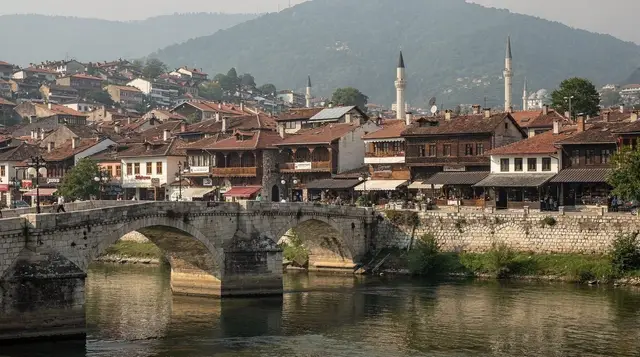
The cafés clustered around the Sebilj fountain and along the Kazandžiluk copper-working lane are the most reliable places to find the coffee brewed to order rather than poured from a jug kept warm behind the counter. A menu that lists bosanska kafa as its own item, separate from espresso and cappuccino, and tables where people are clearly settled in rather than passing through, are both good signs. A café that serves it in a cup that has clearly come straight from an espresso machine, foam and all, is not serving the traditional version, whatever the menu calls it.
Several guided options in the old town build the coffee stop into a longer walk rather than leaving it as a solo errand:
an old town walk pairing Bosnian coffee and baklava with panoramic viewpoints covers a sit-down coffee alongside a wider look at the city from above, and
a hike through Sarajevo’s traditional mahala neighbourhoods takes the ritual out of the tourist core and into residential hillside streets where the same coffee is served without a menu translated into English.
For a wider view of the historic streets around the fountain, the Ferhadija Austro-Hungarian walk picks up where the Ottoman-era lanes of Baščaršija end and the later 19th-century boulevard begins — a useful contrast for understanding why the old town’s coffee culture looks the way it does, layered over more than one imperial period.
What it costs, and what to tip
A single serving of bosanska kafa with lokum and sugar runs 2 to 3 KM in a traditional café, closer to 3 KM in the more visited spots directly on Baščaršija’s main lanes and nearer 2 KM a few streets back. Espresso and cappuccino sit in a similar range, 2 to 3.50 KM depending on the café. None of this includes a service charge; rounding the bill up, or leaving roughly 10 percent in a sit-down café, is the local norm rather than an obligation. Sarajevo overall runs noticeably cheaper than Croatia across the border, and coffee is one of the clearest examples of that gap.
Cards are accepted in most cafés in the city centre, but carrying a handful of KM in coins and small notes avoids the awkwardness of a card machine for a 2 KM cup — some smaller, more traditional places still expect cash only.
Buying a džezva and coffee to take home
The copper workshops along Kazandžiluk sell hand-hammered džezva sets, usually with a matching fildžan and small tray, alongside machine-stamped versions that look similar but cost less and are worth less. Asking directly which is which is a normal question, not a rude one, and prices vary accordingly. Vacuum-packed bags of finely ground Bosnian coffee, sold by local roasters rather than international brands, are the other half of bringing the ritual home — though replicating the sand-brewing method without a proper džezva and some practice takes a few attempts to get right, which is exactly what the hands-on workshop option above is built to shortcut.
A quick guide to Bosnian coffee etiquette
- Sit down. It is not sold to walk with, and asking for it to go will usually be met with a gentle no rather than a paper cup.
- Let the grounds settle before drinking, and stop two-thirds of the way down rather than finishing the cup to the sediment.
- Bite the sugar cube rather than stirring it in, if trying the traditional version once — though stirring it is a completely normal alternative.
- Expect the sitting to take a while. Nobody will rush a table over one small cup.
- Use bosanska kafa or Bosnian coffee, not Turkish coffee, when ordering or talking about it locally; the method is close but the name matters here.
- Tip by rounding up or adding roughly 10 percent, the same as anywhere else in the city.
For a broader sense of the vocabulary and small customs that make ordering anything in Sarajevo smoother, the Bosnian phrases for visitors guide and the Sarajevo tourist traps page both cover ground this page does not, and the Sarajevo breakfast guide sets out where a morning coffee fits alongside food rather than on its own. Anyone planning a short first visit around the old town can slot a proper sit-down coffee into the Sarajevo in one day guide or the weekend break itinerary without much trouble — the hard part is only remembering not to rush it.
Bosnian coffee ritual: frequently raised questions
What is bosanska kafa and how is it different from Turkish coffee?
Both start from the same very fine grind and are simmered in a small pot rather than filtered. Bosnian coffee is traditionally simmered longer over hot sand or embers, poured into the cup without straining so the grounds settle at the bottom, and served with a lump of sugar on the side to bite rather than a spoonful stirred in, plus a piece of rahat lokum. The brewing pot is called a džezva in Bosnia; calling the drink Turkish coffee in front of a Sarajevo host is a small but real misstep.
How much does Bosnian coffee cost in Sarajevo?
In a traditional café in Baščaršija, expect to pay around 2 to 3 KM (roughly 1 to 1.50 EUR) for a full serving with rahat lokum and sugar. An espresso, the drink most working Sarajevans reach for on a weekday morning, is slightly cheaper at 2 to 2.50 KM. Neither price includes a service charge; rounding up is normal.
What comes with a cup of Bosnian coffee?
A copper džezva with the remaining coffee, a small fildžan cup, a piece of rahat lokum (a soft, sugar-dusted sweet, usually rose or plain), and a single sugar cube served separately rather than dissolved in the cup. The custom is to bite a corner of the sugar cube and sip the coffee through it, though stirring the sugar in is not a mistake anyone will correct you on.
Is it rude to order Bosnian coffee to go?
Most traditional cafés in Baščaršija do not offer it to go at all, because the whole point of the drink is the unfiltered grounds settling while you sit, and the slow finish once you reach the last third of the cup. Espresso and cappuccino travel fine in a paper cup; bosanska kafa, by design, does not.
What’s the difference between Bosnian coffee and espresso in Sarajevo?
Espresso is what most Sarajevans under 40 drink on a weekday, standing at a counter or between errands, and it costs a touch less. Bosanska kafa is slower and more deliberate: it takes several minutes to brew, is never rushed, and functions as a social occasion rather than a caffeine stop. Cafés in the old town serve both; which one a local orders says something about whether they are working or meeting someone.
How long does a Bosnian coffee sitting usually last?
A single cup of bosanska kafa, unhurried, easily stretches to thirty or forty minutes once you count the brewing, the settling, and the conversation around it. Among Sarajevans catching up with friends or family, a sitting of an hour is completely normal and nobody will hurry you out for ordering only one cup.
Where in Baščaršija can I try the full ritual?
Cafés around the Sebilj fountain and along the Kazandžiluk copper-working lane serve it in the traditional way, in a džezva set brewed to order rather than poured from a jug. Look for a menu that lists bosanska kafa separately from espresso and cappuccino, and for other tables sitting for a while rather than turning over quickly.
Can I buy a džezva and coffee to bring home?
Yes. Copper džezva sets, often sold with a matching fildžan and tray, are one of the most common souvenirs in the Kazandžiluk workshops in Baščaršija, alongside vacuum-packed bags of finely ground Bosnian coffee from local roasters. A hand-hammered copper set costs more than a machine-stamped one; asking which is which is a fair question to put to the seller.
Sarajevo food & drink tours on GetYourGuide
Verified deep-linked GetYourGuide tours. Book through these links and we earn a small commission at no cost to you.
GetYourGuide does not provide a product photo for this activity — the image shows the meeting point, photographed by us.