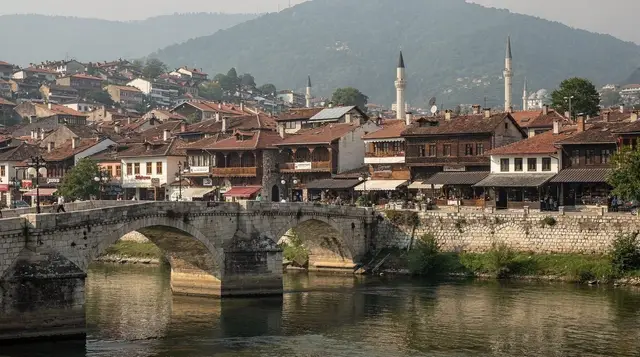
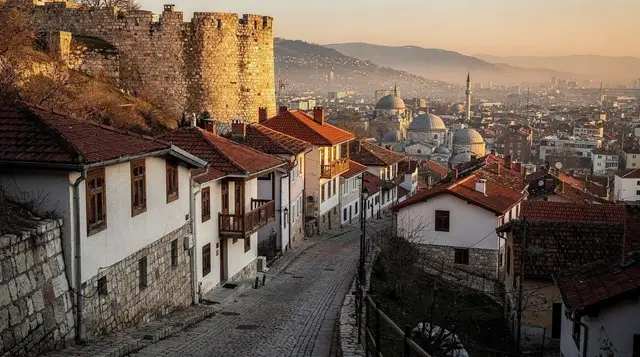
Sarajevo free walking tours: what to expect
Are Sarajevo's free walking tours actually free?
They're tip-based, not free: guides work for whatever you give them, and 10-15 KM per person is the going rate. Most run 2 to 2.5 hours from the Sebilj and cover the Ottoman old town and Austro-Hungarian centre. They rarely include the Tunnel of Hope, which sits outside the walkable centre and is usually sold as a separate paid tour.
How the free walking tour format actually works in Sarajevo
“Free” is doing a specific job in that name. Nobody working these tours is a volunteer: the guide’s entire income for that walk comes from tips handed over at the end, so “free” means “pay what you think it was worth,” not “no cost.” Locally and among the companies that run them, 10-15 KM per person (roughly 5-7.50 EUR) is treated as the floor, not a suggestion you can ignore. If a guide spent 2.5 hours walking you through Baščaršija and Ferhadija and answered every question well, that floor is the wrong number.
The mechanics are simple and consistent across operators. You turn up at the meeting point — almost always the Sebilj, the wooden Ottoman-style fountain that sits at the centre of Baščaršija and is the one landmark every visitor finds without help — a few minutes before the stated start time. Guides usually carry a coloured umbrella or a sign with the company name so you can spot them in the crowd. There’s rarely a booking system: you just show up. A handful of newer operators have started offering a free online reservation to cap group size, which is worth doing in July and August when a single walk can swell past 25 people.
Groups run daily, typically with a morning departure around 10am and an afternoon one around 2 or 3pm, seven days a week in season, and fewer options in the depths of winter. Multiple companies operate the same format from the same spot, so if one guide’s group looks too large, it’s worth waiting ten minutes to see who else is gathering nearby.
What a typical free tour actually covers
The route is built for two things: it has to be walkable in about two hours, and it has to start and end near Baščaršija so people can drift into a café afterwards. That geography shapes the content more than any curatorial choice does.
Expect the tour to move through the Ottoman old town first — Baščaršija’s lanes, the coppersmith workshops of the Kazandžiluk, the Gazi Husrev-bey Mosque courtyard (you won’t usually go inside; that’s a separate, unhurried visit worth doing on your own, covered in our mosque etiquette guide) — before crossing into the Austro-Hungarian centre along Ferhadija, where the architecture visibly changes from Ottoman low-rise to grand 19th-century facades within about 100 metres. That seam, sometimes marked on the pavement, is one of the most photographed small details in the city and every guide stops there.
From there, most routes take in the Vijećnica from the outside (it’s ticketed inside, so unless the tour explicitly says otherwise, you’re seeing the building, not the library), the Latin Bridge where Gavrilo Princip shot Archduke Franz Ferdinand in June 1914, and usually a stretch of the Miljacka riverbank. A good guide will point out at least one or two “Sarajevo roses” — the resin-filled mortar scars in the pavement — and explain what they mark without turning it into a photo stop. Some routes fold in a synagogue or church exterior to gesture at the city’s four-faiths layout, covered properly in our four faiths walk.
What you get, in short, is an orientation walk: a first pass over the two historic centres that answers “what am I looking at” and “how does this city fit together,” with the siege and the 1990s war present as commentary along the way rather than the tour’s main subject.
What free tours almost never include
Three things get left off the standard route consistently enough that it’s worth planning around, not discovering on the day.
The Tunnel of Hope. The 800-metre wartime tunnel under the old airport runway sits in Butmir, near Sarajevo Airport — a taxi ride or a bus with a transfer from the centre, not a walkable add-on to a Baščaršija loop. Every free walking tour company we’ve checked treats it as a separate, paid product: either a dedicated siege-focused walk that includes transport out to Butmir, or a half-day combination with Sniper Alley and the Yellow Fortress. If the tunnel matters to your trip, book that separately — see our visiting guide for what the ~20 metres of open tunnel and small museum actually involve.
Interior visits. Free tours are built around what’s visible from the street. The Vijećnica’s rebuilt reading room, the mosque’s prayer hall, the National Museum’s Haggadah — none of that fits a two-hour outdoor loop with a group that didn’t pay for tickets. You’ll get the outside and the story; the inside is on you, afterwards or on another day.
Sustained depth on the siege. A free tour will mention 1992-96, point out a rose or two, and probably gesture towards where Sniper Alley runs, but it isn’t built to carry that weight properly. If the siege is the reason you’re in Sarajevo, a dedicated walk gives it the time and sourcing it needs rather than three minutes between the bridge and the next café stop — see our siege tour guide and Sniper Alley walking guide.
Free walking tour vs. what else is on offer
| Format | Typical length | Typical cost | Covers Tunnel of Hope | Group size |
|---|---|---|---|---|
| Free (tip-based) old town walk | 2-2.5 hours | 10-15 KM tip/person | Almost never | Often 15-30+ in summer |
| Paid small-group history/siege walk | 2-3 hours | roughly 25-45 KM/person | Sometimes, as an add-on | Usually capped at 10-15 |
| Private guided walk | Flexible | Higher, per group not per person | Yes, if requested | Your group only |
| Self-guided with a written route | As long as you want | Free (no tip needed) | No | Solo or your own group |
A tip-based tour’s real advantage is flexibility and cost: no booking, no fixed price, easy to join on a whim your first morning in the city. Its real weakness is variance — you can’t know in advance whether you’re getting a trained history graduate or someone reciting a memorised script with a joke bolted on every ten minutes. A paid small-group tour trades that uncertainty for a fixed price and, generally, a vetted guide and a smaller crowd where you can actually hear them and ask a question without shouting.
For a first orientation walk built specifically around the siege rather than the old town, our featured option below runs as a proper guided tour rather than a tip-based pickup group.
a guided walk built specifically around Sarajevo’s siege yearsIf you’d rather have the general old-town overview but with a fixed price and smaller group than a tip-based tour typically gathers, this covers similar ground under a booked format.
a booked walking tour through Sarajevo’s Ottoman and Austro-Hungarian centreHow to tell a good guide from a weak one, before you commit two hours
Free walking tour quality in Sarajevo swings hard between operators and, within the same operator, between individual guides — more than almost any other city we cover. A few concrete tells, checkable in the first five minutes:
- They answer a specific question with a specific answer, not a redirect back to the script. Ask when the Sebilj was built (1891, replacing an earlier fountain) or what “burek” actually means in Bosnia (only the meat one — everything else has its own name) and see whether the answer is precise or vague.
- They set expectations at the start: route, rough finish time, whether there are steps or a long uphill stretch, and where the group will end up. A guide who skips this is usually also the one who runs 40 minutes over with no warning.
- Group size stays manageable. If more than 25-30 people gather around one guide with no second guide splitting the group, plan for a lot of standing at the back and less chance to ask anything.
- They’re honest about what they don’t cover. A guide who volunteers “we won’t get to the tunnel today, that’s a separate tour” up front is more trustworthy than one who lets you assume it’s included and only clarifies when you ask at the end.
- The history holds up under a follow-up question. Sarajevo’s own history is contested in places — the 1990s war especially — and a guide who flattens it into a single simple narrative, or who can’t handle a follow-up without getting defensive, is worth downgrading against one who’s comfortable saying “that’s disputed” or “it depends who you ask.”
None of this requires research beforehand. It’s observable in the first stretch of the walk, while you’re still near Baščaršija’s cafés and can peel off with nothing lost if it’s clearly not working.
If the general old-town format doesn’t fit — say you’d rather walk the residential mahala neighbourhoods above the centre than the tourist core — a themed alternative can be a better use of the same two hours.
a walk through Sarajevo’s traditional hillside mahala neighbourhoods, away from the main tourist routePractical logistics
Timing: Arrive 5-10 minutes before the stated start at the Sebilj. Tours run rain or shine in Sarajevo — bring a layer, since the route crosses open squares with no shade and the Miljacka riverbank can be breezy even in summer.
What to bring: Comfortable shoes (Baščaršija’s stone lanes are uneven), cash in KM for the tip (guides can’t usually take cards), and water in summer — there’s no scheduled stop for it.
Language: English-language tours are the default and run most frequently; some companies also offer German, Italian or Spanish groups on request or at set times, worth checking the specific operator’s schedule if you need a language other than English.
Photography: Fine throughout the standard route. The exception is inside any religious building you’re shown from the outside — if you later go in on your own, check posted rules before photographing worshippers or prayer areas.
Combining with other plans: A free tour pairs naturally with the first morning of a one-day itinerary in Sarajevo or the sarajevo-1-day plan: do the walk from 10am to around noon, then use the orientation to choose your own afternoon — a mosque visit, the Vijećnica’s interior, or a coffee break in Baščaršija with a clearer sense of the layout than a map alone gives you.
When a paid or private option makes more sense
A tip-based tour is the right call for a first-morning overview with no planning required. It’s the wrong call if any of these apply: you specifically want the Tunnel of Hope covered in the same outing (book a combined siege tour instead), you’re travelling with a small group and want a guide’s full attention rather than sharing them with 25 strangers, you want a guaranteed vetted guide rather than whoever happens to be rostered that morning, or you’re short on time and can’t afford the risk of a mediocre two hours. For a broader comparison of when independent exploring beats any guided format at all, see our guided tour vs. independent Bosnia piece.
If cycling appeals more than walking and you want the Tunnel of Hope folded in rather than bolted on separately, this covers both in one booking.
a guided bike route through the city that ends with entry to the Tunnel of HopeNone of this makes the tip-based free walk a bad choice — it’s genuinely a reasonable way to spend a first Sarajevo morning, and most visitors who do one don’t regret it. It just isn’t the whole city, and it was never built to be. Treat it as the orientation lap, not the main event, and plan the Tunnel of Hope, the siege sites, and the museum interiors as their own outings once you know your way around.
Common questions about Sarajevo’s free walking tours
Are Sarajevo’s free walking tours really free?
No — they’re tip-based. The guide is paid entirely from what participants give at the end, so treat 10-15 KM per person as the expected minimum, more if the tour ran long or the guide was good.
Where do free walking tours in Sarajevo start?
Almost all of them meet at the Sebilj, the wooden fountain in the middle of Baščaršija. It’s the easiest landmark in the city to find and the default rendezvous for every company running this format.
How long does a free walking tour of Sarajevo last?
Budget 2 to 2.5 hours. Some groups run shorter in bad weather or with a small group, and a chatty guide with an engaged group can push towards 3 hours.
Do free walking tours include the Tunnel of Hope?
Almost never. The tunnel is in Butmir, near the airport, well outside walking distance of Baščaršija, so it’s sold as a separate paid tour, usually combined with a siege-focused walk or a half-day trip that also stops at Sniper Alley and the Yellow Fortress.
Do I need to book a free walking tour in advance?
Most don’t take bookings — you just show up at the meeting point a few minutes early. A few companies now ask for a free online reservation to manage group size, so check the specific operator’s page if you want to be sure of a spot.
Is a paid tour better than a free one in Sarajevo?
Not automatically — it depends on the guide, not the price tag. A paid small-group tour usually guarantees a trained, vetted guide and a fixed group size; a free tour can be just as good with the right guide, or thin and rushed with the wrong one.
What should I tip on a Sarajevo free walking tour?
10-15 KM (about 5-7.50 EUR) per person is the standard range locals and guides themselves quote. Tip more for a guide who clearly went beyond the script, and don’t feel obliged to match a suggested amount you weren’t given value for.
City sightseeing tours on GetYourGuide
Verified deep-linked GetYourGuide tours. Book through these links and we earn a small commission at no cost to you.
GetYourGuide does not provide a product photo for this activity — the image shows the meeting point, photographed by us.