Visoko and the 'Bosnian pyramids': a day trip from Sarajevo
Are the Visoko pyramids real, and is the trip worth it?
No: geologists and archaeologists agree Visočica and its neighbouring hills are natural formations, and Bosnia's official archaeological institutions have publicly rejected the pyramid claim. The trip is still worth it as a curiosity, at the Ravne tunnels and the hillside park, and for Visoko's genuine history as the medieval capital of Bosnia.
What Visoko actually is, before you book anything
Start with the fact, not the marketing. Visočica, the hill above Visoko that gave the “Bosnian pyramid of the sun” its name, is a natural formation. Geologists who have surveyed it, from Bosnian institutions to international teams that visited when the claims first spread in 2005 and 2006, describe ordinary tectonic uplift and erosion, the same processes that shaped every other hill in this valley.
Bosnia’s National Museum, its Centre for Islamic Architecture, and the Archaeological Society of Bosnia and Herzegovina have all issued public statements rejecting the pyramid theory. This isn’t a live scientific debate with two respectable sides. It’s a closed question, and treating it as an open one does a disservice to the country’s genuine archaeology.
None of that means the trip is pointless. Visoko draws a steady stream of visitors, some convinced, most simply curious, and what’s grown up around the theory, the tunnels, the hillside park, the gift shops, is now a real Bosnian phenomenon in its own right, worth seeing precisely as that: a odd, sincere, locally run curiosity, about 30 kilometres and 40 minutes from Sarajevo. Layer onto it the town’s genuine and much older history as a seat of the medieval Bosnian kingdom, and a half-day trip earns its place even for a sceptical visitor.
If you are still deciding how Visoko fits into a longer stay, the Sarajevo first-time guide and the Visoko destination page give the wider picture, and the Bosnian pyramids page sets out what the site itself claims. Read together they help you decide how much of a day this trip deserves.
The Ravne tunnels
The most-visited part of the complex is the Ravne tunnel network, on the edge of Visoko. Discovered as pre-existing underground passages and expanded by the foundation behind the pyramid theory, a stretch of roughly 300 metres is open to walk through on a guided visit, wearing a hard hat supplied at the entrance. Guides describe the tunnels as pre-Illyrian construction and talk about measured “energy” at certain points; you’ll see quartz blocks placed along the route and hear claims about their properties. Whatever you make of the interpretation, the tunnels themselves are real, cool, low-ceilinged in places, and mildly claustrophobic, and the visit takes about 45 minutes to an hour including the introductory talk.
Bring a light jacket even in summer; the tunnels stay cool year-round. Trainers or hiking shoes are sensible, the floor is uneven gravel and packed earth. Entry is charged on site, payable in KM only, cards are not reliable this far outside Sarajevo.
Visočica hill and the park
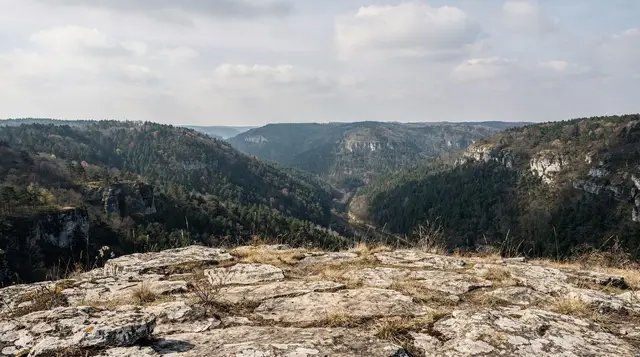
The hill itself, Visočica, sits above the town and has been developed into a small visitor park: paths up through the trees, viewing platforms, information boards laying out the pyramid claims, and stalls selling crystals, books and Visoko pyramid merchandise. There’s no excavation to see at the summit, no exposed stonework, just the walk, the views over the Bosna valley, and the atmosphere of a site that has become part local pilgrimage, part roadside attraction. Allow 45 minutes to an hour if you walk up and back at an easy pace; longer if you linger for the view or a coffee at the stalls near the base.
Combined, the tunnels and the hill make for a two to three hour visit, comfortably done as a half-day from Sarajevo with time either side for the drive and a look at the town itself.
a half-day trip from Sarajevo covering both the Ravne tunnels and the Visočica hillside park, with transport and an English-speaking guide, is the simplest way to do this without a car, and it saves the trouble of coordinating a taxi at the far end. For visitors who want the fuller version of the theory laid out, guided walking and talks included, a longer guided exploration of the tunnels and hill goes deeper into the claims, aimed at people already interested in the theory rather than sceptics looking for a quick look.
A word on attitude, because it shapes the whole visit. Many people arrive either ready to be convinced or ready to be scornful, and both moods spoil the day. The more rewarding approach is to be a curious observer: ask the guide what they base a claim on, notice which statements are offered as belief and which as measurement, and keep your own judgement. The people who run the site are often sincere, and a polite question gets a better conversation than a challenge. If you have read the Bosnian war context for visitors, you will also understand why a story about ancient, peaceful Bosnian greatness has such emotional pull for some locals in a country that has lived through so much.
The history that actually is real: medieval Visoki
What tends to get lost under the pyramid coverage is that Visoko has genuine and well-documented history, and it’s arguably more interesting than the modern claims. Under its old name, Visoki, the town was a seat of the medieval Kingdom of Bosnia from the 12th century onward, tied closely to the ruling Kotromanić dynasty.
The church of Mile, near the village of Arnautovići just outside modern Visoko, is where several Bosnian rulers, including Bosnia’s first king, Tvrtko I, were crowned in the 14th century. Little remains standing today, mostly foundations and archaeological traces, but the site anchors Visoko’s real claim to significance: this was, briefly, close to the centre of an independent Bosnian state, centuries before the Ottoman period that shapes most of what visitors see in Sarajevo.
That thread continues a little further out. The kingdom’s later and more heavily fortified royal seat, Bobovac, sits in the hills near Kraljeva Sutjeska and the town of Vareš, north-east of Visoko. Bobovac was the primary residence of Bosnian kings through much of the 14th and 15th centuries, until it fell to Ottoman forces in 1463, a date that effectively marks the end of the independent medieval kingdom. The ruins, a broken curtain wall and tower remnants on a defensible ridge, are far less visited than Visoko’s tunnels, reached by a walking path from Kraljeva Sutjeska, and pair naturally with a Visoko visit for anyone drawn to medieval Bosnian history rather than the pyramid claims.
a guided walk to the Bobovac ruins and the royal paths around Kraljeva Sutjeska extends the day into that older, verifiable history, and a full day trip from Sarajevo covering Kraljeva Sutjeska and Bobovac is the way to do both Visoko and Bobovac without doubling back to Sarajevo in between, since Kraljeva Sutjeska sits roughly on the way.
If the medieval thread appeals, the Kraljeva Sutjeska destination page is the natural next read, and the Bosnia history week itinerary shows where a kingdom-focused day sits in a longer route. Travellers who want to see how Visoko compares with the rest of the country’s heritage can also look at Travnik and Jajce, both of which carry medieval and Ottoman layers that Visoko only hints at.
Getting there
By car, Visoko is a straightforward 30-kilometre, 40-minute drive north of Sarajevo on the M5, mostly following the Bosna river valley. Parking near the town centre is easy and free on most streets; the tunnel entrance and the base of Visočica are both a short drive or a 20 to 25 minute walk from the centre, well signposted once you’re in town.
Without a car, regular buses run from Sarajevo’s main bus station (the one on the Federation side, not Istočno Sarajevo) to Visoko throughout the day, journey time around 45 minutes. From the Visoko bus stop, it’s a walkable 20 to 25 minutes to the tunnel entrance, or a short, cheap taxi ride if you’d rather not do it twice in the heat.
| Option | Time from Sarajevo | Notes |
|---|---|---|
| Self-drive | ~40 min | M5 north, easy free parking in town |
| Public bus | ~45 min | Frequent departures, then a 20–25 min walk to the sites |
| Guided half-day tour | ~40 min each way | Transport and commentary included, no logistics |
Which option suits you depends mostly on how much you want to organise. Drivers get the most freedom, and the driving in Bosnia guide and the car rental guide cover the practical side. If you would rather not drive, the buses in Bosnia guide and the day trips without a car guide explain how the public network works, and the guided tour versus independent travel comparison helps you weigh a tour against doing it yourself. Taxis are another option, covered in the taxis in Sarajevo guide.
Combining Visoko with the rest of the day
Visoko alone fills a comfortable half-day, tunnels and hill, out and back, done by early afternoon if you leave Sarajevo in the morning. That leaves two honest ways to extend it. One is the medieval-history route above, folding in Kraljeva Sutjeska and Bobovac for a fuller day centred on the Bosnian kingdom rather than the pyramid claims. The other is simply to treat Visoko as a short, self-contained detour on the way to somewhere else, Travnik and Jajce lie further north along a similar route and make for a longer, separate day trip rather than a single combined one; trying to fit both into one day from Sarajevo is a long day on the road for not much time at either.
If you’re building out a wider itinerary around Sarajevo’s day trips, it’s worth reading through the fuller list before committing a day to Visoko specifically, since it competes for time with better-established options like Mostar and Konjic.
For a sense of the alternatives, the best day trips from Sarajevo list and the family day trips guide put Visoko next to the other options. The Mostar day trip and the Konjic day trip are the usual rivals for the same free day, and the Sarajevo trip planning guide is useful if you are still fitting the pieces together. Anyone who prefers nature to curiosities might choose the Vranduk fortress area or the Zenica side of the valley instead, while the Sarajevo in two days itinerary shows how to keep the city itself from being squeezed out.
Practicalities
Visoko town itself is unremarkable, a working Bosnian town rather than a tourist centre, so plan to eat either before you leave Sarajevo or in one of the simple restaurants near the main square; don’t expect much beyond that. Cash in KM is essential at both the tunnels and the hillside stalls; card acceptance this far outside Sarajevo and Mostar is inconsistent at best. Wear shoes you don’t mind getting a little dusty, and bring a layer for the tunnels even if the day above ground is warm.
If you’re travelling with children, the tunnels can feel long and repetitive for younger kids given the low light and the pace of the guided talk; the hillside park, with its open paths and views, tends to hold their attention better. Neither site involves serious walking or elevation, so it’s an easy add for most fitness levels, including a first day trip after arriving in Sarajevo.
A few habits make the day smoother. Start in the morning so you are not rushing the tunnels, keep your phone charged for photos on the hill, and carry water, since the stalls are not a dependable source. Check the money and currency guide before you set out so you have small notes in the local currency, and the Sarajevo packing list if you are unsure what to bring for a day that mixes cool tunnels and open hillside. Whatever you believe about the pyramids, treat the people you meet respectfully, as the visiting Sarajevo respectfully guide suggests, and leave time to finish the day back in the city with a proper meal, perhaps from the Sarajevo food guide.
Frequently asked questions about visiting Visoko
Are the Visoko pyramids scientifically real?
No. The international geological and archaeological community is unanimous that Visočica hill and its neighbours are natural formations, and Bosnia’s National Museum and Centre for Islamic Architecture have both publicly criticised the pyramid project. Treat what you see as a cultural phenomenon, not a discovery.
What do you actually see on a visit?
A roughly 300-metre stretch of the hand-dug Ravne tunnel network, presented with claims about energy and ancient construction, and a small hillside park on Visočica with viewing platforms, stalls and information boards. There is no excavated pyramid to look at.
How far is Visoko from Sarajevo and how do I get there?
About 30 kilometres, roughly 40 minutes by car. Buses run regularly from Sarajevo’s main bus station to Visoko town; the tunnel and hill sites are a short taxi ride or a 20 to 25 minute walk from the town centre.
Is Visoko worth visiting if I don’t believe in the pyramid theory?
Yes, for a different reason: Visoko, known historically as Visoki, was a seat of the medieval Bosnian kingdom, tied to the Kotromanić dynasty and the coronation church of Mile. That history is solid and underexplored by most visitors who come only for the tunnels.
Can I combine Visoko with other medieval Bosnian sites?
Yes. Several tours pair Visoko with Bobovac, the fortified royal seat near Kraljeva Sutjeska and Vareš, which was the more heavily defended residence of Bosnia’s later kings. It extends the day but suits anyone who wants the real medieval history alongside the pyramid curiosity.
Do local guides present the pyramid claim as fact?
Many do, since the site was built around the theory and depends on it commercially. Go in with the scientific consensus in mind, listen politely, and treat the visit as folklore and local enterprise rather than archaeology.
Is there an entry fee?
Yes, a modest entrance charge applies at both the Ravne tunnel complex and the Visočica hillside park, payable in KM on site. Card machines are not reliable this far from Sarajevo, so carry cash.
Adventure & outdoor activities on GetYourGuide
Verified deep-linked GetYourGuide tours. Book through these links and we earn a small commission at no cost to you.
GetYourGuide does not provide a product photo for this activity — the image shows the meeting point, photographed by us.