The best cevapi in Sarajevo, and where to skip
Where do you get the best cevapi in Sarajevo?
In and around Baščaršija, where a plate of ten small grilled sausages in a somun with raw onion and kajmak costs 8 to 12 KM. Petica and Hodžić currently give the most consistent quality for the price; Zeljo is still good but busier, pricier and more tourist-facing than its reputation suggests.
Ten to a plate, not sold by the piece
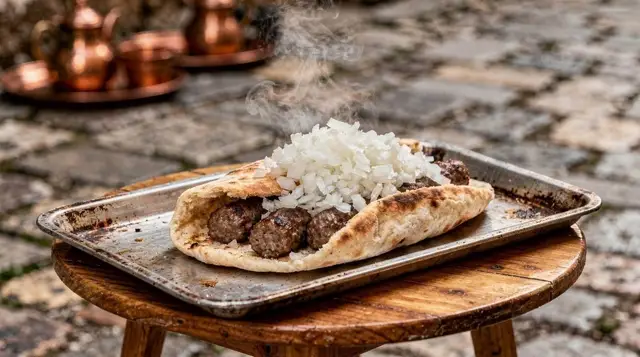
Order cevapi anywhere else in the former Yugoslavia and a waiter will likely ask how many pieces you want, then bring them open on a plate with a smear of ajvar. In Baščaršija, that question does not come up. Sarajevo serves cevapi in a fixed unit: ten small grilled sausages of minced beef, sometimes beef and lamb, tucked into a split somun — a soft, slightly domed flatbread — with a pile of raw chopped onion and a spoon of kajmak, a rich, faintly sour clotted cream, set on the side or already inside the bread. You close the somun over the meat, fold in the onion and kajmak yourself, and eat it with your hands.
That single serving style is worth understanding before anything else, because it explains both the price and the menu. A cevabdžinica in Baščaršija typically sells exactly one dish, in one size, done one way. There is rarely a small or large plate, rarely a choice of sauce, and rarely much else on the menu beyond a yoghurt drink and Bosnian coffee. What varies between addresses is the quality of the meat, the grill technique, the freshness of the somun, and increasingly, given how much of Baščaršija now caters to tour groups rather than locals on a lunch break, whether the kitchen still cares.
This page sticks to that one comparison: which cevabdžinica in and immediately around Baščaršija is worth the queue in 2026, and which is coasting on a name. For the pastry side of Bosnian street food, see the separate burek guide — burek and cevapi are different dishes, different meals, and in Sarajevo usually different addresses entirely. For a wider view of Bosnian cooking beyond the grill, the general Sarajevo food guide covers everything from begova čorba to tufahija.
The cevabdžinice of Baščaršija, ranked honestly
Four names come up most often when people ask where to eat cevapi in Sarajevo: Zeljo, in two separate locations; Petica; Hodžić; and Mrkva. All four sit within a few minutes’ walk of the Sebilj fountain, the usual landmark for meeting up before or after eating. None of them takes reservations, and none needs to — you queue, you sit, you eat, you leave, usually inside twenty minutes once seated.
| Cevabdžinica | Plate of ten | Typical wait, weekend lunch | Honest verdict |
|---|---|---|---|
| Zeljo I and Zeljo II | 10-12 KM | 15-25 minutes | Still solid, but busier and more tourist-facing than its reputation suggests; quality has evened out toward good rather than best |
| Petica | 8-10 KM | 5-15 minutes | The most consistently well-grilled plate right now, less known to visitors than Zeljo |
| Hodžić | 9-11 KM | 5-15 minutes | Close behind Petica, slightly smokier grill, good somun |
| Mrkva | 8-10 KM | rarely more than 10 minutes | Reliable, plainer, a fair choice when the others are full |
Prices move a little with the season and with how many tour groups are in town on a given day; treat the table as the current order of magnitude rather than a fixed menu.
Zeljo: the famous one, and why that is not the whole story
Zeljo has two locations a short walk apart in Baščaršija, and for years it was the answer most Sarajevans gave when asked where to eat cevapi. That reputation is not undeserved — the grill technique is sound, the somun is baked properly, and on a good day the plate is genuinely enjoyable. But it is fair to say plainly what has changed: Zeljo now processes a very high volume of visitors, table turnover is fast and a little brusque, the queue is the longest of the four by a clear margin, and the price sits at the top of the range. None of that makes it bad. It makes it the safe, well-known choice rather than the best one, and it is worth knowing that before standing in a twenty-minute line on the strength of a name alone.
Petica and Hodžić: the better plate, shorter wait
Petica, tucked just off the main bazaar streets, currently turns out the most consistent grill of the group: cevapi with a good char, not dried out, served in a somun that is warm rather than merely room temperature. Hodžić, close by, is a near-equal — a touch smokier, equally fresh bread — and between the two, whichever has the shorter queue on the day is the right call. Both are known locally rather than mainly to visitors, which shows in the pace of service and, most days, in the wait.
Mrkva: the fallback that rarely disappoints
Mrkva does not draw the same lines as the other three, and the plate is plainer for it — good cevapi, competent somun, nothing that stands out and nothing to complain about. It is the sensible choice at 13:00 on a Saturday when the queues elsewhere have crossed twenty minutes and lunch has a deadline.
What actually comes on the plate
A standard order is ten cevapi, one somun, a portion of raw onion, and a spoon of kajmak, for 8 to 12 KM depending on the address. Ordering “a plate” (jedna porcija) gets you exactly this; asking for extra somun or a double portion of kajmak usually adds 1 to 3 KM. Side dishes are minimal to nonexistent — this is not a menu built around variety.
The standard drink alongside is ayran or a similar yoghurt drink, which cuts the richness of the kajmak better than a soft drink; Sarajevsko beer is common too, though many cevabdžinice are simple enough that they do not serve alcohol at all, and asking first avoids a wasted trip to the counter. Bosnian coffee, thick and unfiltered, served in a džezva with a cube of sugar and sometimes a piece of rahat lokum, is the way locals close the meal — for the ritual around it, see the separate Bosnian coffee guide, since it deserves its own explanation and is not something to rush through at the cevapi table.
Vegetarians are not well served here, and it is more useful to say that plainly than to suggest a workaround that does not really exist: the cevabdžinice of Baščaršija are built entirely around the grill, and few keep a plant-based alternative on hand. The vegetarian and vegan Sarajevo guide is the better starting point for that trip.
Sarajevo service versus the rest of the Balkans
It is worth being specific about what makes the Sarajevo style different, because visitors arriving from Belgrade, Zagreb or the Adriatic coast sometimes expect the dish they already know. Elsewhere in the former Yugoslavia, cevapi is commonly sold by the piece — five, ten, fifteen, whatever is ordered — laid out on an open plate with ajvar, a cream cheese called kajmak or kaymak served separately, and flatbread on the side rather than wrapped around the meat.
Sarajevo fixes the count at ten, wraps everything inside the somun, and expects the diner to do the folding and mixing themselves at the table rather than eating each element apart. Neither approach is more authentic than the other — they are simply two regional conventions for the same core dish, and Sarajevo’s is the one to expect here.
Timing: when the queues actually form
Cevapi is treated locally as a midday meal, and the queues follow that pattern closely. Saturday and Sunday between roughly 12:00 and 14:00 are the busiest window at Petica, Hodžić and especially Zeljo, with waits that can run fifteen to twenty-five minutes at the door. Weekday lunch, particularly 12:30 to 13:30, sees a shorter version of the same crowd from office workers on a break.
The reliable way around it is to eat before 12:00 or after 14:30, when the same plate arrives within a few minutes of sitting down. Weekday evenings are noticeably quieter than weekday lunch — cevapi is not really treated as a dinner dish by Sarajevans, which is worth knowing if a restaurant elsewhere in the city looks empty at 20:00 while a bakery two streets over is still doing steady business.
Cevapi, burek, and everything else in Baščaršija
It is easy to blur cevapi together with the rest of Baščaršija’s food scene, so it is worth drawing the lines clearly. Burek is a separate dish entirely — a coiled meat-filled pastry, distinct from the cheese, potato and spinach versions that Bosnians call sirnica, krompiruša and zeljanica rather than burek — sold at dedicated bakeries rather than at cevabdžinice, and best eaten as a breakfast or a between-meals snack rather than as lunch.
The full comparison sits in the burek guide. Coffee, sweets like tufahija and baklava, and the broader Bosnian menu of begova čorba, dolma and japrak belong to restaurants, not to the grill houses covered here — the general food guide is the place for those.
For a wider sense of value across the city rather than one dish, the restaurants by budget guide sets cevapi prices against a full range of Sarajevo dining, and the cost of a day in Sarajevo piece works a cevapi lunch into a realistic daily spend. Compared to a sit-down meal at a proper restaurant, cevapi remains one of the cheapest hot lunches in the city — a fact that holds even at Zeljo’s higher end of the range, and one of the reasons the dish has stayed a fixture rather than becoming a tourist-only novelty.
Learning the dish, not just eating it
Watching the grill through the counter window at any of the four addresses above answers most of the how, but a few visitors want more than that. A hands-on Bosnian cooking class in Sarajevo covers cevapi alongside other staples of the home kitchen, with the kind of detail on the meat mix and the grill timing that a five-minute counter order will not give you.
For a more general orientation to Bosnian food culture in the same afternoon as a Baščaršija walk, a guided tour that pairs Vrelo Bosne with a Baščaršija lunch is a reasonable way to combine sightseeing with a properly explained meal rather than a rushed one.
Beyond the food itself, the neighbourhoods that produced this style of cooking are worth a slower look. A walking tour through the old mahala neighbourhoods above the bazaar gives context for why Baščaršija’s food culture developed the way it did, away from the main tourist strip. And if the plan for the evening includes more than kajmak and onion, a rakija tasting is the more traditional way to round off a cevapi lunch than a second coffee — though it is worth doing later in the day rather than immediately before an afternoon of walking.
Where to eat, and where to walk it off
Every address mentioned here sits inside or a few steps from the bazaar itself; the Baščaršija walking guide lays out a route that threads between them without doubling back. If the queue at your first choice runs long, the coppersmith workshops of Kazandžiluk and the stalls around Ferhadija are worth the wait nearby, as is a slow circuit of Markale market a few minutes further on.
For a broader read on what in Baščaršija is worth paying for and what is priced mainly for visitors passing through once, the Sarajevo tourist traps guide is a useful companion to this one — cevapi, at 8 to 12 KM a plate, is one of the rare bazaar purchases that is not on that list.
Finally, for anyone weighing a self-guided crawl between the four cevabdžinice against joining an organised meal, the food tours compared guide sets out what a guided option adds over simply queuing at Petica or Hodžić with this page as a map.
Sarajevo food & drink tours on GetYourGuide
Verified deep-linked GetYourGuide tours. Book through these links and we earn a small commission at no cost to you.
GetYourGuide does not provide a product photo for this activity — the image shows the meeting point, photographed by us.