Sarajevo's parks and playgrounds for families
Where can I take kids to run around in Sarajevo?
Vrelo Bosne in Ilidza is the reliable choice, with a flat 3.5-kilometre avenue for walking, cycling or a horse-drawn fiacre ride to the spring. Wilson Park along the Miljacka works for a shorter riverside stop, and the Trebević cable car reaches open hillside space at 1,164 metres in nine minutes.
A city built around its green edges
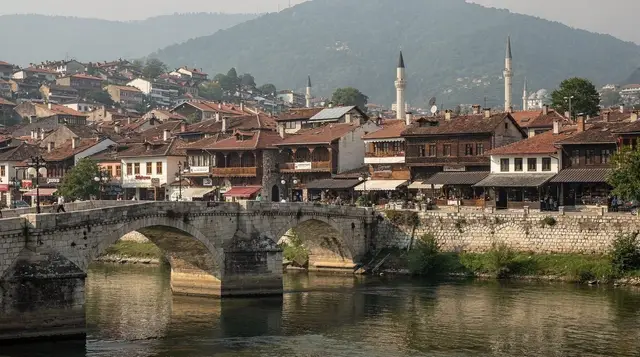
Sarajevo sits at roughly 500 metres in a narrow valley cut by the Miljacka, with mountains rising on three sides. That geography is why the city’s real green space is not concentrated downtown in a single grand park, the way it might be in a flatter capital. It is spread along the river, tucked into hillside terraces above Baščaršija, and waiting at the top of a cable car.
For a parent with an ordinary afternoon to fill rather than a museum itinerary to complete, that geography works in your favour: a tram ride, a short walk, or nine minutes in a cable car cabin each lead to somewhere a child can run, climb, or throw stones in water without you watching a clock. This guide covers only those spaces — urban parks, riverside walks, playgrounds and open hillside — and leaves the museums, the old town’s monuments and the day-trip destinations to other guides linked at the end.
Vrelo Bosne and the Velika aleja: the reliable afternoon
If you take a child to only one green space in Sarajevo, make it Vrelo Bosne, the spring of the Bosna river at Ilidza, on the western edge of the city. The tram runs to Ilidza’s terminus, from which it is a short walk to the start of the Velika aleja, a 3.5-kilometre avenue of mature plane trees planted in the Austro-Hungarian period, dead flat and closed to cars. Families walk it, cycle it on hired bikes, or take one of the horse-drawn fiacres that wait at the entrance and cover the distance in about twenty unhurried minutes.
At the far end, the springs themselves surface as a scatter of shallow, impossibly clear pools and channels, with wooden footbridges, resident ducks and swans, and enough benches that nobody is fighting over a place to sit. There is a modest gate fee at the entrance to the grounds, payable in KM like everything else outside the largest hotels, and a scatter of cafés along the avenue for the inevitable ice cream stop. Full logistics, opening times and the fiacre fare sit in the separate Vrelo Bosne visiting guide; this page is only concerned with whether it is worth the trip with children, and it is.
a half-day trip out to Vrelo Bosne and the nearby Roman bridge at Stojčevac, guided rather than solo is worth considering if you would rather someone else handle the tram connections and explain what you are looking at along the way, particularly with younger children who tire of walking before the avenue’s far end.
Wilson Park and the riverside promenade
Closer to the centre, Vilsonovo šetalište — usually just called Wilson Park in English — runs along the Miljacka near the National Theatre, a stretch of riverside walkway with mature trees, benches and a small run of play equipment. It is not large and it is not a destination in its own right, but it earns its place on this list as the thing you reach for when a child needs twenty minutes to burn off energy between a museum stop and lunch, without a tram ride either way.
The path is flat and stroller-friendly, well used by local families after school and into the evening, and close enough to Baščaršija and Ferhadija that it slots naturally into a day already built around the old town. Treat it as a pressure valve rather than a plan.
Up to Trebević: a playground with a view
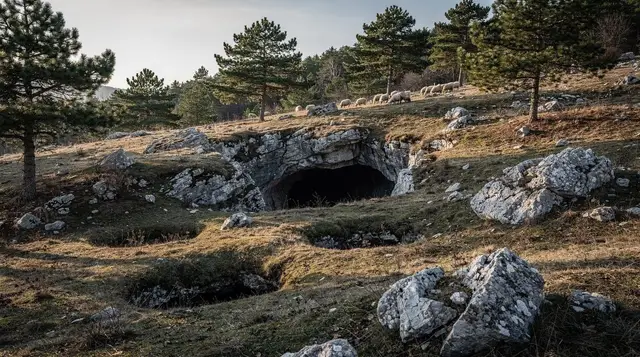
The Trebević cable car reopened in April 2018 after standing derelict since the siege, and it remains the single best piece of infrastructure in the city for a family afternoon that does not involve a museum. The ride from Bistrik station takes about nine minutes and climbs to 1,164 metres, with a return ticket running around 20 KM. What waits at the top is not a manicured park but open hillside — meadow, pine forest, restaurant terraces with views back down over the whole valley, and the famous abandoned bobsleigh track from the 1984 Winter Olympics, its concrete channel now covered in graffiti and open for anyone to walk along.
Children generally love the bobsleigh run as something to explore rather than as a photo backdrop, but the drops on either side are real and unfenced in places, so this is a hold-hands stretch rather than a let-them-run one. Away from the track itself, the grassy slopes and picnic spots around the upper station give younger children room to move without a road or a drop nearby. The full route options and what else sits up there are in the separate Trebević hiking guide and cable car guide; as an outing with children, budget half a day once you include the ride up, a wander, and lunch on one of the terraces.
Hillside pockets: Atmejdan and the two fortresses
Above Baščaršija, on the climb toward the old city walls, Atmejdan is a small hilltop park with play equipment, popular with local families precisely because it sits away from the tourist flow of the bazaar below. It is a 10 to 15-minute uphill walk from the Sebilj, steep enough that a pushchair is more trouble than it is worth, but manageable for children old enough to climb steps themselves. From there it is a short further walk to the Yellow Fortress, whose ramparts give one of the better sunset views in the city and double as an informal open space where children scramble along the old stone walls under supervision.
The White Fortress at Vratnik sits higher again, quieter, with more room to roam and fewer other visitors. None of these three are playgrounds in the equipped, fenced sense, and none charge for entry; they suit an active family happy to trade flat ground for a climb and a view, in the old town and Vratnik neighbourhoods that reward being explored slowly rather than rushed between sights.
a guided walk through Sarajevo’s old mahala neighbourhoods, the residential terraces of steps and lanes above Baščaršija that this hillside cluster sits within is a good way to make sense of the climb and the layout with children in tow, since the guide sets the pace rather than a parent working it out from a map on the way up.
Air quality: when to go outside and when to go up
The same valley that makes Sarajevo beautiful also traps its air. Between roughly December and February, still, cold days bring a thermal inversion that holds cold, polluted air against the valley floor while warmer air sits above it — and Sarajevo regularly appears near the top of global rankings for poor air quality on those days. This matters directly for a family deciding where to spend an afternoon: check the day’s air quality index before heading to a valley-floor park in winter, the same way you would check rain.
On a bad-air day, altitude genuinely helps — Trebević at 1,164 metres and the hillside fortresses above Baščaršija often sit above the worst of the inversion layer, while Vrelo Bosne and Wilson Park, both close to the river, do not. Outside winter this is a non-issue: spring, summer and early autumn air in Sarajevo is unremarkable, and May-June and September to early October are also the most comfortable months for a full afternoon outdoors with children, before the July-August heat in the valley pushes toward 30-35 degrees.
Getting between the parks without a car
None of the spaces in this guide require a rental car, which matters for a family already juggling car seats and luggage. Sarajevo’s tram network is the oldest urban tram system in continuous operation in Europe, running since 1885, and a single ticket costs around 1.80 KM bought at a kiosk before boarding, a little more if bought from the driver. Line services run the length of the valley from the eastern edge of the old town out past Ilidza, covering Wilson Park and Vrelo Bosne on the same east-west route without a change.
Trebević is reached by walking or a short taxi ride to the Bistrik cable car station rather than by tram. Atmejdan and the two fortresses are walk-up only, from Baščaršija. A taxi across the city rarely exceeds a fifteen-minute ride at valley scale; full route planning, including trolleybus options toward the hillside neighbourhoods, is in the public transport guide.
| Place | Neighbourhood | Best for | Getting there | Notes |
|---|---|---|---|---|
| Vrelo Bosne | Ilidza | Toddlers to teens, all-day | Tram to Ilidza + short walk | Flat avenue, gate fee, fiacre available |
| Wilson Park | Riverside, centre | A quick 20-minute stop | Walk from Baščaršija/Ferhadija | Free, playground equipment |
| Trebević | Above Bistrik | Older children, views | Cable car from Bistrik, ~20 KM return | Unfenced drops near the bobsleigh track |
| Atmejdan | Above Baščaršija | Active families, climbers | 10–15 min uphill walk | Free, steep approach |
| Yellow Fortress / White Fortress | Vratnik | Views, informal scrambling | Uphill walk from old town | Free, uneven stone underfoot |
Beyond the city limits
If a city park stops being enough — a common outcome by the third or fourth day — the nearest genuine change of scene is animals and open farmland rather than another patch of urban green.
a day trip to three working farms outside the city, built around animals, produce and open-air space rather than sightseeing works well as the release valve when children have had enough of pavements and playgrounds and need a field instead. For an evening option that keeps adults happy while children have room to move, a family-friendly garden setting for meze and drinks with views back over the city pairs naturally with an afternoon spent at Vrelo Bosne or up on Trebević, closing the day somewhere relaxed rather than back in a hotel room. Both sit alongside the wider family day trips from Sarajevo and the general Sarajevo with kids overview, which cover museums, indoor options and the practical side of travelling with children in the city beyond parks alone.
Frequently asked questions about parks and playgrounds in Sarajevo
Is Vrelo Bosne worth it with small children?
Yes. The Velika aleja is flat, shaded and traffic-free, with benches every few hundred metres, so a pushchair or a wobbly walker both manage it. Ducks and swans on the ponds near the spring hold a toddler’s attention longer than most sights in the city.
Can you take a pushchair on the Trebević cable car?
A folded pushchair fits in a cabin without trouble, and staff will help if you ask. At the top the paths around the old bobsleigh track are uneven concrete and gravel, so a carrier works better than wheels once you are up there.
Is Wilson Park safe for children in the evening?
The riverside stretch is well used and well lit into the evening, with families and joggers around until late. It is not a place to worry about, but it is also not where the city’s real playgrounds are concentrated, so treat it as a stop rather than the main event.
When is the air too polluted for outdoor play in Sarajevo?
Mainly December and January, on still, cold days when a thermal inversion traps smog in the valley. Check the day’s air quality index before heading out; on a bad day, choose Trebević or one of the hillside fortresses over a valley-floor park, since altitude often sits above the worst of it.
Are there playgrounds within walking distance of Baščaršija?
Yes. Atmejdan, on the hillside above the old town near the Yellow Fortress, has play equipment and is a 10 to 15-minute uphill walk from the Sebilj. It suits children old enough to manage the climb rather than a pushchair.
Do Sarajevo’s parks and playgrounds charge entry?
Wilson Park, Atmejdan and the fortress hillsides are free and open at all times. Vrelo Bosne charges a modest gate fee at the entrance to the grounds, payable in KM, which also covers the upkeep of the avenue and the ponds.
Is Sarajevo’s tap water safe for filling kids’ water bottles at the park?
Yes, tap water in Sarajevo is safe to drink and comes from the Bačevo springs and the Miljacka catchment, so refilling bottles before you leave the flat or hotel is normal practice rather than a risk.
Family-friendly tours on GetYourGuide
Verified deep-linked GetYourGuide tours. Book through these links and we earn a small commission at no cost to you.
GetYourGuide does not provide a product photo for this activity — the image shows the meeting point, photographed by us.