Best time to visit Sarajevo
When is the best time to visit Sarajevo?
May, June and September to early October give the best mix of mild weather and manageable crowds. July and August are hot and busy with festivals; December to February brings snow and skiing but also serious air pollution in the valley.
Four seasons, two good windows and one real problem
Sarajevo sits at roughly 500 metres in a narrow valley cut by the Miljacka, closed in by mountains on three sides. That geography is why the city is beautiful, why the 1,425-day siege was possible, and why winter air here needs a paragraph of its own. There is no single “best” month that suits everyone: the honest answer depends on whether you care more about mild weather and thin crowds, festival energy, or snow on Jahorina. What follows is a month-by-month case, not a marketing pitch.
The short version: May, June, September and the first half of October give the most reliable mix of good weather and manageable crowds. July and August are hot, busy and full of festivals. December to February bring genuine snow and skiing 45 minutes from the centre, offset by an air pollution problem serious enough that it should factor into your dates, not just your packing list.
| Season | Months | What to expect | Best for |
|---|---|---|---|
| Spring | April-June | Unsettled in April, reliably mild and green by June | Walking, day trips, fewer crowds |
| Summer | July-August | Hot in the valley (30-35°C), festivals, full guesthouses | Bascarsijske noci, Sarajevo Film Festival, river days |
| Autumn | September-October | Warm days, cool evenings, usually dry through late September | The single best window; hiking before snow |
| Winter | December-February | Snow, skiing nearby, but thermal inversion and smog in the valley | Skiing, a scenic but short city visit |
Spring: April to June
April is the wettest stretch of the year in Sarajevo and can swing between warm afternoons and grey, damp days with little warning; it is a reasonable month to visit but not the one to plan around if you need settled weather. May tends to firm up, and by June the city is at its greenest, days are long, and temperatures sit in a comfortable range for walking without the valley heat that arrives in July.
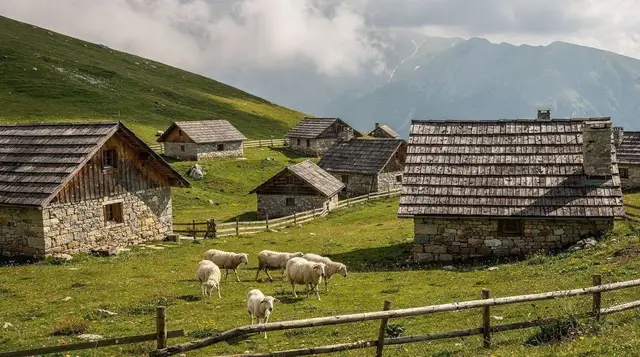
This is a good stretch for Baščaršija, for the walk along Ferhadija, and for day trips that depend on green hillsides rather than snow: Vrelo Bosne and its poplar-lined avenue, or the drive out to Bjelašnica and Umoljani while the high pastures are turning green rather than still under snow.
A guided walking tour through the old town is a sensible first move in any season, but it earns its place particularly well in late spring, when you can comfortably cover Baščaršija, the Sebilj and the riverside on foot without fighting summer heat.
For a rural counterpoint, late spring and early summer are also when a half-day visit to farms outside the city makes the most sense, with produce and orchards in season rather than dormant. See Sarajevo in spring for a fuller seasonal rundown, and hiking around Sarajevo for routes that open up as the snow clears from the surrounding peaks.
Summer: July and August, hot and full
July and August bring the valley’s warmest weather, typically 30-35°C, with the heat holding into the evening more than visitors expect from a mountain-ringed city. It is also the busiest cultural stretch of the year. Baščaršijske noći runs through July with concerts and events across the old town, and the Sarajevo Film Festival, one of the most significant film festivals in south-east Europe, fills the city in mid-August. Both are genuine reasons to visit in summer despite the heat: hotels and guesthouses book up, restaurant terraces are full, and the atmosphere in Baščaršija after dark is markedly different from a quiet spring evening.
The trade-off is straightforward. Expect higher accommodation prices, queues at sights like the Vijećnica and the Tunnel of Hope, and a valley that holds its heat. If you are visiting mainly for the war history and memorial sites, the heat is a genuine discomfort on a full day of walking between the Latin Bridge, the Historical Museum and sniper alley; mornings are noticeably more manageable than afternoons.
Details on the festival calendar and what else fills the city in summer are in Sarajevo festivals calendar and the Sarajevo Film Festival guide; a fuller weather picture is in Sarajevo in summer.
Summer is also the reliable season for water-based day trips that simply do not work the rest of the year: swimming at Kravice waterfalls, and rafting on the Neretva, which runs from May to September. If your trip includes Herzegovina, July and August are when that side of the itinerary earns its keep, even if Sarajevo itself is at its most crowded.
Autumn: September to early October, the strongest single window
Of the two “best” windows this guide keeps pointing to, autumn edges ahead. By September the festival crowds have thinned, accommodation prices ease back down, and the heat of July and August has usually broken by the first week or two of the month. Days commonly stay warm and dry through late September, with cooler, crisper evenings that make walking around Baščaršija after dinner more comfortable than in July. The high country is still open: Trebević and the cable car run their normal schedule, and hiking routes toward Lukomir or through the Rakitnica canyon are usually clear of snow well into October.
This is also a good stretch for cycling and for the kind of half-day activity that needs dry, cool weather rather than either summer heat or winter ice — a guided bike route out to the Tunnel of Hope works particularly well once the July-August heat has passed.
By late October the weather starts to turn genuinely autumnal and the first cold snaps can arrive, so the sweet spot is narrower than “autumn” as a whole — treat September and the first half of October as the target, not the full season. More detail is in Sarajevo in autumn, and for a broader view of what else is worth building into a trip in this window, see the best day trips from Sarajevo.
Winter: December to February, snow, skiing and a smog problem
Winter in Sarajevo has two very different faces, and both are true at once. On the mountain, it is one of the better reasons to visit: Jahorina and Bjelašnica, roughly 45 minutes from the centre and both former 1984 Winter Olympics venues, run a normal ski season from around December into March depending on snowfall, and the city below looks genuinely striking with snow on the surrounding peaks.
In the valley, though, Sarajevo’s geography works against it. The same mountains that shelter the city also trap cold air beneath warmer air above it — a thermal inversion — and through December and January that inversion holds smoke, vehicle exhaust and heating emissions close to the ground. Sarajevo shows up regularly near the top of worldwide rankings for the worst air quality of any city, on exactly those days.
This is not a reason to skip winter, but it should shape how you plan one. Check a daily air quality index before deciding how to spend the day: on a bad-inversion day, get up out of the valley rather than walking around it. Trebević and the ski resorts sit above the inversion layer more often than not, so a gondola ride up to the Ravna Planina plateau can trade a hazy, smoggy morning in Baščaršija for clear air and a view back down over the smog sitting in the bowl below — which is, oddly, one of the more memorable things about visiting in winter.
If skiing is the goal, budget most of the trip for the mountain and treat the city centre as a shorter add-on rather than the main event. Full detail on the pollution problem, including how to read the index and which days tend to be worst, is in Sarajevo winter air quality; for the ski logistics themselves, see skiing near Sarajevo, the Jahorina ski guide and the Bjelašnica ski guide. For what to actually pack, Sarajevo winter packing is worth reading before a December or January trip, and Sarajevo in winter covers the season more broadly.
Ramadan in Sarajevo
Ramadan follows the lunar calendar and shifts by roughly ten days each year against the Western calendar, so it can fall in any season depending on when you look this guide up — check the current year’s dates before you travel rather than assuming a fixed month. What stays consistent is the rhythm it brings to the city. A cannon shot from the Žuta tabija, the yellow fortress above the old town, marks the moment the day’s fast ends, and Baščaršija fills up and stays busy well into the evening once it does, with food stalls and cafés doing brisk trade after sunset.
It is one of the more atmospheric times to be in the old town in the evening, open to visitors and worth experiencing respectfully rather than avoiding. During the day, some cafés and restaurants in more traditional areas keep shorter hours; it rarely affects visitors in any practical way beyond that. See Ramadan in Sarajevo for more on how it plays out day to day.
Putting a trip together
None of this needs to be complicated. If your dates are flexible, aim for June or September. If you are building a trip around a specific interest — festivals, skiing, river days in Herzegovina — let that interest set the season rather than forcing it into what is technically the “best” window on paper. A few practical pairings:
- First-time visit, flexible dates: late May, June, or September to early October.
- Festival trip: July for Baščaršijske noći, mid-August for the Sarajevo Film Festival.
- Ski trip: late December through February, based mostly on the mountain.
- Hiking and day trips into Herzegovina: May through September, with June and September the most comfortable for walking.
- Budget-conscious trip: avoid mid-August and the peak ski weeks, when accommodation prices climb the most.
For help turning a chosen season into an actual schedule, Sarajevo trip planning and where to stay in Sarajevo are the logical next reads.
Choosing when to visit Sarajevo: your questions answered
What is the single best month to visit Sarajevo?
September is the strongest single choice: the summer heat and festival crowds have gone, days are usually still dry and mild, and the mountains around the city stay accessible for hiking before the first snow. May and June are close runners-up.
Is Sarajevo too cold to visit in winter?
Cold is not the issue. Winter here is genuinely scenic, with snow on Trebević visible from the old town and skiing 45 minutes away on Jahorina or Bjelašnica. The real problem is air quality, not temperature.
How bad is the winter air pollution, really?
Sarajevo sits in a bowl surrounded by mountains, and in December and January a thermal inversion traps smoke and exhaust in the valley. The city regularly appears near the top of global rankings for the world’s worst air quality on those days. Check the daily index before planning a day outdoors, and head up to Trebević or the ski resorts, where the air is usually clear above the inversion layer.
Does Ramadan affect a visit to Sarajevo?
It changes the rhythm of the day rather than closing anything to visitors. A cannon shot from the Žuta tabija marks sunset, and Baščaršija fills up and stays lively into the evening once the fast breaks. Dates move by about ten days each year against the Western calendar, so check the current dates before you travel rather than assuming a fixed month.
Are July and August worth visiting despite the heat and crowds?
Yes, if festivals interest you. The Sarajevo Film Festival in mid-August and Baščaršijske noći through July bring genuine energy and a busy cultural calendar, but expect 30-35°C in the valley, full guesthouses, and queues at the main sights.
Is spring in Sarajevo rainy?
April carries the most rain of the year and can be unsettled. By May the weather is usually more reliable, and June tends to be warm and green with long daylight hours, making late spring one of the two best windows to visit.
When should I time a ski trip to Sarajevo?
Jahorina and Bjelašnica, both around 45 minutes from the city, typically run from December into March depending on snowfall. Late December through February is the most reliable stretch, but it overlaps with the worst weeks for valley air quality, so most of a ski trip is better spent on the mountain than in the city centre.
Should I plan day trips to Mostar or Kravice around the season?
Mostar and the Old Bridge work in any season, but Kravice waterfalls and river swimming are really a May-to-September activity, and the drive down through Herzegovina is at its best with the wildflowers and green hills of late spring.
Seasonal experiences on GetYourGuide
Verified deep-linked GetYourGuide tours. Book through these links and we earn a small commission at no cost to you.
GetYourGuide does not provide a product photo for this activity — the image shows the meeting point, photographed by us.