Jahorina ski guide: pistes, lifts and getting there
Is Jahorina a good ski resort for a day trip from Sarajevo?
Yes. Jahorina is about 30 kilometres and 45 minutes from Sarajevo by car, and it is Bosnia and Herzegovina's largest ski area, built around the 1916m summit of Ognjena Marija where the 1984 Winter Olympics held the women's alpine skiing. There is no efficient direct public transport, so plan on a car, taxi, or an organised transfer or shuttle.
Where Jahorina sits, and why it matters
Jahorina is the mountain most people mean when they say they are “skiing near Sarajevo,” and it is the bigger of the city’s two Olympic ski areas. The summit, Ognjena Marija, tops out at 1916 metres, and it was here that the 1984 Winter Olympics staged the women’s alpine skiing events, while the men’s races ran on Bjelašnica on the opposite side of the valley. Both mountains still carry that history in their infrastructure and their layout, and both are covered in more depth in the 1984 Olympics legacy guide if you want the fuller story before you go.
Jahorina lies within Republika Srpska, one of the two entities that make up Bosnia and Herzegovina, and that is worth knowing before you arrive rather than as a surprise on the mountain. It shows up in ordinary, practical ways: road signs and piste information mix Cyrillic and Latin script, and resort branding often leans Cyrillic first. None of this affects how visitors are treated or how the resort runs day to day, and it is not something to read into beyond what it is: a feature of the country’s postwar structure, described here without taking a side either way.
Getting there from Sarajevo
Jahorina is about 30 kilometres from central Sarajevo, and the drive takes roughly 45 minutes in normal winter conditions, climbing steadily out of the city and up through forest on the approach road. That short distance is the main reason it works as a day trip rather than requiring an overnight stay, though plenty of visitors do stay up on the mountain for a longer ski break.
There is no efficient direct public transport link between Sarajevo and Jahorina, and this is the detail that catches people out. A rented car is the most flexible option; see the car rental guide and the wider driving in Bosnia guide for what to expect on mountain roads in winter, including tyres and conditions.
A taxi from Sarajevo works too, though it is worth agreeing the fare before you set off; the taxis in Sarajevo guide covers how that normally works. The third option, and the one that needs no planning on your part, is an organised transfer, ski shuttle, or a guided day tour that bundles transport with the day itself — useful if you would rather not deal with mountain driving, snow chains, or parking.
If you are staying in the city rather than on the mountain, the where to stay in Sarajevo guide and the general getting to Sarajevo guide are the right starting points for the logistics either side of a Jahorina day.
The mountain and its ski area
Jahorina is Bosnia and Herzegovina’s largest ski area, noticeably bigger than Bjelašnica across the valley, with terrain spread across several sectors below and around the Ognjena Marija summit. A network of chairlifts and drag lifts serves the mountain, carrying skiers up from the base area at Poljice and the surrounding sectors towards the higher, more open terrain near the top.
The layout is broadly what you would expect of a resort built for both Olympic racing and ordinary skiing: wide, exposed pistes on the upper mountain give way to narrower, tree-lined runs lower down, which matters on days when visibility up top is poor but the forest runs are still skiable. Runs are graded and, as on any mountain, conditions on a given run change through the season and through the day, so treating a piste map and the day’s snow report as more reliable than a single glowing description is the sensible approach.
For the numbers that actually matter for planning — current lift pass prices, ticket types, and how they compare across the season — the ski passes and prices guide is kept up to date separately from this page and is the one to check before you go. Equipment and lessons work the same way: the ski rental and lessons guide covers where to hire skis, boards, and boots, and how to book an instructor, whether you are starting from nothing or want a guide for off-piste terrain.
On the pistes: what to expect at each level
Beginners have dedicated, gentler terrain near the base area, away from the faster through-traffic of the upper mountain, which is the normal arrangement on a resort this size and makes a first-timer’s day considerably less stressful than being funnelled onto shared runs. Group and private lessons are widely available and are worth booking ahead in the busier weeks of the season.
Intermediate skiers get the bulk of the mountain: the mid-level runs that connect the base sectors to the upper lifts are where most of a day is actually spent, mixing open sections with some tree-lined stretches lower down. This is also where the difference in scale between Jahorina and Bjelašnica is most obvious — there is simply more terrain to move through here before you start repeating runs.
More advanced skiers head for the steeper pitches nearer the summit and the sections that catch the least traffic, particularly useful on a powder morning before the rest of the mountain has tracked it out. As on any Olympic-era resort, some of the steeper and more technical lines reward local knowledge, and hiring a guide or instructor for a first visit to the harder terrain is not a bad idea rather than an admission of anything.
When to go: the December-to-March window
The season on Jahorina runs broadly from December to the end of March, though the exact opening and closing dates shift year to year depending on snowfall, so treating those months as a window rather than a guarantee is the honest way to plan. Early and late season can be excellent or thin depending on how the winter has gone; checking recent snow reports before booking transport or accommodation is worth the five minutes it takes.
For what to pack and how to dress for a day on the mountain, and for how the season interacts with the city below — including the winter air quality that settles into the Sarajevo valley in December and January, which is a separate issue from snow conditions up on Jahorina — see the winter packing guide and the Sarajevo in winter guide. If you are building a longer stay around the season rather than a single day, the four-day winter itinerary works skiing in alongside the city’s museums and old town.
Off the skis: eco-walks, snowshoeing and summit views
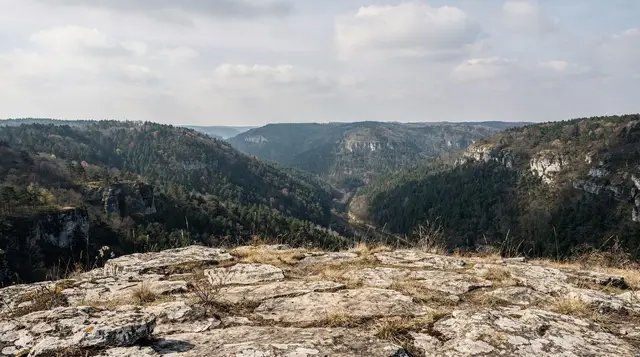
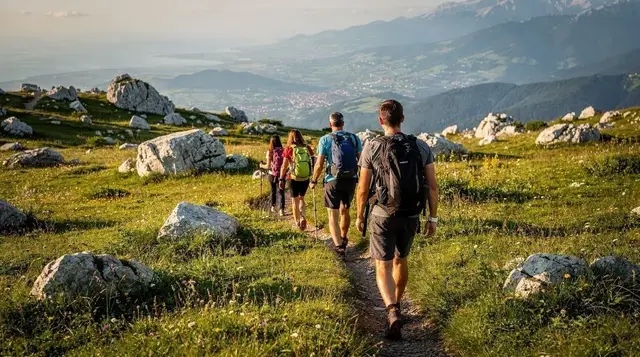
Jahorina is not only a ski mountain, and visitors who are not skiing, or who want a non-ski day within a longer ski trip, have real options here. A guided eco-walk covers the mountain’s trails and viewpoints without needing snow gear beyond ordinary winter clothing — the Jahorina eco-walk with a local guide is built around exactly that. When there is enough snow underfoot, a guided snowshoeing outing on Jahorina from Sarajevo covers similar ground on snowshoes instead, with transport from the city included, which sidesteps the public transport gap altogether.
Neither of these requires ski experience, and both are worth considering for a travel companion who is not skiing, or for anyone who wants the mountain’s views and forest without the lift queues. For hiking that ranges further across the wider Sarajevo mountains, including summer terrain that is under snow during ski season, the hiking around Sarajevo guide and the guide to mountain huts around Sarajevo are useful companion reading, and readers curious about the wider high country beyond Jahorina and Bjelašnica can look at the guide to Maglić and the high peaks for context, even though that terrain is a separate, more remote trip.
Jahorina versus Bjelašnica
The two questions most people arrive with are which Olympic mountain to choose, and whether it is worth doing both. A side-by-side helps:
| Feature | Jahorina | Bjelašnica |
|---|---|---|
| 1984 Olympic discipline | Women’s alpine skiing | Men’s alpine skiing |
| Summit | Ognjena Marija, 1916m | High alpine terrain, similar scale |
| Entity | Republika Srpska | Federation of Bosnia and Herzegovina |
| Distance from Sarajevo | ~30km / ~45 minutes | ~30km / ~45 minutes |
| Ski area size | Larger of the two | Smaller of the two |
| Signage | Cyrillic and Latin script | Latin script |
Both are covered individually — the Bjelašnica ski guide is the counterpart to this page — and the direct comparison is unpacked further in the Jahorina versus Bjelašnica guide, which goes into which mountain suits which kind of visitor rather than repeating the table above. Neither mountain requires choosing over the other on a longer trip; some visitors ski both on consecutive days, treating the short distance between Sarajevo and each resort as the whole point.
Planning your day or your stay
For a single day, the logistics are simple once transport is sorted: get to the mountain by mid-morning, factor in that lift queues and lesson bookings are busiest on weekends and around Sarajevo’s own school holidays, and build in enough daylight for the return leg, since mountain roads in winter are slower after dark. For a longer stay, Jahorina has accommodation on the mountain itself, which removes the daily transfer question entirely at the cost of being further from the city’s restaurants and old town in the evenings.
Either way, the practical questions — pass prices, rental costs, lesson booking — sit in their own guides rather than here, precisely because those numbers move with the season and are more useful kept current in one place: the ski passes and prices guide and the rental and lessons guide. This page’s job is the mountain itself — the terrain, the lifts, the entity it sits in, and how to actually get up there from Sarajevo — and on that front, Jahorina delivers Bosnia and Herzegovina’s largest ski area within three-quarters of an hour of the capital, which is a genuinely short list of European cities that can say the same.
Jahorina skiing: frequently asked questions
How far is Jahorina from Sarajevo, and how do I get there?
About 30 kilometres and roughly 45 minutes by car. There is no efficient direct public transport link, so most visitors drive, take a taxi, or book an organised transfer or day tour that includes transport.
Is Jahorina bigger than Bjelašnica?
Yes, Jahorina is the larger of the two Sarajevo Olympic mountains by ski area, though both sit at similar distances from the city and both trace back to the 1984 Winter Olympics.
What altitude does Jahorina reach?
The summit, Ognjena Marija, sits at 1916 metres. It was the venue for the women’s alpine skiing events at the 1984 Winter Olympics.
Do I need a car to ski Jahorina, or can I get a shuttle?
A car is the most flexible option, and rental cars are widely available in Sarajevo. Where a car is not practical, an organised transfer, ski shuttle, or guided day tour that includes transport is the realistic alternative, since public transport does not run efficiently to the resort.
Is Jahorina in Republika Srpska or the Federation of Bosnia and Herzegovina?
Jahorina lies within Republika Srpska, one of the country’s two entities. This shows up on the ground in practical ways, such as Cyrillic script alongside Latin on signage, without affecting how the resort operates or how visitors are treated.
When is the ski season on Jahorina?
Broadly December to the end of March, depending on snowfall in a given year. Conditions vary season to season, so checking snow reports close to your travel dates is worth doing before committing to specific days.
Where do I find lift pass prices and equipment rental for Jahorina?
This guide covers the mountain itself; for current pass pricing see the dedicated guide to ski passes and prices, and for rental and lessons see the Sarajevo-area rental and lessons guide.
Can non-skiers do anything on Jahorina in winter?
Yes. Guided eco-walks and snowshoeing tours run on the mountain for visitors who are not skiing, and the summit views and forest trails are worth the trip on their own.
Skiing & winter sports experiences on GetYourGuide
Verified deep-linked GetYourGuide tours. Book through these links and we earn a small commission at no cost to you.
GetYourGuide does not provide a product photo for this activity — the image shows the meeting point, photographed by us.