Sarajevo in winter: a 4-day ski and city itinerary
Most guides to Sarajevo assume summer. This one doesn’t: it’s built for four days between December and March, and it deliberately keeps the city and the mountains apart rather than blurring them into one long list of sights. Two days belong to Sarajevo itself — Baščaršija on foot, the Trebević cable car, the old bobsleigh track under snow.
The other two belong to skiing at Jahorina and Bjelašnica, the two mountains that hosted the 1984 Winter Olympics and are still where Sarajevans ski every weekend. Neither half is padding for the other; if you only want one, our Jahorina versus Bjelašnica comparison and our wider guide to skiing near Sarajevo will help you pick.
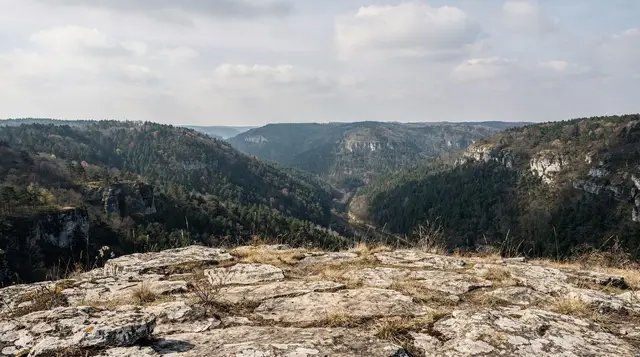
The one thing that shapes every winter itinerary here, and that most visitors never hear about until they’re in it, is air quality. Sarajevo sits in a bowl surrounded by mountains, and in December and January a thermal inversion regularly traps smog in the valley badly enough that the city turns up near the top of worldwide pollution rankings. It doesn’t mean staying away. It means checking the index each morning and treating the mountains as more than a ski trip — they’re also where the air is clear.
Day 1: Baščaršija and the old town, at a gentle pace
Land, check into a place with heating that actually works, and spend the afternoon on foot in Baščaršija, the Ottoman-era bazaar quarter that’s been the centre of the city since the 15th century. Winter empties it of the summer crowds, which makes it a genuinely better time to walk the copper-working lanes of Kazandžiluk, stop at the Sebilj fountain, and step into the Gazi Husrev-bey Mosque if it’s outside prayer hours — shoulders and knees covered, a headscarf is lent at the door for women.
A guided grand walking tour of Sarajevo on your first afternoon is the fastest way to get your bearings before the mountain days start, and our own Baščaršija walking guide covers the same ground at your own pace.
Warm up over a bosnian coffee in a džezva, and don’t skip a proper dinner of ćevapi — Sarajevo serves them ten to a plate, in somun bread, with raw onion and kajmak. If the day’s pollution index was high, this is the day to accept it: you’re indoors and eating well regardless. Book accommodation with the where to stay in Sarajevo guide before you land; winter rates run noticeably below summer ones.
Day 2: Trebević by cable car, and the bobsleigh track under snow
This is the day that needs no ski legs at all. The Trebević cable car reopened in 2018 after a 26-year gap caused by the siege, and the 9-minute ride from Bistrik up to 1,164 metres is still the single best way to understand how the mountains close in around this city. At the top, walk to the abandoned 1984 Olympic bobsleigh and luge track: unused since the war, covered in graffiti, and under snow in winter it’s genuinely striking rather than merely photogenic — our Trebević bobsleigh guide has the walking route from the cable car station. Round-trip tickets run around 20 KM; buy them at the base station in Bistrik.
If the winter light and the empty slopes convince you to stay up longer, a Trebević sunset and night hike extends the day past the cable car’s last descent, on foot back down through the forest. For the war history that the mountain and the valley below both carry, a Sarajevo siege walking tour is a better fit as a half-day back in the city than anything folded into the ski days — it deserves its own attention, not a slot between mountain outings. Read our 1984 Olympics legacy guide beforehand if you want the venue names and dates before you’re standing at each one.
Day 3: Jahorina, and a border you’ll notice
Jahorina hosted the women’s alpine skiing events in 1984 and remains the larger, more developed of Sarajevo’s two ski mountains, with the longer runs and the bigger base village. It’s about 30 km and 45 minutes from central Sarajevo, and the drive is worth paying attention to: it crosses into Republika Srpska, one of the two entities that make up Bosnia and Herzegovina, and you’ll notice it in the signage before you notice it anywhere else — Cyrillic becomes the dominant script rather than the Latin alphabet used around Baščaršija. It isn’t a border crossing in any practical sense, no passport check, but it’s a real administrative line and worth registering rather than ignoring.
Rent skis and boots at the base if you didn’t bring your own — both are available on the day, with instructors bookable for beginners — and check our Jahorina ski guide and the ski passes and prices in Bosnia guide for current lift arrangements before you go, since day-pass terms shift season to season more than most of what’s in this itinerary. Non-skiers can still ride up for the mountain views and a proper lunch at altitude; the day works either way.
Day 4: Bjelašnica, the Olympic downhill, and the road home
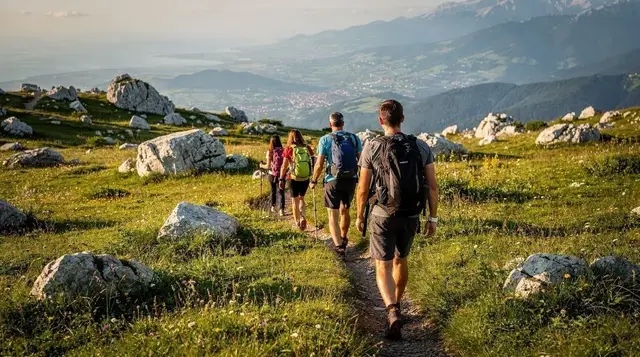
Bjelašnica hosted the 1984 men’s alpine skiing and sits, like Jahorina, around 30 km and 45 minutes from Sarajevo — but on the Federation side, no entity crossing involved. It’s the steeper, quieter, more serious mountain of the two, and it sits close enough to the villages of the high Bjelašnica plateau — Umoljani among them — that it’s easy to combine skiing with a short walk into that landscape if there’s time before the road opens back down. Our Bjelašnica ski guide breaks down the runs by level.
If you’d rather not ski your last day at all, an Igman and Bjelašnica mountains tour to Umoljani village covers the same Olympic terrain by 4x4 and on foot instead, with the stone-roofed village and its winter quiet standing in for the pistes.
Either way, plan the transfer back to Sarajevo with enough slack for the road: mountain roads here ice over fast once the sun drops, and a scheduled evening flight is not the moment to test that. Check ski rental and lessons in Sarajevo and driving in Bosnia if you’re weighing a rental car over taxis for this leg — see car rental in Sarajevo for the practicalities either way.
At a glance
| Day | Base | Focus | Transfer from Sarajevo |
|---|---|---|---|
| 1 | Sarajevo | Baščaršija, old town, first dinner | — |
| 2 | Sarajevo | Trebević cable car, bobsleigh track | 9 minutes by cable car |
| 3 | Jahorina | Skiing, Olympic slopes | ~30 km / 45 minutes |
| 4 | Bjelašnica | Skiing, Umoljani area, return | ~30 km / 45 minutes |
Winter air quality: check it, don’t skip the trip over it
This is worth saying plainly rather than tucking into a footnote. Sarajevo sits in a valley ringed by mountains on three sides, and in December and January a thermal inversion regularly traps cold, polluted air low in the city, badly enough that Sarajevo turns up repeatedly among the world’s worst air-quality readings on any given morning. It’s a real health consideration, not a travel-blog exaggeration, and it’s worth taking seriously if you have asthma or another respiratory condition.
The practical response is straightforward. Check a live air quality index each morning before deciding how the day runs. On bad days, spend more time up at Trebević, Jahorina or Bjelašnica — all three sit above the inversion layer, where the air is measurably clearer than in the valley below — and less time walking slowly outdoors in the old town. Our dedicated Sarajevo winter air quality guide goes into the index numbers and the months it’s worst.
Packing and practical notes
Pack for two different kinds of cold: a damp, grey city cold in the valley, and a drier, sharper mountain cold up at the ski resorts. Waterproof boots matter more than a heavy coat for the Baščaršija days, since slush is the norm on cobbled lanes. For the ski days, thermal base layers, gloves, and good sunglasses or goggles cover most of it — rental shops at both resorts supply the rest. Our Sarajevo winter packing guide has the fuller list, and the ski rental and lessons guide covers what’s available on-site versus what to bring.
This itinerary assumes no car and taxis or transfers for the two mountain days, which keeps things simple and avoids driving on roads that can ice over with little warning. If you’d rather self-drive, read driving in Bosnia and car rental in Sarajevo before booking, and budget extra time for the Jahorina road once you’re past the Republika Srpska entity line.
Sarajevo winter itinerary: frequently asked questions
Do I need to book Jahorina and Bjelašnica lift passes in advance?
Not usually. Both resorts sell day passes at the lift base, and neither runs anywhere near Alpine-resort capacity. Weekends in January and February are busier with Sarajevo day-trippers, so arrive early rather than pre-booking online.
Is Sarajevo’s winter air pollution serious enough to change my plans?
It’s serious enough to check daily, not to cancel a trip over. Thermal inversion traps smog in the Sarajevo valley in December and January, and the city regularly appears near the top of global worst-air-quality rankings on bad days. The fix is simple: check the index each morning and spend more time up at Trebević, Jahorina or Bjelašnica, where the air sits above the inversion layer.
How do I get from Sarajevo to Jahorina and Bjelašnica without a car?
Both are reachable by taxi (around 45 minutes each way) or organised transfer, and this itinerary is built around not renting one. A car buys flexibility for early lift lines but adds a driving risk on mountain roads that can ice over; see our guide to car rental in Sarajevo if you’d rather self-drive.
Is the road to Jahorina really in Republika Srpska?
Yes. Jahorina sits in Republika Srpska, one of Bosnia and Herzegovina’s two entities, and the drive out of Sarajevo crosses the entity line. You’ll notice it in the signage and shopfronts, where Cyrillic becomes the dominant script rather than the Latin alphabet used in Sarajevo. It’s a border you cross without a passport check, but it’s worth clocking.
Do I need my own ski gear?
No. Both Jahorina and Bjelašnica have rental shops at the base with skis, boots, poles and snowboards, and instructors are available for lessons booked on the day or the day before. Bring your own layers, gloves and a good hat; renting the hardware is the norm even for regular skiers visiting from abroad.
Is the Trebević cable car worth it if I don’t ski?
Yes, and it’s the one mountain outing on this itinerary that needs no snow experience at all. The round trip takes about 9 minutes each way and costs around 20 KM return, and it’s the fastest way to understand Sarajevo’s shape: a city pinned into a valley by mountains on three sides.
Can I do this itinerary without skiing at all?
Yes. Swap the two ski days for the cable car, the bobsleigh track, and a guided walk or snowshoe outing on Bjelašnica or Igman instead. The Olympic history and the winter light are worth the trip even if you never clip into a binding.
Skiing & winter sports experiences on GetYourGuide
Verified deep-linked GetYourGuide tours. Book through these links and we earn a small commission at no cost to you.
GetYourGuide does not provide a product photo for this activity — the image shows the meeting point, photographed by us.