Sarajevo Film Festival: what to know before you go
When is the Sarajevo Film Festival and does it change how I should plan a trip?
The festival runs for about ten days in mid-August, centred on Baščaršija square and the National Theatre. Accommodation prices in Sarajevo rise by roughly 30 to 50% that week and rooms sell out, so book six to eight weeks ahead if your dates overlap.
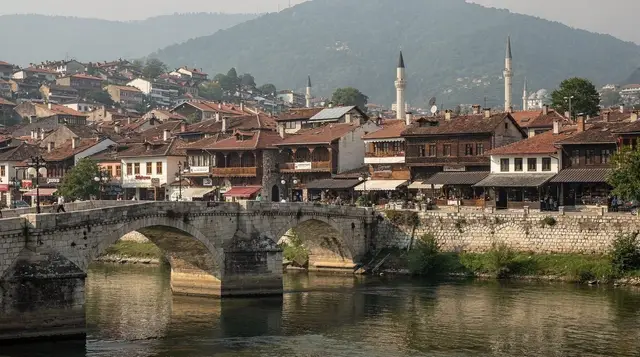
For about ten days every mid-August, Sarajevo runs on a different schedule. Cafés on Baščaršija stay busy past midnight, a screen goes up in front of the Sebilj fountain, and the short stretch of riverside between the Vijećnica and the National Theatre fills with people queuing for films rather than sightseeing. This is the Sarajevo Film Festival, and if your visit overlaps with it, it changes two very practical things: what there is to do in the evening, and what a room costs.
A festival born out of necessity, not ambition
The festival started in 1995, before the siege of Sarajevo had ended. There was no red carpet and no industry infrastructure — organisers screened films in a basement cinema for a population that had spent three years cut off from almost everything, including a working cultural life. It was not conceived as a tourist event. It was a way of keeping something normal running in a city where very little was.
That history matters for how the festival is talked about today. It is not framed locally as a curiosity or a wartime footnote — it is treated as one of the clearest signs that the city rebuilt something lasting out of the siege years, alongside the reopened Vijećnica and the restored tram network. Anyone curious about that period in more depth is better served by a dedicated siege tour or the Tunnel of Hope than by treating the festival itself as a history exhibit — it is now a working film festival first, a symbol second, and it plays that way on the ground.
What it looks like today
The Sarajevo Film Festival has grown into the largest film event in the Balkans and one of the more significant regional festivals in Europe. The programme runs across several cinema venues in the city centre, with competition strands for feature films, documentaries and shorts from South East Europe alongside a wider international selection. Industry events, co-production markets and talent programmes run in parallel for people working in film, but none of that requires a badge to notice — what a visitor experiences is a city centre with more foot traffic, more temporary signage, and evenings built around screening times rather than dinner times.
Expect crowds skewed younger than Sarajevo’s usual visitor mix, a lot of Bosnian, regional and international film professionals mixing with the public, and an atmosphere closer to a city-wide event than a niche cultural festival. Restaurants around Baščaršija and the riverside fill up earlier than usual, and staff at cafés and bars will generally know the day’s screening times better than most posted schedules.
When it happens and how tickets work
The festival runs for roughly ten days, typically opening on a Friday in mid-August and closing the following weekend. Exact dates move by a few days from year to year, so treat any specific date as provisional until the festival publishes its own programme in the spring — checking that programme directly is more reliable than working from a fixed date months out.
| What | Typical pattern |
|---|---|
| Timing | Mid-August, around ten days |
| Ticketing opens | Programme and online booking published a few weeks before the opening |
| Busiest sessions | Opening and closing films, competition premieres, open-air evenings |
| Easiest to get into | Weekday daytime screenings at the standard cinema venues |
| Where to book | The festival’s own website once the programme is live |
For anyone planning around the festival rather than for it, the practical rule is simple: decide roughly which evenings you want free for screenings before you book flights, because everything else in the week — restaurant tables, taxi availability, hotel rooms — gets tighter as the opening date approaches.
Where the films actually screen
Two locations do most of the work. The National Theatre, on Obala Kulina bana by the river, hosts the festival’s formal premieres, red-carpet arrivals and the bulk of the in-cinema competition programme — this is the venue that photographs turn up from, and it is worth walking past even outside screening hours to see the building itself. A short walk away, Baščaršija square, in front of the Sebilj fountain, becomes an open-air cinema for a run of evening screenings that are considerably more casual: bring a layer for the evening cool, expect standing or bench seating, and expect the square’s usual bazaar crowd to be replaced almost entirely by a film-going one after dark.
Beyond those two anchors, several of the city’s regular cinemas — smaller, indoor, less crowded — carry additional sessions throughout the day. These are consistently the easiest tickets to get and a reasonable way to catch part of the programme without competing for the headline slots.
For a first pass at getting oriented between these venues and the rest of the old town, a guided walk through Sarajevo’s historic centre covers Baščaršija, the riverside and the approach to the National Theatre in a couple of hours, which is enough to know exactly where you’re heading back to that evening.
The accommodation squeeze: book six to eight weeks out
This is the detail that catches people out. Sarajevo has a comparatively small stock of hotel rooms and short-term apartments for a capital city, and the festival adds a significant, concentrated spike in demand on top of an already busy August. The result is consistent and measurable: accommodation prices rise by roughly 30 to 50% for the festival week, and the cheaper options — hostel beds and budget apartments in particular — are the first to disappear.
| Accommodation | Typical nightly rate | Festival-week rate |
|---|---|---|
| Hostel bed | 20–35 KM (≈€10–18) | Sells out early; limited premium options remain |
| Apartment | 60–110 KM (≈€31–56) | 80–165 KM (≈€41–84) |
| Hotel, 3–4 star | 100–200 KM (≈€51–102) | 130–300 KM (≈€66–153) |
The practical advice is unglamorous but reliable: if your travel dates land anywhere near mid-August, book a room the moment your dates are fixed, ideally six to eight weeks ahead, rather than treating Sarajevo the way you might treat a shoulder-season city where rooms are available up to the week before. Staying slightly outside the immediate Baščaršija core — around Marijin Dvor or along the tram lines toward Ilidža — tends to hold prices closer to normal while keeping the centre a short tram ride away; see where to stay in Sarajevo for how the neighbourhoods compare outside festival week too.
How the city changes for those ten days
Outside the two main venues, festival week is mostly additive rather than disruptive. Museums, the Tunnel of Hope, day trips to Mostar and the regular sightseeing circuit through Vijećnica and the Gazi Husrev-bey Mosque run on their usual hours. What changes is the evening: Baščaršija’s restaurant tables fill earlier, the square itself becomes screening space after dark, and taxis and the tram get busier around the National Theatre at the end of each evening session.
Noise and street closures cluster tightly around Baščaršija and the riverside in the hours before and after screenings — if a quiet evening base matters more to you than proximity, the neighbourhoods a few tram stops out keep the festival at a comfortable distance while the daytime sightseeing stays exactly as accessible. For a broader read on how the city’s evening scene works outside festival week, see the Sarajevo nightlife guide and bars by neighbourhood — festival week is essentially that scene turned up, concentrated into one square and one week.
Getting around stays straightforward: the tram network still runs its usual lines through the centre, and walking between Baščaršija and the National Theatre takes under ten minutes. Anyone unfamiliar with ticketing and validation on the trams should read the public transport guide before the extra evening crowds make figuring it out on the fly less appealing.
Making a trip around the festival
Three or four days is enough to catch a meaningful slice of the programme without building an entire trip around cinema seats. A workable shape: arrive a day or two before the opening to secure your bearings and your restaurant options before the crowds peak, keep two or three evenings free for screenings — one at the National Theatre, one on the open-air screen at Baščaršija — and use the daytime hours for the sightseeing you’d do anyway, since the festival barely touches the city before early evening.
If mountains or a day out of town appeal, an early-morning hike up into the hills above the city with lunch included is a genuinely useful way to spend a festival-week daytime — you’re back well before the evening screenings and the elevation gives a clean break from the week’s extra noise and heat down in the valley. For a lower-key half-day, a guided e-bike route through Sarajevo’s neighbourhoods covers ground the walking routes don’t, including some of the residential streets that stay unaffected by the festival entirely.
Travellers building a longer Bosnia trip around the festival dates should also weigh whether Sarajevo or Mostar makes the better base for that particular week — Mostar’s accommodation market doesn’t feel the same spike, and the Sarajevo–Mostar transport guide makes a two-base trip realistic even with festival evenings pulling you back to Sarajevo. First-time visitors unsure how to structure the rest of the visit can start from the general Sarajevo trip planning guide or a fixed-length three-day itinerary and simply slot the festival evenings in where they land.
Booking, budget and avoiding the obvious traps
None of the festival’s own tickets or accommodation should be arranged through third-party resellers advertising “guaranteed” access at a markup — buy directly through the festival’s official channels once the programme and ticketing window open, and book accommodation through recognised platforms or directly with hotels and apartment owners rather than informal offers that appear on social media in the days before the opening. The Sarajevo tourist traps guide and the Sarajevo on a budget guide cover the wider version of this advice, but festival week is exactly when the incentive to overcharge or oversell is highest, precisely because demand outstrips supply so visibly.
Budget for the accommodation premium honestly rather than hoping a late search turns up a normal-priced room — it consistently does not for anything central during the festival’s peak days. Everything else about a Sarajevo trip during this week costs roughly what it does the rest of the summer: cafés, cevapi stalls and museum admission don’t move on festival pricing, only rooms and, to a lesser extent, restaurant tables directly on Baščaršija in the evening hours do.
Sarajevo Film Festival: questions people ask before booking
When is the Sarajevo Film Festival?
It runs for about ten days in mid-August, usually opening the second Friday of the month, though exact dates shift slightly each year. Check the festival’s official programme once published in spring rather than fixing dates from a previous year.
Do I need to book festival tickets in advance?
For premieres, competition screenings and the open-air programme, yes — these sell out within days of the schedule going live. Smaller daytime screenings at the regular cinemas are usually easier to get on short notice.
Why does accommodation get so expensive that week?
Sarajevo has limited hotel and apartment stock relative to the extra tens of thousands of festival visitors, so prices rise roughly 30 to 50% above already-busy August rates, with the cheapest options selling out first.
Is the festival open to the general public or only industry professionals?
It’s open to the public. Industry accreditation exists for trade events, but public screenings, including the open-air programme on Baščaršija square, only require a standard ticket.
Where do the screenings take place?
The National Theatre on Obala Kulina bana hosts premieres and the main competition programme; Baščaršija square, by the Sebilj fountain, runs the open-air evening screenings. Several smaller city cinemas carry additional daytime sessions.
Can I still sightsee normally during the festival?
Yes — museums and attractions across the city keep their usual hours. The festival’s effect is concentrated on Baščaršija and the riverside in the evenings, not on daytime sightseeing elsewhere in Sarajevo.
How does the festival connect to the siege of Sarajevo?
It began in 1995, during the siege, when organisers screened films in a basement cinema. That origin is part of why it carries real local significance today rather than functioning as a purely commercial event.
Should I stay in Sarajevo itself for the festival, or is a day trip in feasible?
Stay in Sarajevo if a room is available — evening screenings run late and public transport back from a day-trip base isn’t realistic. If a central room can’t be found, staying a few tram stops out and travelling in for evenings still works.
Sarajevo nightlife on GetYourGuide
Verified deep-linked GetYourGuide tours. Book through these links and we earn a small commission at no cost to you.
GetYourGuide does not provide a product photo for this activity — the image shows the meeting point, photographed by us.