Sarajevo nightlife: what it actually looks like
Where does Sarajevo's nightlife happen, and is it expensive?
Most of it concentrates in Baščaršija and along Ferhadija/Maršala Tita, where draught beer runs 3-5 KM (around 1.50-2.50 EUR), well under Zagreb or Dubrovnik prices. Weeknights outside Bašćaršijske noći in July and the Sarajevo Film Festival in mid-August are noticeably quieter.
Where the evening happens
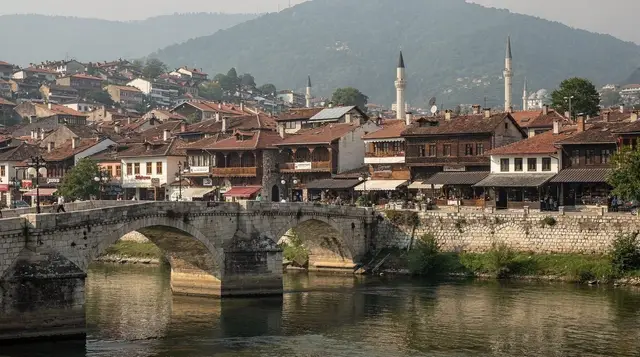
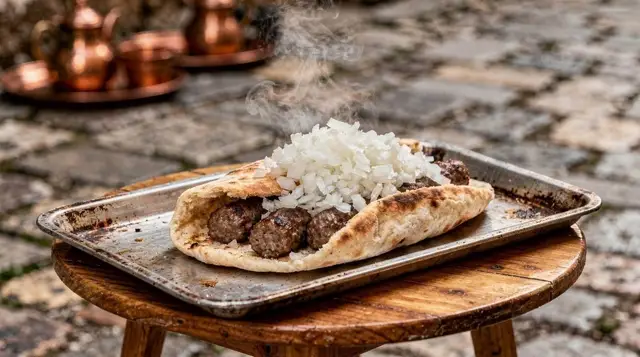
Sarajevo’s evening life is not spread thin across the city. It concentrates in two connected areas: the Ottoman lanes of Baščaršija, centred on the Sebilj fountain, and the Austro-Hungarian stretch of Ferhadija and Maršala Tita running west from it. Between the two, a fifteen-minute walk covers most of what counts as “going out” in this city: coffeehouses that quietly become bars after dark, small courtyard terraces, a scattering of pubs, and the late-night burek and ćevapi stalls that everyone eventually ends up at.
That geography is worth knowing before anything else, because it shapes expectations. Sarajevo does not have a nightclub district in the way Zagreb or Belgrade do. What it has is a walkable, low-lit, café-culture kind of evening, heavy on conversation and coffee and rakija, lighter on dancefloors. If that is not what someone is looking for, it is better to know before arriving than to go searching for a club scene that is not really here.
Prices are the other headline fact, and they are genuinely favourable. A draught beer in a normal Baščaršija bar runs 3-5 KM, roughly 1.50-2.50 EUR at the fixed 1 EUR = 1.95583 KM rate. A cocktail on Ferhadija is more, typically 10-15 KM (5-7.50 EUR), but still noticeably cheaper than the same drink in Zagreb’s Tkalčićeva or Dubrovnik’s old town, where equivalent bars routinely charge double. A bosanska kafa with a place to sit and watch the street costs 2-3 KM. This is one of the real, checkable reasons Sarajevo is cheaper to visit than Croatia: the gap shows up as clearly after 9pm as it does at lunch.
| Drink | Sarajevo (KM) | Sarajevo (EUR approx.) |
|---|---|---|
| Draught beer, 0.5 l | 3-5 KM | 1.50-2.50 EUR |
| Cocktail | 10-15 KM | 5-7.50 EUR |
| Bosanska kafa | 2-3 KM | 1-1.50 EUR |
| Glass of Žilavka or Blatina wine | 6-10 KM | 3-5 EUR |
| Late-night burek slice | 3-5 KM | 1.50-2.50 EUR |
Baščaršija after dark
By day, Baščaršija is a bazaar: coppersmiths working in the Kazandžiluk, souvenir stalls, tour groups around the Sebilj. By evening the same lanes shift register. Tables spread further into the alleys, the coppersmiths’ workshops close and go dark, and the crowd turns from day-trippers to a mix of locals meeting after work and visitors working through a first ćevapi dinner. It stays busy, without being loud in the way a party district is loud — most of the noise is conversation, not music.
This is also where the coffeehouse culture is most visible. Ordering a bosanska kafa here, served in its džezva with a cube of rahat lokum, is as much a nightlife activity as ordering a beer; sitting over one for an hour is completely normal and nobody will rush the table. For the ritual itself, and how not to get it wrong as a first-timer, the dedicated bosnian coffee ritual guide covers it properly rather than repeating it here.
Streets to know by name rather than just wandering into: Kazandžiluk for the coppersmith lanes that quiet down but stay atmospheric after dark, and the small square around the Sebilj as the obvious meeting point if a group has split up. For a street-by-street breakdown of which lanes lean toward bars, which toward tea houses, and which go dead after 10pm, the Sarajevo bars by neighbourhood guide is the one to open — this page stays at the overview level on purpose.
Ferhadija and Maršala Tita: the other half of the evening
West of Baščaršija, past the point where the Ottoman paving gives way to Austro-Hungarian facades, Ferhadija and its continuation along Maršala Tita carry a different kind of evening. This stretch has more of the conventional bar format: proper drinks menus, later closing hours on weekends, and a crowd that skews younger and more local, particularly students given the university’s proximity. It is where a cocktail bar is more likely to be found than in Baščaršija proper, and where prices creep up slightly as a result, though still nowhere near Zagreb or Dubrovnik levels.
The two areas function together rather than as alternatives. A common and sensible pattern for a first evening is to start in Baščaršija for coffee, a rakija, and dinner, then walk the fifteen minutes to Ferhadija for a bar with a later, livelier crowd. That loop is covered start to finish in Sarajevo in one day, which folds an evening plan into a full day’s structure.
For anyone who wants live music specifically rather than a general bar crawl — venues with regular bands, jazz nights, or DJ sets — that detail sits in live music in Sarajevo rather than being listed twice here.
Weeknight versus weekend: a real difference
Anyone timing a trip around evenings out should know that Sarajevo’s nightlife rhythm changes hard across the week, more than in many capitals of similar size. Thursday through Saturday nights, both Baščaršija and Ferhadija fill up and stay busy well past midnight, with tables spilling further out and a genuine buzz on the street. Sunday through Wednesday, outside the festival calendar, is a different city: many bars empty out by 11pm, some smaller places do not bother opening at all, and Baščaršija in particular can feel closer to its daytime self than its weekend one.
| Night | Typical atmosphere |
|---|---|
| Thursday-Saturday | Busy, tables full, streets active past midnight |
| Sunday-Wednesday (outside festivals) | Noticeably quieter, some smaller bars closed |
| Bašćaršijske noći (July) | Extended hours, outdoor events, dense crowds |
| Sarajevo Film Festival (mid-August) | Busiest nights of the year, book ahead |
This is not a minor caveat. Someone planning a trip specifically for the evenings, rather than treating nightlife as incidental to a day of sightseeing, should weight their dates toward a Thursday-to-Saturday stretch, or toward one of the two festival windows below, rather than assuming any night of the week looks the same.
Two dates that change everything: July and mid-August
Two annual events reliably lift Sarajevo’s evenings well above their normal baseline. Bašćaršijske noći (“Baščaršija Nights”) runs through July, filling the old town with extended opening hours, outdoor concerts, and a noticeably denser crowd than an ordinary summer week. The Sarajevo Film Festival, held mid-August, is bigger again: it is the busiest fortnight of the year for the city’s evenings, with screenings, industry events, and after-hours crowds spreading from the festival’s core venues out into Ferhadija and Baščaršija alike.
Anyone visiting for either event should book accommodation well ahead — rooms in the centre fill up, and prices rise with demand. The Sarajevo Film Festival guide covers venues, tickets, and the festival’s own schedule in the detail this page does not attempt to duplicate.
Outside these two windows, July and August evenings are still the warmest and busiest of the year by default — the heat that makes the Miljacka valley uncomfortable at midday (see Sarajevo in summer) is exactly what pushes people outdoors after sunset.
Ramadan: the evening does not stop, it moves
During Ramadan, Sarajevo’s nightlife does not disappear — it relocates in time. Afternoons are quieter than usual, with many people fasting through the day. Then, at sunset, the cannon at Žuta tabija fires to mark iftar, the breaking of the fast, and the city’s rhythm flips: Baščaršija in particular fills with people eating, drinking coffee, and staying out well into the night, in a way that can outdo an ordinary summer evening.
This is a genuinely good time to be out in the old town, provided the shift in timing is understood in advance rather than mistaken for the city being shut. The full context — what changes for visitors, what to expect at restaurants during the day, how to behave respectfully around the cannon and the evening crowds — is in Ramadan in Sarajevo.
What kind of night out this is not
It is worth being direct about what Sarajevo’s nightlife is not, so nobody arrives with the wrong expectations. It is not a large-scale club city: there is no equivalent of Zagreb’s bigger club nights or Belgrade’s riverside splavovi (floating clubs). What exists is smaller-scale and closer to bar culture — a place that turns into a bar as the evening goes on, a courtyard with music some nights and not others, a late kafana. That is not a shortfall so much as a different kind of evening, and for many visitors it is the more comfortable one: cheap, sociable, easy to wander between venues on foot, and rarely loud enough to be unpleasant.
Anyone who wants a structured way into that first evening rather than wandering cold can book a guided walk that ends around dusk and hands the rest of the night over naturally. The guided walking tour through the old town runs during the day but times well into an evening in Baščaršija afterwards, and the electric bike tour with a guide covers more ground in less time for anyone short on days, again leaving the evening free for Ferhadija.
For a slower, more residential introduction to the city before heading into its bars, the guided hike through the traditional mahala neighbourhoods is a useful contrast to the tourist-facing centre.
Getting around and getting home
Sarajevo’s centre is compact enough that most of an evening in Baščaršija and Ferhadija can be done entirely on foot; the two areas are a fifteen-minute walk apart, and everything within them is closer still. The tram network runs along the valley but stops running well before the latest bars close, so a late return to accommodation outside the centre usually means a taxi.
Taxis in Sarajevo are inexpensive by Western European standards and easy to find around Baščaršija at any hour on a weekend; agreeing the fare or confirming the meter is on before setting off avoids the only common complaint. For anyone staying centrally, this is largely academic — walking is faster than waiting for a car for most of the relevant distances, and where to stay in Sarajevo explains why a central base pays off specifically for this reason.
Keeping it cheap
Because Sarajevo’s evening prices are already low by regional standards, keeping a night out inexpensive does not require much effort. Sticking to Baščaršija rather than the pricier end of Ferhadija, drinking coffee or rakija rather than imported spirits, and treating the late-night burek stalls as a legitimate part of the evening rather than an afterthought will keep a full night, drinks and food included, well under 50 KM (about 25 EUR) per person. For a broader view of how nightlife spending fits into a daily budget, Sarajevo on a budget and Sarajevo restaurants by budget both cover the wider picture that this page only touches at the edges.
Safety after dark
Sarajevo’s evenings are safe by any reasonable measure: street crime is low and visitors are rarely targeted, even walking back from Ferhadija to Baščaršija late on a weekend. The one safety issue that matters in this country — landmines in undeveloped rural areas — has no bearing on an evening spent in the city centre, where nothing of the sort applies. Is Sarajevo safe sets out the fuller picture, including the landmine rule for anyone also planning hikes or day trips outside the city.
FAQ: Sarajevo nightlife
Is Sarajevo good for nightlife compared with other regional capitals?
It is good for cheap, sociable, low-key nightlife rather than a big club scene. Prices undercut Zagreb and Dubrovnik by a wide margin, and Baščaršija in particular stays lively into the early hours on weekends, but there is no equivalent of a large clubbing district.
How much does a night out cost in Sarajevo?
A draught beer is 3-5 KM (roughly 1.50-2.50 EUR), a cocktail in a Ferhadija bar is closer to 10-15 KM (5-7.50 EUR), and a bosanska kafa with somewhere to sit costs 2-3 KM. A full evening of drinks and a late-night burek rarely tops 40-50 KM (about 20-25 EUR) per person.
Is Sarajevo nightlife different on weekdays than weekends?
Yes, sharply. Thursday to Saturday, Baščaršija and Ferhadija fill up and stay busy past midnight. Sunday to Wednesday, many bars empty out early and some smaller places close altogether, especially outside July and August.
What happens to nightlife during Ramadan?
The rhythm shifts rather than stops. Streets are quieter in the afternoon, then the cannon at Žuta tabija marks sunset and the breaking of the fast, after which Baščaršija fills with people eating, drinking coffee, and staying out late. It is a different kind of busy, not a shutdown.
Are there real nightclubs in Sarajevo, or is it mostly bars?
It is mostly bars, cafés that turn into bars after dark, and a handful of late venues rather than a large club circuit. Live music venues and specific bar streets are covered in their own guides rather than duplicated here.
Do prices or crowds change during festivals?
Yes. Bašćaršijske noći in July and the Sarajevo Film Festival in mid-August both bring extended hours, outdoor events, and noticeably fuller streets, particularly around Baščaršija and the festival’s Ferhadija-adjacent venues. Book accommodation early for festival dates.
Is it safe to be out late in Sarajevo?
Yes. Sarajevo has low street crime and visitors are rarely targeted. The main safety rule in the country concerns landmines in rural areas, which has no bearing on an evening spent in the city centre.
Where should I go if I only have one evening?
Start around the Sebilj and work through Baščaršija’s lanes for coffee and rakija, then move onto Ferhadija or Maršala Tita for a bar with a later crowd. That single loop covers most of what a first evening in Sarajevo has to offer.
Sarajevo nightlife on GetYourGuide
Verified deep-linked GetYourGuide tours. Book through these links and we earn a small commission at no cost to you.
GetYourGuide does not provide a product photo for this activity — the image shows the meeting point, photographed by us.