Bosnia with kids: a 5-day itinerary from Sarajevo
Five days built around what children actually enjoy
Sarajevo has one of the heaviest recent histories of any city in Europe, and most guides to it, including most of this site, are built around the siege, the Tunnel of Hope and the museums that explain 1992 to 1996 honestly. This page is the deliberate exception. It leaves the Tunnel of Hope and the siege museums off the plan entirely, not because they matter less, but because they ask more of a young child than a five-day family trip should. What replaces them is physical and playful: a cable car, a cave with a lit walkway, an abandoned bobsleigh track that doubles as a running track, a waterfall in the middle of a town square, and a swimming stop in summer.
The base is Sarajevo throughout — no need to change hotels for five nights. Two of the days are long drives out and back (Jajce and Kravice), and both are better done as a booked tour than a self-drive with tired children, which is also why this route is marked as not requiring your own car.
| Day | Focus | Round-trip distance | Pace |
|---|---|---|---|
| 1 | Sarajevo old town, trams, Baščaršija | On foot | Easy |
| 2 | Vrelo Bosne + Bijambare Caves | ~90 km | Easy |
| 3 | Trebević cable car + bobsleigh track | ~10 km | Easy |
| 4 | Jajce waterfall and fortress | ~330 km | Long, plan breaks |
| 5 | Kravice Waterfalls (swimming, summer) | ~360 km | Long, best by tour |
Day 1: Baščaršija, trams and the Sebilj fountain
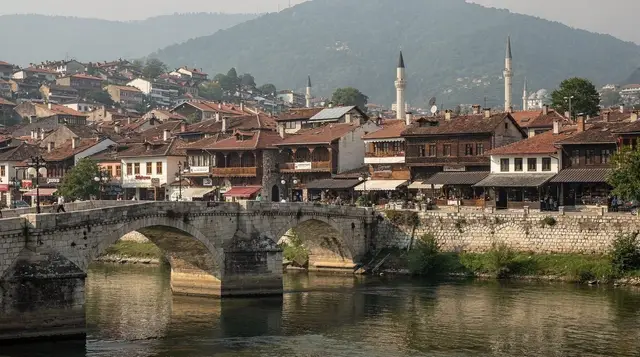
Start gently, on foot, in the Ottoman old town. Baščaršija was founded around 1462 and is still a working bazaar rather than a reconstruction, which tends to hold a child’s attention longer than a museum would: coppersmiths still hammer sheets of metal into pots at the Kazandžiluk workshops, and the smell of fresh burek and grilling ćevapi is constant. The Sebilj, the wooden fountain from 1891 in the main square, is where everyone in Sarajevo eventually passes, and it is fed with drinking water, which children like to test.
Ride Sarajevo’s trams for the sake of riding them. The network dates to 1885 and is one of the oldest urban tramways in Europe still running continuously; a single ticket costs around 1.80 KM (about €0.90) from a kiosk, a little more bought on board, and needs to be composted. Lines 1 to 3 run the length of the valley and give a child a moving window onto the city without any walking required. For a slightly older group, a guided walking tour of the old town and the Ottoman quarter covers the same ground with a guide doing the talking, which frees the adults up to watch the children instead of a map.
Keep the Latin Bridge and the 1914 assassination site on the route as a five-minute stop if it comes up naturally, but there is no need to explain it in depth to a young child; the Bašćaršija walking guide has a fuller route if you want to extend the afternoon.
Day 2: Vrelo Bosne on wheels, then the Bijambare caves
Vrelo Bosne, the spring where the Bosna river surfaces at Ilidža, sits at the end of the Velika aleja, a 3.5 km avenue of plane trees planted more than a century ago. Walking that distance both ways with young legs is the single most common way families overdo this stop: rent bikes at the park entrance, book a horse-drawn fijaker, or take the e-bike tour that covers the avenue with snacks included instead.
The spring itself, with its footbridges over turquoise water and resident swans, needs no walking at all once you arrive. Ilidža is about 12 km from central Sarajevo, 20 to 25 minutes by taxi or tram plus a short connection. The full route and rental details are in the Vrelo Bosne visiting guide.
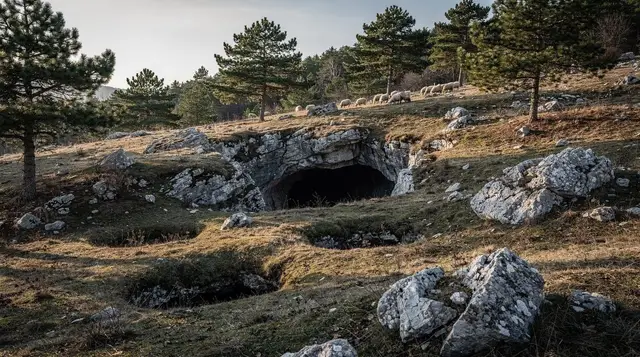
In the afternoon, drive or taxi about 30 km north to the Bijambare Caves. The show cave here is lit and fitted with a railed walkway, and a guided visit runs around 45 minutes — genuinely easier for children than most caves in the region, since there is no crawling or scrambling involved. The steps are damp, so hold hands, and keep to the walkway: the surrounding hillside, like most unmarked ground in this country, is not an area to wander off into. The Bijambare Caves visiting guide has current opening hours, which vary by season.
Day 3: Trebević cable car and the abandoned bobsleigh track
Trebević, the mountain that overlooks the city from the south-east, is the easiest big day on this itinerary and usually the one children remember best. The cable car, reopened in 2018 on the route of the original that ran until the siege, takes about 9 minutes from Bistrik up to 1,164 m, and a return ticket costs around 20 KM (about €10). At the top, the disused 1984 Olympic bobsleigh and luge track is open access, covered in decades of graffiti, and is genuinely fun for a child to run through: the curved concrete banks are wide, mostly flat underfoot, and safe to walk.
Stay on the track itself. It sits inside forest, and Bosnia still has suspected minefields in unmarked and off-path ground decades after the war; that rule holds here exactly as it does on any hiking trail in the country, and it is worth saying out loud to older children rather than assuming it is obvious. The Trebević bobsleigh track guide and the mine safety guide for hiking in Bosnia both cover this in more detail.
Bring a picnic, or book the guided hike with a picnic lunch included if you would rather not carry food up yourself. There are short, clearly marked walking paths near the upper cable car station that suit shorter legs, with views back down over the whole Sarajevo valley.
Day 4: Jajce — a waterfall in the middle of town
This is the longest day of the trip, and it should be treated that way. Jajce is 165 km and around 2 hours 30 minutes from Sarajevo by road, so plan on roughly 5 hours of driving for a single day out, with breaks built in rather than treated as optional. A guided day tour takes the driving off your hands entirely and is worth the cost with young children in the car; the guided day tour to Travnik and Jajce with fortress entry included splits the drive with a stop in Travnik, birthplace of the Nobel laureate Ivo Andrić, which gives everyone a chance to get out and walk before the second half of the journey.
The payoff at Jajce needs no hike to reach: the Pliva waterfall drops about 20 m right in the middle of town, visible from the main street with no walk-in at all, which makes it one of the least demanding “big sight” stops anywhere in this itinerary.
The medieval fortress above town is a short, manageable climb if children still have energy left, and the Pliva watermills, a cluster of small wooden mills on the river just outside town, are an easy add-on. For families who want the fuller story of medieval Bosnia here, the guided tour through Jajce’s medieval history is aimed at older children rather than toddlers. Full route notes are in the Jajce and Travnik day trip guide.
Day 5: Kravice Waterfalls — the swimming day
Kravice is the farthest stop on this itinerary, about 180 km and roughly 3 hours each way, which makes for a long day even with an early start. It earns its place here for one reason: in summer, it is the one stop on this whole route where children can actually swim, in the calmer, shallower pools near the shore below the main curtain of falls, which drops about 25 m across a wide, natural amphitheatre. There are no lifeguards, and the current picks up noticeably closer to the falls themselves, so keep younger children in the quiet edges and watch them directly. Entry runs around 20 KM (about €10) per person in high season.
Given the distance, this is a day where booking transport rather than self-driving pays off twice over — once for the driving itself, and once because a guide will know which pools are calm on the day you visit. The Kravice Waterfalls visiting guide has current water levels and swimming conditions by month. Families who find two long out-and-back days in a row too much can fold this stop into a longer, overnight version of the trip instead — the guided three-day tour combining Mostar, Kravice and Blagaj covers the same waterfall at a slower pace, with Mostar and the spring at Blagaj added in and no same-day return drive.
Bring swimwear, water shoes for the stony shoreline, and a change of dry clothes for the drive back — Sarajevo with kids has a fuller packing note for days like this one, and the site’s packing list tool generates one for the whole trip. For more ideas that stay this close to Sarajevo without the two long drives, see family day trips from Sarajevo.
Questions about doing Bosnia with young children in five days
Why does this itinerary skip the Tunnel of Hope and the siege museums?
They are the right thing to see in Sarajevo, but they are heavy, and most guides who run them will say so themselves. This route is the one page on the site built deliberately around what keeps young children moving and interested, not around what an adult should not miss.
Is Vrelo Bosne worth it with a stroller?
The park itself is flat and paved, but the walk out along the Velika aleja is 3.5 km each way. Rent bikes, book a fijaker horse-drawn carriage, or take the e-bike tour rather than pushing a stroller the whole distance.
Are the Bijambare caves safe and easy for small children?
The show cave has a lit, railed walkway and takes about 45 minutes with a guide, so it works for most ages. Hold hands on the steps, which are damp and uneven in places, and keep to the walkway.
Can we actually explore the old bobsleigh track on Trebević?
Yes, it is open access and children generally enjoy running its curves and looking at the graffiti. Stay on the concrete track itself; do not cut into the trees around it, for the same mines reason that applies to any unmarked ground in Bosnia.
Is the Jajce day trip too long for young children?
At 165 km and roughly 2 hours 30 minutes each way, it is the longest day of this itinerary. Split it with a stop in Travnik, book a guided tour so nobody has to drive tired, and treat the waterfall itself, which sits in the middle of town with no walk-in needed, as the payoff.
Is Kravice safe for children to swim at?
In summer, yes, in the shallower pools near the shore, though the current strengthens toward the falls and there are no lifeguards. Keep younger children in the calm edges and watch them directly rather than from a blanket.
Do we need mine safety rules if we are only doing family-friendly stops?
Yes. Every stop on this route, from the bobsleigh track to Bijambare’s surrounding hillside, sits inside a country where demining is still ongoing. The rule does not relax because the destination is aimed at children: stay on marked paths and paved areas, always.
Do we need a rental car for this itinerary?
No. Vrelo Bosne and Bijambare are reachable by taxi or organised half-day tours, Trebević has its own cable car, and both Jajce and Kravice are covered by guided day tours that include the driving, which is the easier choice with tired children in the back seat.
Family-friendly tours on GetYourGuide
Verified deep-linked GetYourGuide tours. Book through these links and we earn a small commission at no cost to you.
GetYourGuide does not provide a product photo for this activity — the image shows the meeting point, photographed by us.