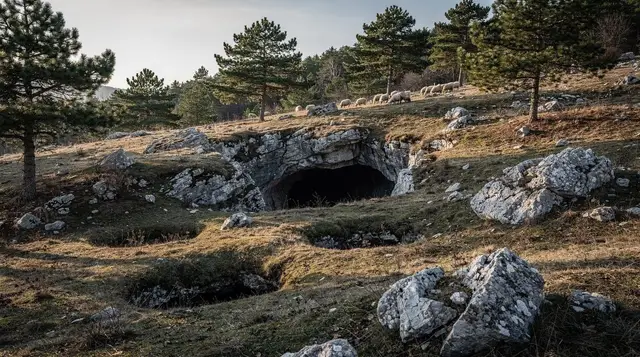
Bijambare Caves: visiting Sarajevo's nearest show cave
What can you actually see at Bijambare Caves?
A guided, lit stretch of roughly 45 minutes through one chamber of the Bijambare cave system, helmet provided. The rest of the network, several kilometres of it, is reserved for equipped speleologists and is not part of the public tour.
An underground half day, not a waterfall
Bijambare Caves sit inside a protected nature reserve roughly 30 km north of Sarajevo, and the two things worth knowing before anything else are that this is a cave, not a waterfall, and that only a small, lit stretch of the system is open to ordinary visitors. People occasionally arrive expecting something closer to Skakavac, which is a hike to a 98-metre waterfall in a different direction from the city with no cave at all. Bijambare is the opposite kind of outing: cool, dim, underground, and over in under an hour once you are inside.
The reserve itself covers several karst caves, of which one, sometimes called the Bijambare show cave, has walkways, lighting and a marked route for guided visits. The rest of the network, several kilometres of mapped passages, belongs to speleologists with their own equipment and training, and it is not something a general visitor can wander into. That division matters for planning: come expecting a short, guided, accessible walk underground, not a caving expedition.
Getting there without public transport
There is no direct bus, tram or train service to Bijambare, which is the detail that catches out visitors who have been relying on Sarajevo’s tram network or intercity buses for everything else. The two realistic ways in are:
- Self-drive, around 40 to 50 minutes from central Sarajevo on rural roads. A rental car makes the most sense if you are also planning other trips outside the city, since driving in Bosnia on these routes is straightforward once you are out of the city traffic.
- An organised half-day excursion, which removes the need to navigate unmarked turnings and usually bundles the cave entrance and guide into one price. This is the simpler option if you are not renting a car for the rest of your stay, and it is the same logic covered in our guide to day trips without a car.
A taxi is possible but expensive for a round trip with a wait built in, and it is not something most Sarajevo taxi drivers do routinely, so agree the fare and the return time clearly before setting off; see our notes on taxis in Sarajevo for how that negotiation usually goes.
What the guided 45 minutes covers
At the entrance, a guide fits visitors with a helmet, mandatory for the low sections of ceiling, and leads the group along a lit, railed path through one chamber of the system. The walk lasts about 45 minutes, moving slowly enough to point out formations and explain what lies beyond the barriers, and it does not require any climbing, crawling or equipment beyond the helmet provided.
Tours typically leave once a small group has gathered at the entrance rather than running on a fixed timetable, which means a short wait is normal on a quiet weekday and closer to none at all on a busy weekend. If keeping to a schedule matters more than saving a little money, booking the trip as part of an organised excursion avoids that uncertainty entirely.
The deeper, unlit parts of the Bijambare system are the domain of caving clubs and researchers, and they are not accessible on the standard visit at any price. If you have genuine caving experience and want to go further, that is arranged separately and well in advance through specialist operators, not at the ticket window.
Temperature and what to bring
The cave holds a cool, near-constant temperature year-round, noticeably colder than a Sarajevo summer afternoon and noticeably milder than a Sarajevo winter one. Bring a light jacket or fleece regardless of the season above ground; shorts and a T-shirt that feel right in July at Baščaršija are the wrong outfit for the cave itself.
Footwear matters more than clothing. The path inside is uneven, sometimes damp, and closed shoes with a decent grip are necessary; sandals or anything open-toed are a genuine hazard on wet stone, not just an inconvenience. Outside, the reserve’s trails are unpaved, so the same shoes that work for the cave will do for a walk around the grounds afterwards.
The reserve above ground
Bijambare is a protected nature reserve, not only a cave entrance with a car park, and the area around the show cave has marked walking trails, benches and picnic spots set among forest and karst scenery. Most visitors treat the guided cave tour as the centrepiece of a slower half day that includes some time walking the reserve itself before or after.
As with any wooded or hillside area in Bosnia and Herzegovina, stick to marked trails. Landmines remain a real, documented risk in parts of the countryside decades after the war, and while the developed reserve around Bijambare is a managed, visited site, the general rule for the whole country holds everywhere: never leave marked paths or frequented areas, and heed any yellow or red warning signage without exception. Our guide to landmine safety while hiking sets out the full picture and is worth reading before any walk off a paved road in Bosnia.
Picnic here, not at Vrelo Bosne
The instinct to pair Bijambare with Vrelo Bosne, the spring and poplar avenue at Ilidza, is understandable since both are popular half-day nature outings from Sarajevo, but the geography does not cooperate. Vrelo Bosne sits on the opposite side of the city, and driving between the two adds enough time in the car that the day stops feeling relaxed and starts feeling like a transit exercise.
A better plan is to picnic inside the Bijambare reserve itself. The benches and grounds around the cave entrance are set up for exactly this, and bringing food from Sarajevo, or picking up bread, cheese and fruit at a market stop on the way, turns the cave visit into a full, unhurried half day without a second long drive. Treat Vrelo Bosne as its own separate outing, ideally paired with Skakavac or another destination on the same side of the city; see the Vrelo Bosne visiting guide for how that trip works on its own terms.
Comparing Bijambare with the other nearby nature stops
| Destination | What it is | Approx. distance / time from Sarajevo | Public transport |
|---|---|---|---|
| Bijambare Caves | Guided show cave, ~45 min underground | ~30 km / 40–50 min | None; car or organised tour only |
| Skakavac waterfall | 98 m waterfall, forest hike | ~12 km further north again, ~1 hr | Limited; usually car or tour |
| Vrelo Bosne | Spring, poplar avenue, Ilidza | ~12 km / 25 min | Tram plus short walk or fiacre |
The pattern worth noting is that Vrelo Bosne is the one genuinely easy outing by public transport, while both Bijambare and Skakavac are more comfortable with a car or a booked tour, and neither pairs naturally with the other in a single half day without a lot of driving.
What it costs and how long to set aside
Entry to the guided cave section is paid in cash on site, a modest sum that will not affect the overall budget of a half-day trip. Bring cash regardless: as with most sites outside central Sarajevo, cards are not a given here. For the whole outing, allow a half day rather than the 45 minutes of the tour alone once travel time, any wait for a group to form, and time in the reserve are factored in.
| Item | Approx. cost / time |
|---|---|
| Cave entrance and guided walk | Modest, cash only, on site |
| Guided tour duration | ~45 minutes |
| Drive from Sarajevo | ~40–50 minutes each way |
| Recommended time to set aside | Half day |
Combining the visit with a booked nature tour
Because there is no direct bus to Bijambare, an organised excursion is often the least stressful way to see it, particularly for a solo traveller or anyone not renting a car for the rest of their stay. A guided nature walk in the hills around Sarajevo, such as the Stojčevac nature walk, gives a useful sense of the same karst landscape without needing your own transport, and operators covering this side of the city can often be asked about a Bijambare add-on directly.
For a different kind of half day in the same general area, an eco tour to the source of the Miljacka river covers spring-fed landscape rather than a cave, and is worth considering as a separate, standalone trip rather than a same-day pairing with Bijambare.
If the underground stretch of Bijambare leaves you wanting a longer walk in daylight afterwards, the half-day tour to Skakavac waterfall is the clearest way to see that separate destination without driving yourself, and it underlines the distinction worth remembering: Skakavac is water and forest above ground, Bijambare is stone and dark below it.
For an evening outing that needs no advance driving of your own at all, the sunset and night hike on Mount Trebević is close to the city and works well as the second half of a day that started underground at Bijambare.
Planning the rest of your trip
Bijambare works best as one component of a broader stay rather than a headline reason to visit Sarajevo on its own. If you are building out a first visit, our Sarajevo in one day and Sarajevo in two days guides cover the city core, while the wider hiking around Sarajevo guide sets Bijambare in context alongside Trebević, Bjelašnica and the trails around Lukomir.
Families weighing up whether the cave suits younger children can check Sarajevo with kids and the broader list of family day trips from Sarajevo, and anyone assembling a longer nature-focused stretch of the trip should start from best day trips from Sarajevo to see how Bijambare fits against Skakavac, Vrelo Bosne and the mountains further out. Pack for the temperature swing between a warm city afternoon and a cool cave interior; our Sarajevo packing list covers layers that work for exactly this kind of day.
Bijambare Caves visit: questions answered
How far is Bijambare from Sarajevo and how do I get there?
Around 30 km north of the city, about 40 to 50 minutes by car on ordinary rural roads. There is no direct bus or tram service, so the realistic options are a rented car, a taxi arranged for the return trip, or an organised half-day excursion.
How long does the cave tour last?
The guided section runs about 45 minutes, walking at an easy pace with stops. It covers a fraction of the mapped system; the deeper passages are closed to visitors without caving equipment and a specialist guide.
Do I need to book in advance?
Not usually for the standard guided walk, which departs when enough visitors have gathered at the entrance, though this can mean a short wait on a quiet weekday. An organised tour from Sarajevo removes that uncertainty.
What should I wear inside the cave?
Closed, non-slip shoes are necessary; the path is uneven and often damp. A light jacket or fleece helps too, since the temperature underground stays cool and constant regardless of the season above.
Is Bijambare the same as the Skakavac waterfall?
No, and mixing the two up is an easy mistake. Skakavac is a waterfall hike north of Sarajevo with no cave involved; Bijambare is entirely underground, in a separate protected reserve with its own entrance and car park.
Can I combine Bijambare with Vrelo Bosne in one day?
It is possible but tight, and the two sit on opposite sides of Sarajevo with a drive between them, so it stops feeling like a relaxed outing. A picnic inside the Bijambare reserve itself, before or after the cave tour, makes for a calmer half day.
Is there anywhere to eat near the caves?
Options are limited and rural rather than a strip of restaurants, so most visitors bring their own food and use the picnic areas and benches in the reserve around the cave entrance.
Are the caves suitable for children?
The guided 45-minute walk is manageable for most children who can handle uneven, occasionally slippery ground and a cool, dim environment; strollers do not work on the path, so a child who can walk the distance is the practical minimum.
Hiking & nature tours on GetYourGuide
Verified deep-linked GetYourGuide tours. Book through these links and we earn a small commission at no cost to you.
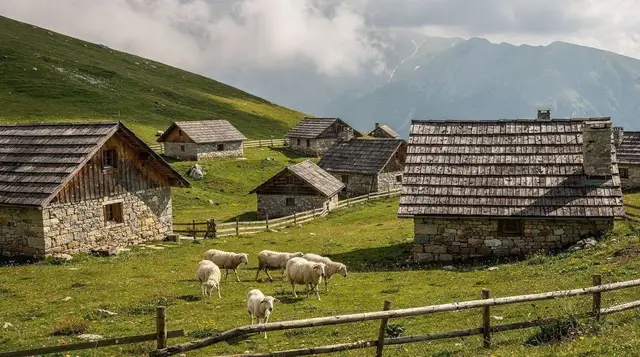
GetYourGuide does not provide a product photo for this activity — the image shows the meeting point, photographed by us.