Bosnian coffee is not Turkish coffee
The mistake I made on my first morning in Baščaršija
I ordered a coffee on my first morning in Baščaršija the way I’d order one anywhere: a small cup arrived, a small copper pot arrived next to it, and a cube of sugar sat on the saucer with a single piece of rahat lokum. I picked up the spoon, dropped the sugar into the cup, and stirred. The waiter, who had been perfectly friendly two minutes earlier, watched me do it with an expression I can only describe as personally offended. He didn’t say anything. He didn’t need to. I had just done, in full view of a café that had been serving this drink the same way for longer than most countries have existed in their current borders, the one thing you’re not supposed to do with it.
That cup was bosanska kafa - Bosnian coffee - and I had been treating it like instant granules in hot water. It took me the rest of that week, and a few more quietly corrected mistakes, to understand what I’d actually been served, and why it isn’t the same drink as its more famous regional cousin.
How bosanska kafa actually gets made
The coffee itself is ground fine, close to a powder, the same way it is for Turkish or Greek coffee. Where it splits off is in the brewing. Water goes into the dzezva - the long-handled copper pot - and comes to a boil on its own, with nothing else in it. Only then does the coffee go in, off the heat, stirred once, before the pot goes back onto the flame just long enough for a foam to rise. That foam, called kajmak here (not to be confused with the clotted cream of the same name served with meat), gets spooned or poured a little into each empty cup first. The rest of the coffee follows on top. Skip that step and you’ve made a coffee; do it and you’ve made a Bosnian one.
None of this is fast. A proper bosanska kafa takes several minutes from order to table, brewed to order rather than pulled from a machine, which is part of why it’s meant to be drunk slowly, in company, over conversation rather than on the way somewhere. I didn’t understand that the first time either - I finished mine in about ninety seconds and looked, I imagine, exactly as out of place as I felt.
The sugar cube, again
Here’s the part that actually confused me: the sugar isn’t optional, and it isn’t meant for the coffee at all. It’s meant for you. You take a small bite of the cube, drink a sip of the black, unsweetened coffee, and let the two meet in your mouth rather than in the cup. The rahat lokum works the same way, a separate hit of sweetness between sips rather than a garnish. Dissolve the sugar into the coffee and you’ve flattened the whole point of serving them apart - which is presumably why my waiter looked so pained.
Turkish coffee, in most of the versions I’ve had elsewhere, goes the opposite direction: the sugar (when there is any) is added to the water before it ever reaches a boil, so sweetness and bitterness cook together into one thing. It isn’t wrong, it’s just a different drink with a similar grind and a similar pot. Calling bosanska kafa “Turkish coffee” in Sarajevo is a bit like calling an espresso a filter coffee because both start as ground beans and hot water - technically adjacent, practically a different order entirely.
Where the ritual still holds
a hands-on Bosnian coffee workshop that walks through the whole brewing sequence is a fair shortcut if you’d rather be shown once than corrected twice, the way I was.
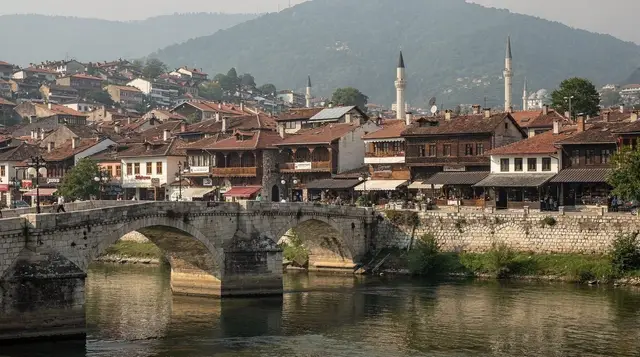
Baščaršija is where the tradition is easiest to find intact - small cafés along narrow lanes, coffee ground on site rather than bought in bulk, and staff who still expect the ritual to be followed. I’m deliberately not naming specific cafés here; they change hands and quality often enough that a story like this one goes stale fast, and there’s a proper Baščaršija walking guide built to be checked and updated instead. A few streets over, the coppersmiths of Kazandžiluk still hammer out the dzezvas themselves, which is worth seeing even if you have no intention of carrying copper home in a suitcase.
If you’d rather have someone else navigate the ordering etiquette on your first pass, an old town coffee and baklava tour with panoramic viewpoints pairs the cup with the view and takes the guesswork out of it. For the fuller mechanics of the pour, the foam and the sugar cube, there’s a dedicated Bosnian coffee ritual guide that goes into more detail than a story about my own bad manners really should.
It’s cheap, and that’s part of the point
A bosanska kafa runs about 2 to 3 KM (a little over 1 EUR), a rahat lokum-and-baklava plate not much more, and an espresso - for anyone who’d rather skip the ceremony - about 2 to 2.50 KM. Given how much longer the Bosnian version takes to make, that price gap is almost backwards, and it says something about what the drink is actually for: not efficiency, but time spent sitting still.
| Drink | Typical price | Time to prepare |
|---|---|---|
| Bosnian coffee (bosanska kafa) | 2-3 KM | Several minutes, brewed to order |
| Espresso | 2-2.50 KM | Under a minute |
| Rahat lokum (single piece) | Usually included or 1-2 KM extra | - |
It’s also, compared with a lot of what a coffee costs a few hours north in Croatia or Austria, close to free, which is one more reason it’s easy to have three of these in a morning without noticing your budget move at all - see the wider Sarajevo food guide for how that stretches across a whole day of eating, from burek to ćevapi and the sweeter end of the table covered in the Bosnian sweets guide.
What actually separates it from Turkish coffee
Not the beans. Not really the grind, which is close enough between the two that most people couldn’t tell blind. The real differences are in the sequence and in the hospitality built around it: water boiled alone, coffee added off the heat, foam distributed cup by cup before the rest is poured, and sugar handed over separately rather than dissolved in - a cube to bite, not a spoonful to stir. It’s slower on purpose, and the slowness is the actual product, which is why nobody in Baščaršija is in a hurry to hand you a to-go cup.
I’ve had a lot of coffees since that first, badly-stirred one, and I’ve made a point of not touching the spoon again. If you want the more organised version of everything I learned the clumsy way - what to order, what not to do with the sugar, roughly what it should cost - the Bosnian coffee ritual guide covers it properly. This one’s really just an account of getting it wrong in public, once, in front of a waiter who was too polite to say so and didn’t need to.
For a first visit generally, the Sarajevo first-time guide and a look at Sarajevo’s food tours compared will save you a few more of these small, avoidable mistakes - and if hospitality customs are the part that interests you most, the notes on Bosnian hospitality go well beyond just the coffee cup.
Bosnian coffee FAQ: sugar, price and etiquette in Sarajevo
Is Bosnian coffee the same as Turkish coffee?
They share a grind and a copper pot, but not much else. Turkish coffee is usually brewed with the sugar already in the water. Bosnian coffee is brewed with nothing but water and coffee, and the sugar arrives afterwards as a cube on the saucer, meant to be bitten between sips, not stirred in.
Why shouldn’t I stir the sugar into my coffee in Sarajevo?
Because it isn’t served that way. The cube sits next to the cup so you can dip it and bite it, tasting the sweetness against the bitterness of the coffee rather than blending the two. Stirring it in is a common first-timer’s mistake, and most staff will notice.
How much does a Bosnian coffee cost in Sarajevo?
Around 2 to 3 KM (roughly 1 to 1.50 EUR) in an ordinary café, slightly more with a piece of baklava or rahat lokum on the side. Espresso, by comparison, runs about 2 to 2.50 KM, despite taking far less time to make.
What is rahat lokum and why does it come with the coffee?
It’s a soft, sugar-dusted confection, closer to what English calls Turkish delight, served in a single small piece alongside the sugar cube. It isn’t a dessert course - it’s part of the same slow ritual as the coffee itself.
Where in Sarajevo is Bosnian coffee still made the traditional way?
Baščaršija, the old Ottoman quarter, is where the ritual holds up best - copper dzezvas, unhurried service, coffee ground on site rather than bought pre-ground. Specific cafés change often enough that a separate, regularly checked guide is a better source than a name dropped into this story.
What’s a dzezva?
The long-handled copper pot the coffee is brewed and served in. Sarajevo’s own coppersmiths, working a few streets from most cafés that use them, still make and repair them by hand.
Sarajevo food & drink tours on GetYourGuide
Verified deep-linked GetYourGuide tours. Book through these links and we earn a small commission at no cost to you.
GetYourGuide does not provide a product photo for this activity — the image shows the meeting point, photographed by us.