Breakfast in Sarajevo: bosanska kafa, proper burek and where to eat it
What should I actually eat for breakfast in Sarajevo?
A slice of burek - meat-filled pastry, the only kind Sarajevans call burek - eaten standing up at a stall near the Sebilj, followed by a bosanska kafa in a copper dzezva with a cube of sugar and a piece of rahat lokum. Expect to pay 3-5 KM for the pastry and 2-3 KM for the coffee, together roughly 3-4 EUR.
Coffee first, cevapi later
Sarajevo’s morning food culture runs on two things: a slice of burek eaten standing up, and a bosanska kafa drunk sitting down for as long as it takes. This is not the page for cevapi - that is lunch and dinner food, and ordering it before noon marks you as a tourist rather than a local. This page covers what Sarajevo actually eats and drinks between roughly 7am and 11am, what it should cost, and which stalls near the Sebilj are selling pastry baked that morning rather than reheated from the day before.
The two anchors are burek and bosanska kafa. Everything else - sirnica, krompirusa, zeljanica, espresso, the cafes along Ferhadija - sits around those two fixed points.
Burek means meat, and nothing else
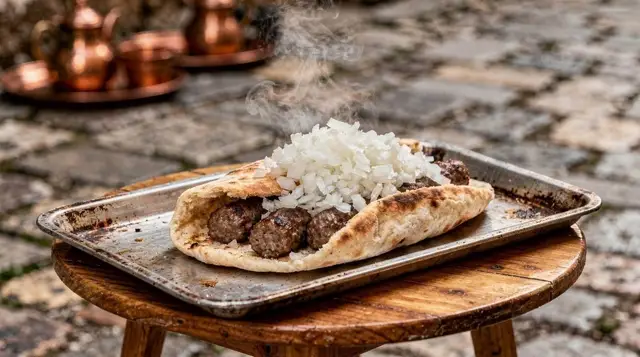
In most of the English-speaking world “burek” has become a catch-all word for any filled filo pastry. In Bosnia it is not. Burek is specifically the meat-filled version - minced beef or a beef-lamb mix, rolled in coiled or layered filo and baked until the top is dark and crisp. The other fillings have their own names, and Sarajevans use them precisely:
| Bosnian name | Filling | What to say if you don’t want meat |
|---|---|---|
| Burek | Minced meat | - |
| Sirnica | Cheese (usually a soft white cheese) | Ask for sirnica |
| Krompirusa | Potato | Ask for krompirusa |
| Zeljanica | Spinach, sometimes with cheese | Ask for zeljanica |
The four pastries usually sit in the same tray or the same case, cut into the same spiral or rectangular slices, so the only way to be sure what you are getting is to say the right word. Asking for “burek” and expecting cheese, or asking for “a slice” and pointing vaguely, is how visitors end up with the wrong breakfast. Our burek guide goes deeper into the pastry itself; this page is about where and when to eat it.
Portions are usually sold by weight or by slice rather than as a fixed single serving, and a slice big enough for breakfast runs 3-5 KM (roughly 1.50-2.50 EUR). Bakeries sell burek all day, but the trays coming fresh out of the oven in the early morning are the ones worth catching - by mid-afternoon you are often eating from a tray that has been resting, and reheated, since lunchtime.
Bosanska kafa: the ritual, not just the drink
Bosanska kafa - Bosnian coffee - is finely ground coffee simmered in a small copper or brass pot called a dzezva, poured unfiltered into a small cup, and left to settle before drinking. It arrives with a cube of sugar on the side and, in a proper setting, a small piece of rahat lokum (Turkish delight). You do not stir the coffee grounds into the drink, and you do not drink the last mouthful, which is thick with sediment.
The price is almost always 2-3 KM, and it is meant to be drunk slowly - twenty minutes at a Bascarsija table with a dzezva of coffee is normal, not a sign you are lingering too long. If you want a faster, more familiar cup, cafes across the city also serve standard espresso for 2-2.50 KM, and it is a perfectly acceptable way to start the day if you are not in the mood for the ritual. Our Bosnian coffee ritual guide covers the etiquette - how to pour, how to eat the lokum, and when it is rude to rush - in more detail than fits here.
Where to actually eat breakfast
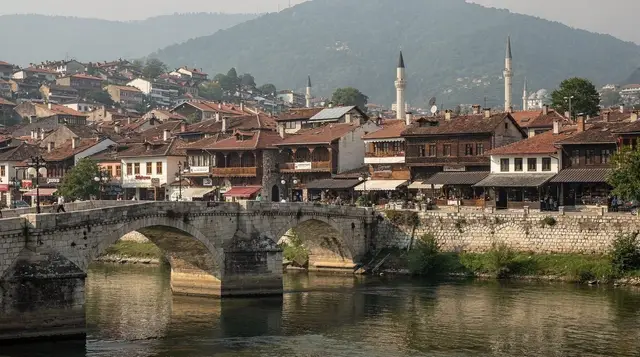
The lanes radiating from the Sebilj fountain in Bascarsija are the obvious starting point, and for good reason: this is where the highest concentration of bakeries and coffee stalls open earliest, some before 7am, well ahead of the tour groups. The tell for a good stall is not its proximity to the fountain - plenty of average ones sit right on it - but whether the customers in front of you are locals on their way to work rather than other visitors with cameras. A queue of Sarajevans buying burek to eat standing at the counter, wrapped in paper, is the best endorsement a stall can have.
Ferhadija, the pedestrian street running from Bascarsija toward the Austro-Hungarian city centre, is the second option, and arguably the calmer one. The cafes here serve the same bosanska kafa without the Bascarsija footfall, at similar or slightly lower prices, and they are a reasonable base if you are staying near Markale Market rather than in the old town itself. Our Ferhadija walking guide covers the wider street if you want to fold breakfast into a longer walk.
Neighbourhood kafanas further from the tourist core - the kind with plastic chairs and a handwritten price list rather than an English menu - are where locals actually have their morning coffee, and they are almost always cheaper. If you are doing a longer stay and want to see how residents live day to day rather than just the sights, a walk through the older mahala neighbourhoods is a good way to find one:
a guided hike through Sarajevo’s traditional mahala neighbourhoods, the residential quarters climbing the hillsides above the old town, works well as a mid-morning walk after breakfast rather than instead of it - eat first in Bascarsija, then walk it off uphill.
The reheated-burek problem
The single most common breakfast disappointment in Sarajevo is not a bad recipe, it is a stale one. Burek made to be sold to whoever walks past a landmark all day does not get baked fresh every hour; it gets baked once, then kept warm - sometimes for many hours - under a heat lamp or in a low oven. The result is soft rather than crisp pastry, layers that have gone slightly gummy, and a filling that tastes flat rather than fresh.
A few concrete signs to check before you buy:
- Texture on top: fresh burek has a dry, crackling, browned top layer. If it looks pale, soft or slightly damp, it has probably been sitting.
- Visible restocking: bakeries doing real trade near Bascarsija bring out new trays more than once during the morning. If the case looks half-empty and nobody is bringing more out, ask when the next batch arrives rather than settling for what is left.
- Locals in the queue: a stall with mostly tourists in line is not automatically bad, but a stall with mostly locals in line is a much stronger signal.
- Price as a rough proxy: burek priced noticeably above the 3-5 KM range right by a landmark is often selling convenience and location rather than freshness - it is not a guarantee either way, but it is worth noticing.
None of this requires research in advance. It is a habit you can apply at the counter in about five seconds, and it is the difference between a good Sarajevo breakfast and a mediocre one.
A simple breakfast route through Bascarsija
If you want a structured way to do this rather than wandering, here is a route that works well as the opening of a one-day Sarajevo itinerary or simply as a slow first morning:
- Start at the Sebilj itself, then take one of the small lanes leading off it rather than the widest tourist thoroughfare - the bakeries doing the earliest trade are usually one or two turns off the main flow.
- Buy a slice of burek, confirming the filling by name, and eat it standing at the counter or on a nearby bench - it is meant to be eaten hot, not carried around for twenty minutes.
- Move to a cafe table, order a bosanska kafa, and sit with it for as long as feels natural. This is the point of the morning, not a stop to rush through.
- If you want a wider taste of the city’s food beyond breakfast, a guided walk is a straightforward way to do it without guessing:
a guided walking food tour through Sarajevo’s Grbavica district, which moves beyond the old town’s most visited stalls into a residential area most visitors never eat in, works well later in the day once the morning coffee ritual is out of the way.
- For a longer day built around Herzegovina’s food and wine rather than Sarajevo’s breakfast stalls, a full-day culinary and cultural trip from Sarajevo into Herzegovina covers a different set of dishes and a rakija tasting along the way - a good pairing for anyone whose interest in Sarajevo breakfast has turned into a wider interest in Bosnian food generally.
Our Bascarsija walking guide covers the bazaar in full for the rest of the day, once the breakfast stop is behind you, and the coppersmiths of Kazandziluk are a natural next stop if you are already in the lanes just north of the Sebilj.
Vegetarian mornings
Sirnica, zeljanica and krompirusa share the same trays and the same bakeries as burek, so a vegetarian breakfast in Sarajevo requires no separate search - only the right word at the counter. Cheese burek (sirnica) is the most widely available of the three; spinach (zeljanica) and potato (krompirusa) are slightly less universal but still common at any bakery doing real volume. None of the three are marked as “vegetarian” on a sign - Bosnian bakeries assume you know the names, which is exactly why getting them right matters. Our vegetarian and vegan Sarajevo guide covers the rest of the day’s meals if breakfast is only the start of the question.
Hours, cash and manners
Bakeries around Bascarsija generally open by 7am, sometimes earlier, and the best trays go fastest between 7am and 9am before the day’s visitors are up. Cafes serving bosanska kafa tend to open a little later, closer to 8am, since the coffee itself is meant to be a sit-down pause rather than a grab-and-go.
Cash is close to essential for both burek stalls and small cafes - card machines exist in some Bascarsija spots but not reliably at the smaller counters, and having a few KM in low denominations makes the transaction faster for everyone. Tipping is not expected on a 2-3 KM coffee, though rounding up is normal and appreciated.
If sitting for coffee, it is fine - normal, even - to order one dzezva and stay for twenty or thirty minutes; nobody will hurry you, and rushing the ritual rather defeats the point of ordering it. During Ramadan, the schedule shifts: many stalls and cafes near Bascarsija open later in the morning and stay busiest after the evening call announcing iftar rather than at dawn - see the Ramadan in Sarajevo guide for what changes if your visit falls during the fasting month.
For a broader sense of where locals eat as opposed to where visitors are steered, our Sarajevo tourist traps guide and restaurants by budget guide both cover the same instinct - queue length and local presence over proximity to a landmark - applied to lunch and dinner instead of the morning pastry counter.
Breakfast in Sarajevo: the essentials answered
Is burek always made with meat in Bosnia?
Only the meat version is called burek. The cheese one is sirnica, the potato one is krompirusa, and the spinach one is zeljanica. Ordering burek in Sarajevo and getting handed a cheese pastry means you have walked into a place using the word loosely - ask directly for the filling you want.
What is bosanska kafa and how is it different from Turkish coffee?
Bosanska kafa is finely ground coffee boiled in a small copper pot, the dzezva, and served unfiltered with the grounds settled at the bottom, alongside a cube of sugar and usually a piece of rahat lokum. The method is close to Turkish coffee, but Sarajevans are precise about the name and the ritual of drinking it slowly, not the recipe.
Where near the Sebilj can I get a fresh burek in the morning?
The bakeries and stalls tucked into the lanes just off the Sebilj fountain in Bascarsija sell burek fresh from the tray from early morning, and a queue of locals rather than a queue of tour groups is the best sign the pastry was baked that day.
How much should breakfast in Sarajevo cost?
A realistic morning of burek and coffee runs 6-8 KM per person, around 3-4 EUR. A cafe espresso adds 2-2.50 KM. Paying much more than that near a landmark usually means a tourist markup rather than a better product.
How do I spot a burek that has been reheated rather than baked fresh?
Reheated burek is soft rather than crisp on top, the pastry layers have collapsed into each other, and it is often kept warm under a heat lamp instead of coming straight from a visible oven. Fresh trays are usually restocked more than once during the morning - ask when the next batch comes out if the counter looks quiet.
Can I get a proper breakfast outside Bascarsija?
Yes. Ferhadija and the surrounding Austro-Hungarian streets have cafes serving the same bosanska kafa without the Bascarsija footfall, and neighbourhood kafanas away from the old town serve locals rather than visitors, often at lower prices.
Is there a vegetarian option for breakfast?
Sirnica (cheese), zeljanica (spinach) and krompirusa (potato) cover most vegetarian breakfasts, and they sit in the same trays as burek at most stalls - just name the filling rather than asking for burek.
Sarajevo food & drink tours on GetYourGuide
Verified deep-linked GetYourGuide tours. Book through these links and we earn a small commission at no cost to you.
GetYourGuide does not provide a product photo for this activity — the image shows the meeting point, photographed by us.