The winter smog nobody warns you about
Is Sarajevo's winter air pollution really that bad?
Yes. Between December and February, Sarajevo regularly tops global rankings of the world's most polluted cities on a given day, because coal and wood heating smoke gets trapped in the valley by temperature inversions. Checking the daily AQI and heading uphill to Trebević, Bjelašnica or Jahorina on red days is the practical fix.
Why Sarajevo’s air turns bad in winter
Sarajevo sits at roughly 500 metres, resting in a narrow valley carved by the Miljacka and closed in by mountains on three sides. That geography is the same reason the city is beautiful, the reason the 1992-96 siege lasted as long as it did, and the reason its air turns genuinely bad for a few months every winter. None of these facts is separate from the others — they are all the same bowl.
The mechanism itself is straightforward. A meaningful share of Sarajevo’s homes and older apartment blocks are heated with coal and wood, either individually or through district plants that also burn coal. On a normal day, that smoke rises and mixes into the wider atmosphere. In winter, cold nights chill the valley floor faster than the air above it, so a layer of colder, denser air ends up trapped underneath a layer of warmer air — a temperature inversion. Smoke, vehicle exhaust and dust released into that trapped layer has nowhere to go. It just accumulates, day after windless day, until a change in weather — wind, rain, snow, or a passing front — finally flushes the valley out.
This is not a rare or occasional event. From December through February, Sarajevo regularly appears at or near the top of global rankings of the world’s most polluted cities on a given day, alongside places like Delhi and Lahore — a fact that surprises most visitors, since it has no connection to the size of the city or the volume of traffic. It is purely a function of the bowl, the cold snap, and the fuel being burned to stay warm inside it. The pollutant driving the headline numbers is PM2.5 — fine particulate matter small enough to lodge in the lungs — and on the worst days the reading in the city centre can sit many times above the level the World Health Organization considers safe for sustained exposure.
What it looks like on the ground
You will usually see it before you check a number for it. On a bad day, the view down Sniper Alley or from any of the Sarajevo viewpoints disappears into a flat grey-brown haze that sits over the whole valley like a lid. Streetlights and building outlines blur past a few hundred metres. There is often a faint smell of woodsmoke, particularly in the evening as households stoke fires for the night, and a metallic taste that many visitors notice within a day or two of walking around at valley level.
The pattern within a day is fairly consistent. Air is often at its worst overnight and in the early morning, when smoke has accumulated for hours with no sun to help disperse it. It can improve somewhat by mid-afternoon as the ground warms and some mixing occurs, then worsens again in the evening. None of this is a reason to abandon a trip — it is a reason to build the day around the reading, the same way you would check a rain forecast before deciding whether to walk or take the tram.
Check the index before you plan the day
The single most useful habit for a winter visit is to check a real-time air quality index before deciding what to do. Any AQI app or site with a Sarajevo monitoring station will do — look at the PM2.5 figure specifically, since that is the number that tracks the inversion smoke, rather than a generic “AQI” label that can be calculated differently in different apps. Treat the categories roughly like this:
| AQI category | What it means in Sarajevo in winter | Sensible response |
|---|---|---|
| Good to moderate | Wind or rain has cleared the valley, or you’re reading it after a front has passed | Normal sightseeing, walking, and outdoor plans |
| Unhealthy for sensitive groups | A mild, common inversion day | Fine for most visitors; asthma, heart conditions and young children should shorten outdoor time |
| Unhealthy to very unhealthy (“red”) | A settled, windless cold snap, typically several days running | Move plans uphill or indoors; limit exertion at valley level |
| Hazardous (“purple/maroon”) | Peak winter inversion, most common in January | Stay indoors where practical; a fitted mask outdoors for sensitive groups |
This is not a fixed forecast — it can change within a single day if wind picks up, and it can also persist unchanged for the better part of a week during a stubborn cold, still spell, which is when Sarajevo’s numbers tend to make international headlines.
Get above the smog
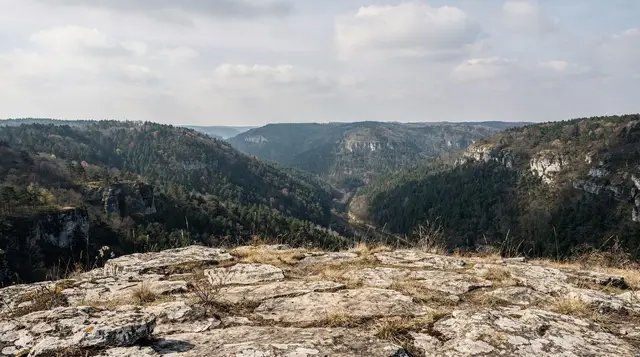
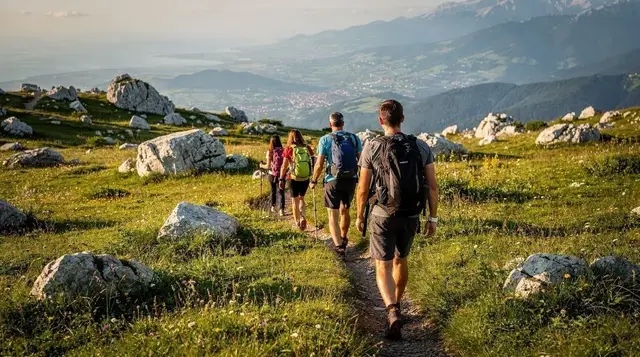
The most reliable fix is also the most Sarajevan one: go up. The inversion layer that traps the smoke typically sits somewhere below 1,000 to 1,200 metres, which means the mountains ringing the city are very often sitting in clean air and full sun while the centre is grey. Locals describe it as going “above the fog”, and on a bad day the contrast between the valley and the ridge line is dramatic — you can watch the haze thin out and vanish as you climb.
Trebević is the closest and easiest option, reachable by the cable car from Bistrik in under ten minutes, which makes it the obvious first move on a red-AQI morning even without a car. The abandoned 1984 Olympic bobsleigh track sits above the worst of the smog line on most winter days, and the wider hillside is covered by marked trails — see the Trebević hiking guide for routes. A snowshoeing trip up there is a genuinely different way to spend a red-AQI day than trying to sightsee in the haze below:
a guided snowshoeing trip on Trebević gets you above the inversion layer with a local guide, snowshoes and warm-drink stops included.
Further out, Bjelašnica and Jahorina — the two mountains that hosted alpine skiing at the 1984 Winter Olympics — sit at 30 kilometres and 45 minutes from the city and are almost always clear on days when Sarajevo itself is smothered.
Both run functioning ski lifts in winter; see the Bjelašnica ski guide and Jahorina ski guide for lift and rental details, or Jahorina vs Bjelašnica if you are choosing between them. Igman, the third Olympic venue, offers a quieter, less commercial version of the same clean-air escape. A day built around the Olympic mountains works well for this exact problem:
a guided day trip to Sarajevo’s Winter Olympics venues covers Bjelašnica, Jahorina and the Trebević bobsleigh track in one outing, which is a practical way to spend a stretch of red-AQI days without losing the trip to haze.
What to do on a red day without leaving town
Not every red-AQI day allows for a trip uphill — weather, time or a tight schedule can rule it out. On those days, the sensible move is to shift the day’s balance away from prolonged outdoor walking at valley level and towards indoor sites and lower-exertion activity, without cancelling the day. Sarajevo has enough indoor depth in its museums, mosques, churches and the covered lanes of Baščaršija that a full day works even under a lid of smog — see the Sarajevo museums guide and Sarajevo rainy day indoor guide for options that apply just as well to a smog day as a wet one.
A guided history walk with plenty of indoor stops is a reasonable way to keep a red day moving without heavy outdoor exertion:
a guided tour through Sarajevo’s Yugoslav history mixes indoor sites with modest, unhurried walking rather than a long uphill hike.
If you do want some walking, keep it gentle and in the lower-lying old town rather than a strenuous climb — a slow route through the traditional neighbourhoods is a lighter option than a hike:
a guided walk through Sarajevo’s traditional mahala neighbourhoods stays at an easy pace, which matters more than usual when the air is thick.
Whatever you choose, the general rule for a red or purple day is to shorten continuous outdoor exertion — a brisk uphill walk pulls far more polluted air into the lungs than a slow one, so pace matters as much as duration.
Health precautions worth taking seriously
Most healthy visitors on a short trip will notice Sarajevo’s winter smog as an inconvenience and a slightly scratchy throat, not a medical event. But it is worth being honest about who should take more care: anyone with asthma or another respiratory condition, anyone with a heart condition, young children, older travellers, and pregnant visitors are all more affected by fine particulate pollution than a healthy adult, and should plan more conservatively around the daily reading rather than pushing through a red day at valley level.
For that group, a fitted N95 or FFP2 mask is the type actually rated to filter PM2.5 — a cloth or surgical mask does very little against particles this small. It is a reasonable item to pack for a December, January or February trip even if you never end up needing it. Keeping windows closed in the evening, when household heating smoke peaks, and running any available air purifier in an apartment rental are both worth doing on the worst days. None of this needs to dominate the trip; it is closer to carrying an umbrella than to changing your itinerary.
Planning around it rather than avoiding it
The honest way to think about Sarajevo’s winter air is as a real, well-documented seasonal fact rather than a reason to avoid visiting between December and February — a season that also brings snow, skiing 45 minutes from the city centre, and a genuinely different, quieter version of the city than summer’s crowds. See the best time to visit Sarajevo guide for how winter compares to the rest of the year, and Sarajevo in winter for a fuller seasonal picture beyond air quality alone.
The practical version of a winter trip here is: check the AQI most mornings the way you’d check the weather, keep a mountain day in reserve for the worst stretch, and don’t schedule your only full day of intensive outdoor walking for a day you haven’t checked. For getting to Trebević, Bjelašnica or Jahorina without a rental car, the Sarajevo public transport guide covers the cable car and bus options, and is Sarajevo safe covers the wider safety picture if winter air quality is one of several concerns you’re weighing before the trip.
Families travelling with children in winter should also read Sarajevo with kids, since the same red-day logic applies with less margin for the very young. For the logistics of the rest of the trip, the Sarajevo trip planning guide and a same-day air quality index are really all you need to build around it.
Sarajevo winter air quality: your questions answered
What actually causes Sarajevo’s winter air pollution?
Sarajevo sits in a narrow valley on the Miljacka, ringed by mountains on three sides. In winter, many households and older buildings heat with coal and wood, and the smoke has nowhere to go. Cold, dense air settles in the valley floor under a layer of warmer air above it — a temperature inversion — which traps the smoke instead of letting it disperse.
When is air quality worst in Sarajevo?
December, January and February are consistently the worst months, particularly on cold, still, windless days. Air quality is usually better by mid-morning after some mixing and worse again in the evening when heating fires are stoked. Rain, wind or a passing weather front can clear the valley within a day.
How do I check the AQI before going out?
Use a real-time air quality index app or website that pulls from monitoring stations in Sarajevo — most show PM2.5 as the headline figure, since that is the pollutant driving the winter problem here. Check it in the morning before planning the day, the same way you would check rain.
Is it safe to visit Sarajevo in winter?
For most healthy visitors on a short trip, yes — this is a nuisance and a health consideration, not a reason to avoid the city. People with asthma, other respiratory conditions, heart conditions, young children and pregnant visitors should be more cautious and plan around the daily AQI reading.
Where is the air cleanest during a temperature inversion?
Above the inversion layer, which typically sits below 1,000 to 1,200 metres in winter. Trebević, Bjelašnica, Jahorina and Igman are usually well above the smog, with clear air and sun even when the city centre is grey. Locals call it going “above the fog”, and it is a genuinely different climate a short drive away.
Should I wear a mask in Sarajevo in winter?
It is a reasonable precaution on red or purple AQI days for anyone in a sensitive group, and a fitted N95 or FFP2 mask is the type that actually filters PM2.5 — a surgical or cloth mask does not. Most visitors on an average day do not need one, but it is worth packing if you are visiting in December or January.
Does the smog affect what I can actually see and do?
It affects visibility more than it closes anything down — indoor museums, mosques, churches and restaurants all operate normally. What changes is how enjoyable extended outdoor walking or hiking is at valley level, and whether a viewpoint is worth the climb if the whole basin is under haze.
Skiing & winter sports experiences on GetYourGuide
Verified deep-linked GetYourGuide tours. Book through these links and we earn a small commission at no cost to you.
GetYourGuide does not provide a product photo for this activity — the image shows the meeting point, photographed by us.