The winter smog nobody mentions
I have a routine now, most winter mornings. Coffee, then the window, then a look at the sky over Bistrik before I decide what kind of day this is going to be.
On a good day the ridge line above Trebevic is sharp against a pale sky, and I know I can spend the afternoon walking Bascarsija without thinking about my chest. On a bad day there is no ridge line. There is a flat, yellowish haze sitting over the whole valley, thick enough that the hills on the far side of the Miljacka just disappear, and I already know how the day is going to feel: a scratch at the back of the throat by mid-afternoon, a dull headache by evening, washing my hair to get the smell of woodsmoke out of it before bed.
Nobody warned me about this before I moved here. Every photo I had seen of Sarajevo in winter was the same postcard: snow on red-tiled roofs, minarets against white hills, steam rising off cups of bosanska kafa. All true. What those photos leave out is that Sarajevo sits at the bottom of a bowl, hemmed in by mountains on three sides, and that bowl does something specific and unglamorous to the air in December and January.
Why the valley traps its own smoke
The mechanism has a name, temperature inversion, and once you understand it, the bad days stop being a mystery. Normally air gets colder the higher you go, and warm air near the ground rises and carries pollution up and away with it. In a valley like this one, on a still, cold, high-pressure winter day, that flips. A layer of cold, heavy air settles into the valley floor and gets capped by a layer of warmer air sitting above it, like a lid. Smoke from wood and coal heating, vehicle exhaust and industrial emissions all get trapped underneath that lid, with nowhere to go. No wind, no rain, no relief, sometimes for the better part of a week.
This is the same geography that made Sarajevo one of the most naturally defensible, most photogenic capitals in Europe, and the same geography that explains why the 1984 Winter Olympics could stage alpine skiing at Bjelasnica and bobsledding at Trebevic within a short drive of a dense, historic city centre. The mountains that ring the valley are a gift most of the year. In a cold, still January, they are a trap.
I don’t want to overstate this into something apocalyptic, because it isn’t a constant state, it’s an intermittent one, and the contrast is part of what makes it worth writing about. Sarajevo genuinely does have days of crisp, cold, clear winter light where the old town looks exactly like the postcards. It also, regularly, has stretches where the city sits near the top of global air quality rankings for the worst reasons, and where visibility across the valley drops to a few hundred metres. Both things are true of the same city in the same season, sometimes in the same week.
What it actually feels like
The physical sensation is specific enough that I can describe it without exaggerating. It’s not a burning or a violent reaction, it’s more of a low, persistent irritation: a scratchiness in the throat that shows up after an hour or two outside, a slight heaviness in the chest on the worst days, eyes that feel tired by evening. Nothing dramatic, but noticeable enough that I now plan around it the way I’d plan around rain.
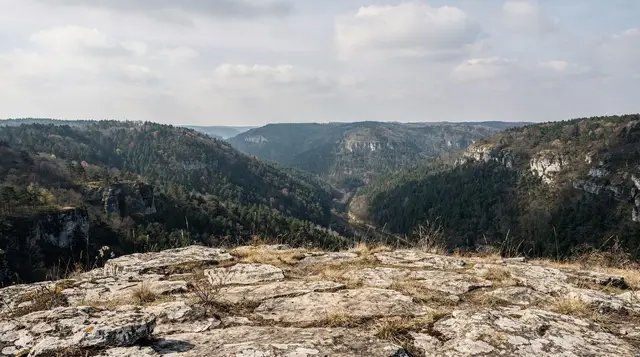
Visually it’s more striking than the physical sensation. Standing on my street in Bistrik on a bad day, I can watch the haze thicken as I look down toward the river, the buildings a few hundred metres away losing their edges, everything taking on that same flat, sepia cast. From higher up, looking down into the valley, it reads as a distinct yellow-grey lake sitting in the bowl of the city, with the hills poking up clean above it. That view, oddly, is the thing that convinced me this wasn’t in my head.
The local reflex: check the index, then go up
What struck me more than the smog itself was how unbothered most people here seem to be about it, in the specific sense that everyone has a working solution and nobody makes a fuss. The reflex is simple and it’s the same one I’ve adopted: check the day’s air quality index before deciding what kind of day it’s going to be, the way you’d check the forecast for rain, and if it’s bad, go up rather than staying down.
The fastest way up is the Sarajevo cable car, which reopened in 2018 after decades out of service. From the Bistrik station it takes about nine minutes to reach the top of Trebevic at 1,164 metres, for around 20 KM return, and more mornings than I’d like to admit, that ride has been the difference between a headache and a clear head.
You come up through the haze layer, sometimes almost literally, and step out into sunshine with the whole polluted valley spread out below you like a lake you’ve just climbed out of. It’s the single best argument I know for the cable car as more than a tourist ride: for anyone actually living here through winter, it’s closer to an amenity.
When I want more than nine minutes of clean air, I go further, out to Bjelasnica, about 45 minutes by car from the centre. On a smog day in the city, Bjelasnica is routinely under blue sky with skiers on the slopes and none of the haze visible from the road up. It’s become my honest answer to anyone asking whether Sarajevo is worth visiting in winter: yes, absolutely, but don’t plan a whole trip around the valley floor. Build in at least one day up on the mountain, whether that’s skiing, a walk near one of the mountain huts, or simply the cable car and lunch at the top, because that’s where winter here is at its best, both scenically and for your lungs.
The honest version, not the postcard
I’m not writing this to talk anyone out of a winter trip. Some of my favourite days in this city have been in December and January: snow on the Vijecnica, steam off coffee cups in half-empty cafes, the mountains 45 minutes away doing exactly what mountains near a capital city should do. What I want is for the trip to be planned with eyes open.
Check the air quality before you commit to a big walking day in the old town. Don’t be surprised if the view from Ilidza or along the river is hazier than the guidebook photos. And treat a morning on Trebevic, or an afternoon up at Jahorina, not as an optional extra but as the counterweight that makes the rest of the winter here work.
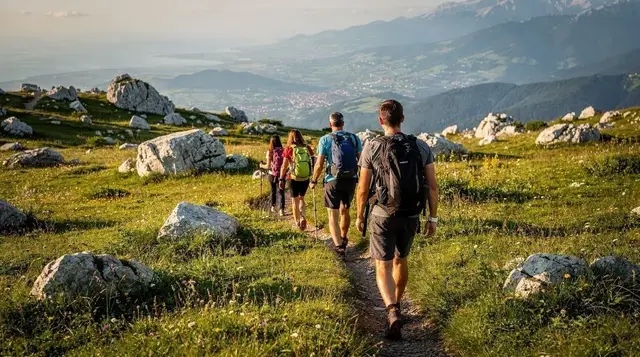
If you’re weighing up when to come at all, it’s worth reading around the best time to visit before you book, because the trade-offs between the seasons here are real and specific, not just a matter of temperature. And if hiking is part of the plan once the weather turns, the wider trail network around the city is worth knowing about too, for exactly the same reason as the cable car: it gets you up and out of the bowl.
A guided walk through the city’s history, like the Sarajevo: Grand Walking Tour, works on almost any day, hazy or clear, since most of it moves between covered markets and interiors. But if you want to actually feel the geography that causes all this, and see the Olympic venues that sit above the smog line, the Sarajevo: Winter Olympics Tour up to Trebevic and beyond is the one I’d point a winter visitor toward first.
The winter smog, in short
| Question | Short answer |
|---|---|
| When is it worst | December and January, on still, cold, high-pressure days |
| What causes it | A temperature inversion trapping smoke and exhaust in the valley |
| How to check | Look up the day’s air quality index before planning your day |
| Fastest escape | Sarajevo cable car to Trebevic, about 9 minutes, ~20 KM return |
| Fuller escape | Bjelasnica, about 45 minutes by car, usually clear above the valley |
| Does it ruin winter here | No, but plan at least one day above the valley floor |
Frequently asked questions about Sarajevo’s winter smog
Is Sarajevo’s winter air pollution really that bad?
Yes. Sarajevo sits in a valley that traps cold, polluted air under a temperature inversion, and the city regularly ranks among the world’s worst for air quality in December and January. Locals check the daily index and head up to Trebevic or Bjelasnica, where the air above the inversion layer is clean.
What causes the smog in Sarajevo?
A temperature inversion: cold, heavy air settles in the Miljacka valley and gets capped by warmer air above, trapping smoke from wood and coal heating, traffic and industry with nowhere to disperse. The surrounding hills that make Sarajevo beautiful are the same hills that make this happen.
Which months are worst?
December and January, especially during still, cold, high-pressure spells with no wind. The city can go days without meaningful air movement in the valley floor.
How do I check the air quality before heading out?
Look up the daily air quality index for Sarajevo before you plan your day, the same way locals do. On a bad day the readings are usually visible in the haze itself before you check a number.
Does the smog affect the whole city equally?
No. The valley floor is worst; neighbourhoods on the lower slopes, like Bistrik, and anywhere above around 700 to 800 metres, sit closer to or above the inversion layer and often have noticeably clearer air.
Where can I go to escape it for a few hours?
The Sarajevo cable car up Trebevic is the fastest option, about nine minutes to 1,164 metres for around 20 KM return. Bjelasnica, roughly 45 minutes by car, is the other reliable option when the valley is thick.
Is winter still worth visiting Sarajevo for?
Yes, with a caveat. Snow on the mountains, skiing 45 minutes away and a quiet, atmospheric old town are real. Just build in at least one trip above the smog line, and check the air quality index before committing to a day of walking.
Skiing & winter sports experiences on GetYourGuide
Verified deep-linked GetYourGuide tours. Book through these links and we earn a small commission at no cost to you.
GetYourGuide does not provide a product photo for this activity — the image shows the meeting point, photographed by us.