Ramadan in Sarajevo: what visitors should know
What actually changes in Sarajevo during Ramadan?
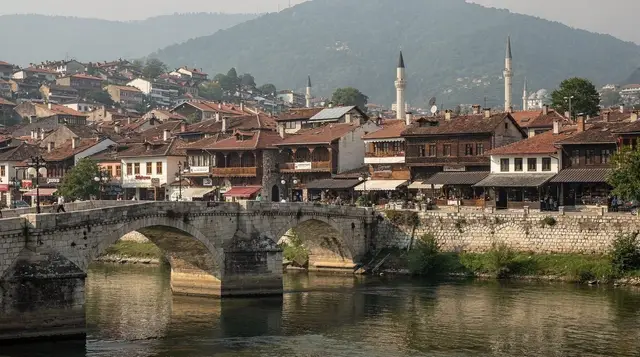
A cannon fired from the Žuta tabija fortress marks sunset each evening, Baščaršija fills with people breaking the fast together, and some mosques restrict tourist visits around the five daily prayer times. Ramadan dates shift every year by around ten to eleven days because they follow the lunar Islamic calendar, so there is no fixed date to memorise.
What Ramadan changes in the city, in practice
Ramadan is not a closure. Nothing in Sarajevo shuts its doors for a month, no sights go dark, and the trams keep running on the same timetable as any other week. What changes is the rhythm of the day, and it changes in ways worth knowing before you arrive rather than working out on the spot.
Bosnia and Herzegovina’s population is roughly half Muslim, concentrated heavily in Sarajevo and the wider Sarajevo canton, alongside sizeable Orthodox Christian, Catholic and smaller Jewish communities living the same streets. That mix is exactly why Ramadan here feels different from how it is sometimes portrayed elsewhere: it is one strand of city life running alongside everything else, not something the whole city pauses for. Cafés serve coffee at 10am as usual. Bakeries sell burek at lunchtime as usual. The visible change arrives in the last hour before sunset, when Baščaršija starts filling with people, and it deepens after dark.
For a visitor, the practical effects sit in three places: the evening signal that marks the fast breaking, the temporary narrowing of mosque visiting hours, and a basic expectation of discretion around people who are fasting. None of the three requires special preparation, only awareness.
The cannon at Žuta tabija: how the evening signal works
Every evening during Ramadan, a cannon is fired from the Yellow Fortress, the Žuta tabija, on the hillside above the old town. The shot marks the precise moment the day’s fast ends, known as iftar, and it is timed to the minute using the day’s sunset. The tradition is old enough that most Sarajevans do not think of it as an event at all, simply as the sound that tells you what time it is.
From street level in Baščaršija, the report carries clearly across the valley, and for a few seconds conversation and footsteps genuinely pause. Families who have gathered at home, at a relative’s table or at a restaurant break their fast with a date and a sip of water first, following a practice that goes back to the earliest days of Islam, before moving on to the rest of the meal. If you are out walking at that hour, you will notice it rather than need to look for it. There is no public spectacle to plan around, no crowd to fight for a view, no photograph to chase: it is a sound, not a show, and treating it as the latter misses what it is for residents.
The fortress itself is a short, steep walk above Baščaršija, and it is one of the better free viewpoints over the old town at any time of year, Ramadan or not. During the month, though, it is worth timing a visit for daylight rather than the evening, since the area around the firing point gets busy with residents who come up specifically to watch the sun go down.
Baščaršija after dark: what to expect
This is where the change is most visible. In the hour after the cannon, tables at the cevabdžinice and grill restaurants around Baščaršija and along Ferhadija fill within minutes, staff move at a different pace, and the pedestrian streets that were quiet at 6pm are suddenly full of families, groups of friends and older couples out for the evening. It is one of the more sociable stretches of the Sarajevo calendar, and it is worth experiencing even if you have no personal stake in the fast: this is simply what the city looks like at its most relaxed.
A walk through Baščaršija after the cannon, taking in the Sebilj fountain and the Kazandžiluk coppersmiths’ lane with the crowds rather than trying to avoid them, gives a better sense of the neighbourhood than the same walk at midday. If you would rather have the history explained as you go, a city hike through Baščaršija and the older mahala neighbourhoods covers the same ground with context on how the old town grew up around the bazaar.
a guided walk through Baščaršija and the old residential mahala quarters above it runs regardless of the season and works well as an evening option during Ramadan specifically, since it puts you in the old town’s busiest, most atmospheric hour with someone who can explain what you are seeing rather than leave you to guess.
Restaurants do not need booking in the way a capital city elsewhere might require during a festive season, but the half-hour either side of sunset is genuinely the single busiest slot of the day, busier than a Friday dinner service outside Ramadan. If you want a table right at that moment rather than twenty minutes into the rush, arrive slightly early and expect a short wait regardless.
Prayer times shift, and so do mosque visiting hours
Bosnia’s mosques operate on the same five-times-daily prayer schedule year-round, but during Ramadan two things change: the evening prayer, akšam, lines up with the iftar meal and draws a noticeably larger congregation, and the night prayer that follows it, teravih, is specific to the month and adds an extra hour of worship most evenings.
For visiting hours this means the same pattern that applies outside Ramadan, only more pronounced: mosques stay open to non-worshippers between prayer times but close their doors to tourism during each prayer itself, and the period from roughly an hour before sunset through the evening prayer is the least practical window to plan a visit around.
The Gazi Husrev-bey Mosque, the largest historic mosque in the country and the one every visitor asks about, follows exactly this rhythm. Full detail on entry costs, dress requirements and the daily prayer-time gaps is in the dedicated Gazi Husrev-bey Mosque visiting guide; the short version for Ramadan specifically is to aim for mid-morning or early afternoon, well clear of both the midday prayer and the evening rush.
The same logic applies more broadly across the city’s religious sites. A four faiths walk taking in the mosque, the Old Orthodox Church, the Sacred Heart Cathedral and the former Ashkenazi synagogue works during Ramadan exactly as it does the rest of the year, since only the mosque’s hours are affected. For background on what is and is not appropriate at each stop, the general mosque etiquette guide covers Ramadan-specific points alongside the year-round basics on dress and footwear.
Sarajevo’s small but old Jewish community is also part of this picture, and its history predates the Ottoman period by comparison only slightly: Sephardic Jews arrived after the 1492 expulsion from Spain and were later joined by an Ashkenazi community, and the story of both is told well on a dedicated walking tour of Jewish Sarajevo, taking in the former synagogue and the Jewish Museum, which runs on its own schedule unaffected by Ramadan. The guide to Jewish Sarajevo has more on the sites themselves if you would rather visit independently.
Eating, drinking and smoking in public during daylight hours
Fasting during Ramadan means abstaining from food, drink, and smoking from first light until sunset, and it is genuinely demanding in the summer months when the fasting window stretches to sixteen hours or more. Not everyone in Sarajevo observes it: plenty of residents do not fast at all, and the ones who do fast are, by and large, entirely unbothered by visitors eating lunch at a café table nearby. This is not a country where public eating during Ramadan carries any legal or strongly enforced social penalty.
The discretion worth applying is narrower and more specific: avoid eating or drinking directly outside a mosque entrance in the last half-hour before a prayer, when worshippers are arriving, and skip anything that reads as making a point of it, such as eating loudly beside a group who are visibly fasting. Away from that immediate context, a coffee on a Baščaršija terrace at midday during Ramadan is exactly as unremarkable as it is in July. For wider guidance on this kind of everyday courtesy beyond the fasting month, visiting Sarajevo respectfully covers the broader picture, including how the city’s recent history factors into how visitors are expected to behave.
When is Ramadan? The lunar calendar in plain terms
Rather than memorise a date that will be wrong within a year, it helps to understand why the date moves. The Islamic calendar is lunar, built from twelve months of about twenty-nine or thirty days each, which adds up to a year roughly eleven days shorter than the solar calendar used for the Gregorian year. Ramadan is the ninth month of that calendar, so each year it starts about ten to eleven days earlier than the year before, drifting slowly backwards through the seasons over a cycle that takes around thirty-three years to complete a full loop.
The practical effect is a genuine difference in how Ramadan feels depending on where it falls. A Ramadan that lands in December means a short fasting day of nine or ten hours and mild weather for the evening gatherings. A Ramadan that lands in July or August means fasting through the longest, hottest days of the year, sixteen hours or more without food or water, and the evening crowd in Baščaršija arriving hungrier and more grateful for the cannon than at any other point in the cycle.
Because Sarajevo’s own best time to visit already varies a great deal by season for unrelated reasons, from winter smog to summer heat, it is worth checking the current year’s Ramadan dates against your own travel dates rather than assuming anything carries over from a previous trip.
The exact start date is also fixed at the last moment in the traditional sense, historically confirmed by the sighting of the new crescent moon, so even official calendars sometimes differ from country to country by a day. For a Sarajevo trip this makes no practical difference: local sources agree on the date within Bosnia and Herzegovina itself, and the cannon at Žuta tabija tells you unmistakably which evening the month begins and ends.
What changes and what does not
| During Ramadan | Rest of the year | |
|---|---|---|
| Restaurants and cafés | Open all day; evenings much busier after sunset | Open all day, steadier trade |
| Mosque visiting hours | Closed to tourists around all five prayers, especially before sunset | Closed to tourists around prayer times, less pronounced |
| Baščaršija atmosphere | Quiet by day, crowded and social after the cannon | Busy through the day, quieter by 9pm |
| Public transport | Normal timetable | Normal timetable |
| Tourist sites outside mosques | Normal hours | Normal hours |
| Eating in public by day | Fine away from mosque entrances; some discretion appreciated | No particular sensitivity |
Eid al-Fitr: the three days after
Ramadan ends with Eid al-Fitr, called Ramazanski Bajram in Bosnian, a three-day festival that starts the morning after the final fast with a large communal prayer, typically held at the largest mosques in the city and sometimes overflowing into open ground nearby. Government offices and schools close, at minimum, for the first day, and many family businesses take the full three days. Sweets, particularly baklava and other pastries, are exchanged between neighbours and relatives, and it is a period of house visits rather than public festivity in the streets.
For a visitor, the effect is mild: restaurants, hotels, transport and tourist sites keep operating, though a specific small business or family café may post shorter hours for a day or two. It is worth building in a little flexibility if your visit lands directly on Eid itself, mainly because some administrative offices, rather than tourist infrastructure, will be closed. The festivals calendar places Eid alongside the city’s other fixed points through the year, from the Sarajevo Film Festival to Sarajevo Winter, for anyone planning a trip around Sarajevo’s calendar rather than avoiding it.
Planning a visit that touches Ramadan
None of this argues for avoiding Sarajevo during Ramadan. If anything, the evenings are a genuine argument in favour: Baščaršija at its most sociable, a soundtrack you will not hear at any other time of year, and a city going about an old, unforced tradition rather than performing one for visitors. The adjustments are small and specific rather than a reason to rearrange an itinerary: visit mosques in the mid-morning or early afternoon window, expect restaurants to be at their busiest in the half hour after sunset, and extend the same everyday courtesy around fasting people that you would extend anywhere.
If your trip covers more than Sarajevo itself, none of Herzegovina’s usual day trips need rethinking either. Mostar, Blagaj and the wider Neretva valley run on their own tourist schedules unaffected by the fasting month. For visitors curious about Sarajevo’s wider Yugoslav-era and Ottoman history alongside the religious layer, a tour tracing the rise and fall of Yugoslavia through Sarajevo’s twentieth-century sites covers ground that has nothing to do with Ramadan directly but sits well alongside a trip built around this season, since it explains the layered, multi-faith city that makes the Ramadan evenings feel the way they do in the first place.
For a more active option that also touches the siege-era history the city carries everywhere, a guided bike tour through the city that includes entry to the Tunnel of Hope runs on its usual daytime schedule and is unaffected by evening crowds.
For food specifically, a first-time visitor unsure where to eat, Ramadan or not, is better served by the dedicated Sarajevo food guide and the guide to the city’s best ćevapi, both of which point to the same restaurants that get busiest after the Ramadan cannon. Pair either with the Bosnian coffee ritual guide to understand why a bosanska kafa afterwards is not optional, and check restaurants by budget if cost matters more than atmosphere. None of these need adjusting for the month; they simply get more crowded, more animated, and arguably more enjoyable in the hour after the sun goes down.
Ramadan in Sarajevo: questions worth asking before you go
When does Ramadan fall, and why does the date move every year?
Ramadan follows the Islamic lunar calendar, which is roughly eleven days shorter than the solar calendar, so the month drifts backwards through the seasons over a cycle of about thirty-three years. Rather than track a fixed date, check the current year’s dates before booking, since Sarajevo’s mosque visiting hours and restaurant rhythms both shift around it.
Will mosques in Sarajevo be closed to visitors during Ramadan?
Not closed outright, but visiting windows narrow. The Gazi Husrev-bey Mosque and other working mosques suspend tourist entry around each of the five daily prayers, and the period just before sunset gets busiest with worshippers arriving for the evening prayer and iftar, so plan visits for mid-morning or early afternoon instead.
Is it rude to eat or drink in public during daylight hours?
It will not cause offence in the way it might in a stricter Muslim-majority country, since Sarajevo is religiously mixed and plenty of residents do not fast. That said, eating openly right outside a mosque during prayer time, or being loud about food near people who are fasting, reads as needlessly inconsiderate rather than illegal.
What is the cannon shot I keep hearing about at sunset?
It is fired from the Žuta tabija fortress above the old town each evening at the exact moment the fast ends, a tradition that predates modern Sarajevo and still carries across the whole valley. Locals set their evening by it more reliably than by an app.
Are restaurants and cafés open during the day in Ramadan?
Yes. Sarajevo’s cevabdžinice, bakeries and coffee houses stay open through the day for the many residents and all the visitors who are not fasting; nothing shuts down. What changes is the evening, when tables that were half-empty at 6pm suddenly fill within minutes of the cannon.
What is Eid al-Fitr, and does the city close for it?
Eid al-Fitr is the three-day festival marking the end of Ramadan, called Ramazanski Bajram locally. Government offices and some businesses close for the first day or two, mosques hold a large morning prayer, and families visit each other over sweets and coffee, but restaurants, transport and tourist sites keep running.
Does Ramadan affect day trips out of Sarajevo, to Mostar or elsewhere?
Barely. Bus and train schedules run as normal, and Herzegovina’s tourist sites keep their usual hours. The only practical note is that some small-town restaurants along the road to Mostar or Trebinje may serve a lighter daytime menu and a fuller one after sunset, which rarely matters for a single day trip.
Is Ramadan a good time to visit Sarajevo, or better avoided?
It is a good time for anyone curious about the city’s daily life rather than only its sights: the evenings are genuinely warmer in atmosphere, with Baščaršija at its most sociable. The trade-off is a shorter window for mosque visits and a slightly slower pace during the day, which suits a relaxed trip better than a tightly packed one.
Religious heritage & sacred sites tours on GetYourGuide
Verified deep-linked GetYourGuide tours. Book through these links and we earn a small commission at no cost to you.
GetYourGuide does not provide a product photo for this activity — the image shows the meeting point, photographed by us.