Is Sarajevo safe?
Is Sarajevo safe to visit?
Yes — Sarajevo has low crime and violence against visitors is rare, so walking the city by day or at night is generally safe. The one real risk in Bosnia and Herzegovina is landmines still suspected in rural areas away from marked trails, which is why hikers should stick to known paths or go with a guide.
The short answer: yes, with one rural exception
Sarajevo is, day to day, a safe city to walk, eat, shop and get lost in. Petty crime is low, violent crime against visitors is rare, and the city’s compact geography — squeezed into the Miljacka valley with mountains on three sides — means most of what a first-time visitor wants to see is within easy, well-used, well-lit reach. That is the honest headline, and it holds up against how the city actually feels on the ground: families out at 10pm in Baščaršija, students filling the tram after dark, cafés along Ferhadija open late without incident.
The one genuine risk in this country is not urban crime at all. It is landmines, still suspected across several dozen square kilometres of rural Bosnia and Herzegovina, left over from the 1992–1995 war. That risk is real, it is specific, and it is also entirely avoidable with one simple habit: never leave marked trails and frequented areas. This page covers both halves honestly — why the city itself is safe, and exactly what the landmine risk means in practice for anyone hiking around Sarajevo.
What “low crime” actually looks like here
Sarajevo’s canton has around 400,000 residents, the city itself about 275,000, and crime statistics and lived experience both point the same way: pickpocketing and scams exist but are uncommon by the standards of major European tourist cities, and confrontational or violent crime targeting visitors is genuinely rare. You won’t get worked over by a fake-petition scam on the Baščaršija or hassled by aggressive touts the way you might in some southern European capitals — Sarajevo simply doesn’t run that way.
Ordinary precautions still apply, because they always do. Keep your bag zipped and in front of you on the tram at rush hour. Don’t leave a phone on a café table and walk off. Use a licensed taxi, or a ride-hailing app, late at night rather than flagging down an unmarked car. None of this is Sarajevo-specific advice — it’s the same baseline you’d carry into any city — and the point worth making plainly is that you don’t need more caution here than in, say, Vienna or Ljubljana.
Where the city does feel different from a big Western European capital is scale and pace. There’s no equivalent of a sprawling, high-crime periphery to accidentally wander into; the built-up area is narrow, and even its outer edges toward Ilidža or up toward Trebević feel more sparse than dangerous. If you’re weighing where to stay, our guide to Sarajevo’s neighbourhoods covers this in more detail, and the solo travel guide goes further into practical specifics for anyone travelling alone.
Walking around at night
The pedestrian core — Baščaršija, Ferhadija, the length of the tram corridor along the Miljacka — stays lit, busy and comfortable well into the evening, used by locals across every age group, not just other tourists. Restaurants and bars keep going late, especially in summer, and walking back to a central apartment or hotel at 11pm or midnight is unremarkable.
That changes at the margins, as it would anywhere. Once you’re off the main pedestrian streets and into quieter residential blocks, or up toward the hillside neighbourhoods with steep, poorly lit lanes, use the same judgement you’d use at home: stick to streets with other people on them, and take a taxi rather than navigate an unfamiliar dark backstreet on foot. If you’d rather see the layout of the city from above before dark falls, the Sarajevo cable car up to Trebević gives you that orientation in about nine minutes each way.
The one real risk: landmines in rural Bosnia
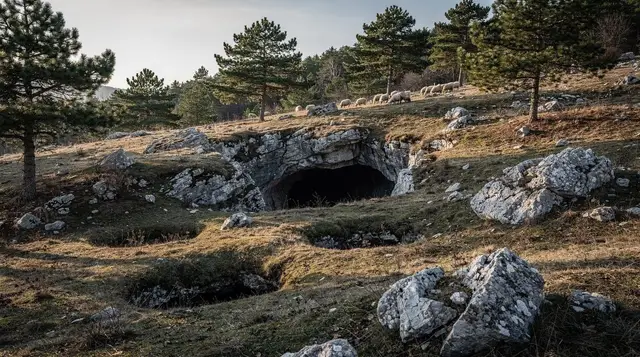
Here is the fact that actually matters for personal safety in this country, and it has nothing to do with the city centre. Bosnia and Herzegovina still has landmines suspected across roughly several dozen square kilometres of land, almost entirely legacy of the 1992–1995 war’s confrontation lines. Clearance work has been under way for decades and has removed a great deal, but suspected hazardous areas remain, concentrated in rural terrain: overgrown fields, forest margins, abandoned agricultural land and hillsides away from villages, roads and marked paths.
This is not a risk that touches ordinary sightseeing. It does not affect Sarajevo’s streets, its museums, its parks, Baščaršija, Trebević’s cable car station or bobsleigh track, or any of the day-trip towns covered elsewhere on this site. It is a rural hiking risk, specific to leaving the established path in certain parts of the countryside — and it is entirely manageable with one absolute rule.
The rule: never leave marked trails and frequented areas
This is worth stating as plainly as possible, because it is the only piece of safety advice on this page that actually changes what you do:
- Stay on marked, signed hiking trails. Don’t cut switchbacks, don’t shortcut across open ground, don’t wander off to chase a better view or a curious ruin.
- Respect yellow and red warning markers. Where suspected hazardous areas are known, they are signed. Treat every such marker as absolute, not as an exaggerated formality.
- Take a licensed guide for anything off well-known routes. Established trails around Lukomir, Bjelašnica and Sutjeska National Park are walked safely by large numbers of visitors every season. Anything beyond them — an unmarked ridge, an old forestry track, a shortcut a local mentions casually — needs a guide who knows the ground.
- Never enter an abandoned building or bunker in the countryside on your own initiative, and don’t treat old military positions as a photo opportunity to explore off-path.
None of this should read as alarming. It is a single, clear habit — stay on the path — and it removes essentially all of the risk. Our dedicated landmine safety guide for hiking in Bosnia goes into more detail on how areas are marked and cleared, and is worth reading in full before any multi-day hiking trip.
Where this matters: Lukomir, Bjelašnica, Sutjeska
The places where this rule is most relevant are exactly the high-country destinations this site sends people to most often:
| Area | What draws visitors | The trail rule in practice |
|---|---|---|
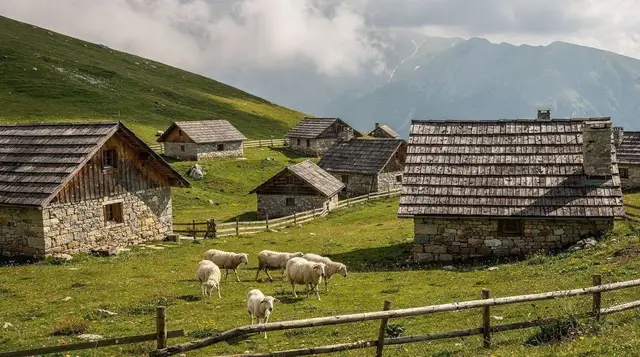
| Lukomir | Highest inhabited village in the country, stone houses, shingle roofs | Stick to the road and the marked approach path; don’t cut across pasture toward the Rakitnica canyon rim off-trail |
| Bjelašnica | 1984 Olympic ski slopes, summer hiking, mountain huts | Marked summer trails and ski-lift access routes are well used and safe; unmarked ridgelines are not the place to improvise |
| Sutjeska National Park | Maglić (2,386m), the Perućica primary forest | Perućica is accessible only with a park guide by design — this isn’t bureaucracy, it’s the correct precaution for the terrain |
| Umoljani and Rakitnica | Quieter alternative to Lukomir, canyon views | Same principle: signed paths only, guide for anything beyond them |
If day hikes near the city are more your pace than a full mountain trip, hiking around Sarajevo rounds up the closer, well-marked options, and a guided outing removes the question entirely — a local guide already knows exactly which ground is fine and which isn’t.
For a middle ground between solo hiking and a full guided trek, a day tour that keeps you on established routes with someone who knows the terrain is the simplest way to see the countryside without having to think about any of this. A guided 4x4 trip into the Zelengora mountains with a barbecue lunch covers genuinely remote terrain on vehicle tracks with a driver-guide who knows the area, which is exactly the kind of access that turns “interesting but risky to do alone” into a straightforward day out.
For history-adjacent countryside closer to Sarajevo, a guided day trip to Kraljeva Sutjeska and the Bobovac fortress ruins does the same thing on foot with a guide handling the route.
Stray dogs on the outskirts
Free-roaming dogs are a visible feature of Sarajevo’s edges and the surrounding hills, less so in the pedestrian centre. Most are timid rather than aggressive — more interested in food scraps near cafés and markets than in visitors — and serious incidents are uncommon. Sensible practice is the same as anywhere with free-roaming animals: don’t approach or try to pet strays, don’t feed them by hand, and give a wide berth to any dog that looks agitated or is guarding food. On hiking trails, a stray dog trotting along with a group for a while is common and rarely a problem; a dog that growls or blocks a path is a signal to back away calmly rather than push past.
Everyday practicalities that make the city easier to navigate safely
A few concrete things reduce friction and, indirectly, risk:
- Cards work in the city; carry cash outside it. Bosnian marks (KM) are needed for buses, markets and smaller towns, where cards often aren’t accepted. Running out of cash in an unfamiliar place is its own small risk. Our money and currency guide covers ATMs and exchange rates in full.
- Know which bus or tram you actually need. Sarajevo runs one of Europe’s oldest continuously operating tram networks, plus trolleybuses to the hillside districts. The public transport guide and the note on Sarajevo’s two separate bus stations will save you a wrong-station trip.
- Emergency numbers. 112 works for all services; 122 is police directly, 124 ambulance, 123 fire.
- Common scams to actually watch for are covered in the tourist traps guide — mostly overpriced taxi fares and inflated souvenir prices rather than anything more serious.
- Solo and first-time visitors will find more specific notes in the solo travel guide and the accessible Sarajevo guide if mobility is a factor.
- Nightlife areas around Baščaršija and the newer bar streets are covered for context in the nightlife guide — busy, mixed-age, and not a part of the city that raises particular safety concerns.
If you’d rather have a local point things out directly than rely on a map, a guided hike through Sarajevo’s traditional mahala neighbourhoods is a straightforward way to get oriented on foot with someone who knows exactly which lanes and viewpoints are worth the walk. For a longer day that mixes the city with the countryside just outside it, a guided bike tour that includes entry to the Tunnel of Hope covers ground on cycle paths and quiet roads rather than open fields, which sidesteps the whole trail-marking question by design.
The bottom line
Sarajevo itself does not require special caution beyond the ordinary common sense you’d bring to any European city — that’s a fair, evidence-based statement, not reassurance for its own sake. The country’s one genuine risk is rural and specific: landmines still suspected in parts of the countryside, avoidable in full by staying on marked trails, respecting warning signs, and taking a guide once you’re off the routes everyone already walks. Combine those two facts and Bosnia and Herzegovina is a straightforward, low-risk destination — provided the one rule that matters is treated as absolute rather than optional.
Sarajevo safety: frequently asked questions
Is Sarajevo safe to visit?
Yes. Petty crime is low and violent crime against visitors is rare, even in a city of around 275,000 people. The city centre, Baščaršija and the tram corridor along the Miljacka are busy and well used at almost all hours. The one thing to actually plan around is not urban crime — it is staying on marked paths once you leave town for the mountains.
Is it safe to walk around Sarajevo at night?
For most of the pedestrian centre, yes. Baščaršija, Ferhadija and the tram line stay lit and populated well into the evening, and locals of all ages use them. Ordinary caution applies as anywhere — stick to lit streets, keep valuables out of sight, use a licensed taxi rather than wandering unfamiliar backstreets late at night.
Are there landmines in Sarajevo itself?
No — the city, its parks, streets and popular viewpoints such as Trebević’s cable car station and bobsleigh track are clear and safe to walk. The landmine risk is rural, concentrated in former confrontation-line areas away from settlements, and it does not affect ordinary sightseeing in Sarajevo.
Which parts of Bosnia and Herzegovina still have landmine risk?
Suspected hazardous areas cover several dozen square kilometres of rural land, mostly former front lines from the 1992 to 1995 war — overgrown fields, forest edges and hillsides away from villages and marked paths. They are signed with yellow and red warning markers where known. Cleared land, roads, marked hiking trails and anywhere tourists normally go are not part of this risk.
Is it safe to hike to Lukomir or on Bjelašnica?
Yes, on the marked routes. Lukomir, Bjelašnica’s ski-area trails and the path along the Rakitnica canyon rim are walked by hundreds of visitors every summer weekend without incident, because they stay on the established track. The risk appears only if someone leaves the path to shortcut a switchback, chase a view, or explore an abandoned building — don’t do it, and take a guide for anything off the known routes.
Are the stray dogs around Sarajevo dangerous?
Rarely a real problem. Stray dogs are more common on the city’s edges and in the hills than in the centre, and the great majority are timid around people, more interested in scraps than in visitors. Don’t approach or feed them, give a wide berth to any that look agitated, and treat a hiking-trail encounter the way you would anywhere else with free-roaming dogs.
Do I need special travel insurance for hiking in Bosnia?
Standard travel insurance that covers hiking and mountain activities is sensible for Bjelašnica, Lukomir or Sutjeska, the same as for any hill walking abroad. It won’t change the landmine rule — insurance does not make it safe to leave a marked trail — but it matters for a twisted ankle a long way from a road, which is the more likely mishap by far.
Trip-planning essentials on GetYourGuide
Verified deep-linked GetYourGuide tours. Book through these links and we earn a small commission at no cost to you.
GetYourGuide does not provide a product photo for this activity — the image shows the meeting point, photographed by us.