Live music in Sarajevo: jazz, sevdalinka and rock venues
Where can you hear live music in Sarajevo?
Sarajevo Jazz Fest fills clubs and halls every November, a handful of Baščaršija restaurants programme live sevdalinka after around 9pm, and a few central venues keep the city's post-1990s rock and alternative scene going. Most gigs start after 10pm and are advertised locally rather than online in advance, so it is worth checking listings in person during the day rather than trusting an old website.
Three scenes, not one bar crawl
A lot of what gets written about evenings in Sarajevo is really about bars: where to have a drink, which terrace has the best view, which streets get loud on a Friday. That is a fair question and our nightlife guide and bars by neighbourhood cover it properly. This page is narrower on purpose: it is only about places where someone is actually playing an instrument or singing, in front of you, on a given night. That rules out the many perfectly pleasant cafés that simply play a Spotify playlist over the speakers, however good the playlist is.
Three things make up Sarajevo’s live music calendar. Sarajevo Jazz Fest is the one date worth planning a trip around. Sevdalinka, the city’s own traditional urban song form, turns up live in a handful of Baščaršija restaurants after dark, though far fewer than the number of restaurants that merely pipe it through speakers. And a small, changeable set of central venues carries on a rock and alternative tradition that runs back to Sarajevo’s pre-war “New Primitives” scene. None of the three is large. All three are worth knowing about specifically, rather than hoping something turns up.
Sarajevo Jazz Fest, in November
Sarajevo Jazz Fest has run since the late 1990s, making it one of the region’s older festivals of its kind, and it takes place over roughly a week each November. The format mixes ticketed evening concerts in the city’s proper halls with looser, often free or cheap, club nights that follow on afterwards. Venues change year to year but typically include the Bosnian Cultural Centre, the National Theatre, and one or two of the city’s cinema-turned-club spaces for the late sets. Expect a programme that leans toward jazz in the broad, international festival sense: plenty of adjacent genres, world music crossovers and experimental acts alongside anything strictly straight-ahead.
If a specific headline act matters to you, buy tickets ahead through the festival’s own channels once the programme is announced, usually a few months out. For the club nights that follow the main concerts, turning up and paying on the door is normal and often the only option, since these are not always listed anywhere formal.
November is also grey and often smoggy in the valley, so pair a festival trip with the practical read on Sarajevo’s winter air quality if you are sensitive to it, and check the wider festivals calendar in case anything else overlaps. It is a different event from the Sarajevo Film Festival, which happens in August and is a much bigger, more tourist-facing affair.
| Detail | What to expect |
|---|---|
| When | Roughly a week in November, dates move each year |
| Main concerts | Ticketed, in proper halls, book ahead for a specific act |
| Club nights | Later, looser, often pay on the door |
| Genre range | Jazz-adjacent and experimental more than strictly traditional |
| Typical ticket range | Roughly 20 to 40 KM for a single club night, more for headline hall concerts |
Sevdalinka after dark in Baščaršija
Sevdalinka is Sarajevo’s own urban song tradition, built around loss, longing and love, usually slow, usually built for a single strong voice over accordion or the string instrument called a saz. It occupies roughly the emotional space that fado does in Lisbon or rebetiko does in Athens: not background music by design, even though it very often gets used that way.
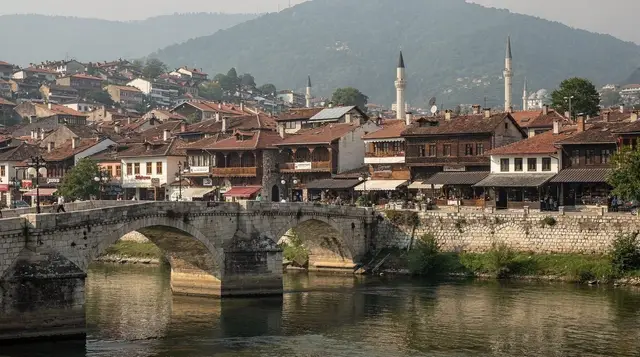
Walk through Baščaršija in the evening and you will hear it coming from restaurant doorways up and down the old market streets. Most of what you are hearing is recorded. A smaller number of restaurant-taverns genuinely book a singer and an accordionist or saz player for the evening, usually starting around dinner time, from about 9pm, and running for a couple of hours. Zlatna Ribica, the eccentric antique-filled bar tucked into the old town, is one of the better-known names to ask about, precisely because it has built a reputation as somewhere music happens rather than just plays in the background; treat it as a starting point to ask, not a guarantee of what is on any given night.
The honest advice here is to ask rather than assume. If a restaurant’s tables are full and the music sounds live rather than looped, it probably is; if in doubt, ask a server directly whether there is a live set that evening. Pair an evening out with a proper daytime walk through the old town using our Baščaršija walking guide, which also covers the coppersmiths of Kazandžiluk still working copper by hand a few streets over, so you know the layout before it fills up after dark.
What is left of the 1990s rock scene
Sarajevo had a genuinely influential alternative rock scene in the 1980s, the so-called New Primitives movement, which produced bands whose members went on to score films and lead orchestras that toured internationally. That scene had a physical home in venues around Marijin Dvor and Skenderija, and some of that lineage is still audible, if thinner and more scattered than it once was.
Kino Bosna, a former cinema turned cultural space closely associated with that era, is the name most visitors are pointed toward. Its live programming has been inconsistent for years, with spells of closure and reopening under different management, so treat any listing for it as something to verify locally rather than plan around from home. Caffe Tito, a Yugoslav-nostalgia themed bar, occasionally hosts live sets as well, alongside its usual role as a drinking spot built around old Yugoslav memorabilia.
Neither venue keeps a reliable online calendar, which is the pattern across this whole scene: names persist, but what is actually happening on a given Tuesday changes fast, and more than one historically important venue in this city has closed for good in the last few years. If you want a live rock or alternative set specifically, budget an evening to walk the Marijin Dvor and Skenderija area and see what is actually on, rather than booking a night around one venue in advance.
If a beer afterwards matters more to you than the band, the background on Sarajevo’s own brewery and its beer culture is in our Sarajevo brewery and beer guide.
Timing: gigs start late, and the listings are local
The single most useful thing to know before an evening out is that almost nothing starts early. Sevdalinka sets in Baščaršija restaurants tend to begin around dinner, from roughly 9pm. Everything else, rock, alternative, club nights, festival after-parties, rarely gets going before 10pm, and rooms often do not fill up until closer to 11pm. If you show up at 8pm expecting a band, you will usually find an empty stage and recorded music.
The second most useful thing is that Sarajevo does not run its live music scene through international ticketing or listings sites in any reliable way. Posters taped to a venue’s door, chalkboards outside restaurants, and local Facebook event pages carry more accurate information than anything you will find searching in English from abroad.
The practical routine that works: walk past venues you are interested in during the day, read what is posted, and ask directly at your accommodation, since staff at hostels and guesthouses in the centre generally know what is genuinely on that week. Our first-time guide and trip planning guide cover this kind of on-the-ground orientation in more depth, and it is worth reading before you arrive rather than after.
Fill the day, save the late set
Because almost everything worth hearing starts after 9 or 10pm, a live music evening in Sarajevo pairs naturally with a full daytime itinerary rather than competing with one. A few options that fit that rhythm and connect directly to the city’s musical and cultural history:
a guided walk through Sarajevo’s Yugoslav-era history, which gives useful context before an evening at a Tito-themed bar or a venue tied to the 1980s rock scene.
a hike through the city’s traditional mahala neighbourhoods, a good way to see the hillside streets above Baščaršija by daylight before coming back down for dinner and music.
a guided tour covering the siege of Sarajevo, which fits earlier in the day and leaves the evening free.
a guided tour of Jewish Sarajevo, another daytime option that finishes well before any of the evening’s music gets going.
Getting home after a late set
Trams and trolleybuses in Sarajevo stop running well before midnight, so if a gig runs on until 1am, public transport will not be an option for getting back. A short taxi ride across the centre is inexpensive and easy to arrange, either hailed on the street near a busy venue or booked through a local app; our taxis in Sarajevo guide and public transport guide cover both the daytime tram network, including riding tram line three end to end, and what changes after dark.
If you are staying centrally, most of Baščaršija and the surrounding streets are walkable even late at night, which is worth factoring into where to stay in Sarajevo if evenings out are a priority for your trip.
Avoiding the folklore-show trap
A few venues, mostly aimed squarely at coach tour groups, run scheduled “folklore evenings” with dancers in costume and a fixed-price dinner, advertised well in advance and often booked through hotels. These are a different product from the live sevdalinka and rock scenes described above: reliable in timing, but performed for an audience rather than growing out of the city’s own late-night culture. Neither is wrong to attend, but it is worth knowing which one you are booking. Our tourist traps guide covers this distinction and a few others worth knowing before you hand over a deposit.
Ramadan changes the evening rhythm
If your visit falls during Ramadan, evenings in Baščaršija shift later and get busier rather than quieter: the cannon fired from the Žuta tabija fortress marks the end of the daily fast, and the old town fills up with people eating and socialising after sunset, a genuinely good atmosphere to be part of respectfully. It is not the same thing as a scheduled live music night, but it does mean restaurant terraces stay lively later than usual. The Ramadan in Sarajevo guide covers timings and etiquette in more detail.
Where to hear what, at a glance
| Scene | When it happens | Typical venues | Start time | What to expect |
|---|---|---|---|---|
| Sarajevo Jazz Fest | A week in November | Bosnian Cultural Centre, National Theatre, club nights after | Evening concerts, later club sets | Booked headline acts plus looser after-parties |
| Sevdalinka | Most evenings, in a handful of places | Select Baščaršija restaurant-taverns, such as Zlatna Ribica | From around 9pm | Ask first; many places only play recordings |
| Rock and alternative | Irregular, scene changes fast | Marijin Dvor and Skenderija area venues, when open | From around 10pm | Check posters and local listings on the day |
Questions about live music in Sarajevo
When is Sarajevo Jazz Fest?
It runs in November, over roughly a week, with a mix of ticketed evening concerts in proper halls and free or cheap club nights afterwards. The exact dates move each year, so check before booking flights around it.
Do all the sevdalinka restaurants in Baščaršija have live music every night?
No. Most play recorded sevdalinka as background music all evening, and only a handful book live musicians, usually later in the evening and not on a fixed nightly schedule. Ask at the door, or ask your accommodation, rather than assuming a full house of instruments means a live set is coming.
What time do live music venues in Sarajevo actually start?
Restaurant-based sevdalinka sets tend to start earlier, around 9pm, alongside dinner. Rock, alternative and club gigs rarely start before 10pm and sometimes later, with the room filling up over the following hour.
Is Kino Bosna still open?
Its programming has been inconsistent for years, with periods of closure and reopening under different management. Treat any online listing for it, and for similar heritage venues, as unverified until you see a poster or hear it confirmed locally.
How do I find out what’s on tonight in Sarajevo?
Walk past the venue in daylight and read the chalkboard or posters taped to the door, check local Facebook event pages rather than international listing sites, and ask staff at your hotel or hostel, who usually know what is genuinely happening that week.
Do I need to book live music tickets in advance?
For Sarajevo Jazz Fest’s headline concerts, yes, buy ahead if you have a specific act in mind. For sevdalinka sets and rock club nights, turning up on the night and paying on the door is normal and usually the only option.
Is it safe to walk back to my accommodation after a late gig?
Sarajevo’s centre is safe to walk late at night by most standards, and locals do it. Trams and trolleybuses stop running well before midnight, so plan on a short taxi ride or a walk for anything after that.
Sarajevo nightlife on GetYourGuide
Verified deep-linked GetYourGuide tours. Book through these links and we earn a small commission at no cost to you.
GetYourGuide does not provide a product photo for this activity — the image shows the meeting point, photographed by us.