A mountain with two histories, not one
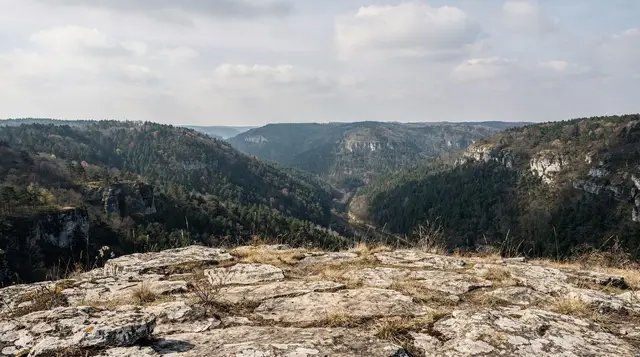
Igman rises just southwest of Sarajevo, a broad, forested plateau that never quite reaches the drama of its neighbour Bjelašnica, and that is rather the point. In February 1984 it hosted three of the Winter Olympics’ most demanding disciplines — ski jumping, cross-country skiing and biathlon — while Bjelašnica and Jahorina took the downhill glamour.
Eight years later, the same gentle terrain became a lifeline: the Igman road across the mountain, used in parallel with the Tunnel of Hope dug beneath the airport runway, was one of the only routes in and out of a besieged city. Both stories sit on the same plateau, within a few hundred metres of each other, and neither cancels the other out. A short trip up here is as close as the region gets to reading 1984 and 1992 on the same page.
That double history is also why Igman rewards a visit more than its modest profile suggests. The ski jump towers at Malo Polje are among the most photographed and least explained structures near Sarajevo: two concrete ramps, rusted railings, decades of graffiti, no signage to speak of. Understanding what they were — and what happened around them a decade later — turns a striking ruin into something worth the detour.
The 1984 Winter Olympics on Igman
When Sarajevo hosted the XIV Winter Olympics from 8 to 19 February 1984, Igman carried the Nordic programme: the ski jumping (both the normal and large hills), cross-country skiing, and the biathlon, alongside the bobsleigh and luge run built on Trebević. It was, briefly, one of the best-equipped Nordic venues in Europe, and Yugoslavia’s turn on the world stage after Innsbruck and Lake Placid.
For a fuller picture of how the whole city was reshaped for the Games — and what became of each venue afterwards — the dedicated guide to Sarajevo’s 1984 Olympic legacy is worth reading alongside this page; it covers Trebević’s bobsleigh track, the Zetra hall and the Koševo stadium as well as Igman itself.
Nobody maintained the Nordic venues once the Games left town, and the war that followed eight years later put any question of upkeep permanently to rest.
The ski jumps at Malo Polje today
The two ski jump towers stand on the Malo Polje plateau, a short walk or drive from the main Igman road. Up close, what’s striking isn’t scale — they’re not huge structures — but the accumulation of thirty-plus years of neglect: peeling paint, missing panels, staircases rusted through in places, and every flat surface layered in spray-painted names, dates and tags. Access is informal. There’s no ticket booth, no opening hours, and in places the site is fenced off for genuine structural reasons rather than for show, so treat the barriers as real rather than decorative and don’t attempt to climb the towers themselves.
It’s easy for a ruin like this to slide into “urbex” territory in the way it’s photographed and written up online, and that framing does the place a disservice. The jumps aren’t a curiosity that happens to have a tragic backstory; they’re a functioning piece of Olympic infrastructure that the war interrupted, and the road running past them carried people escaping shelling within a few years of the closing ceremony. Visit for what it plainly is — a striking, badly weathered relic — without needing to dress the visit up as edgy or forbidden.
a guided half-day trip that pairs the Igman plateau with the Tunnel of Hope covers both halves of the mountain’s history in one outing and is the most efficient way to see the ski jumps if you don’t want to drive yourself.
The wartime road: Igman’s other history
During the siege of Sarajevo, which lasted 1,425 days from 5 April 1992 to 29 February 1996, the city was surrounded by Bosnian Serb forces holding the surrounding hills. Two routes connected besieged Sarajevo to Bosnian-government-held territory: the tunnel dug in 1993 under the airport runway, and the mountain road over Igman, controlled at various points by UN forces and used, at real risk, to move people, weapons and supplies who could not fit through or wait for the tunnel. The road was exposed to shelling and observation from surrounding high ground for much of the war.
This is the context worth carrying up the mountain, and it’s covered in more depth in the guide to visiting the Tunnel of Hope, which sits at the Butmir end of the same wartime supply network, near the airport. Reading the two sites together — tunnel and mountain road — gives a fuller sense of how the city stayed connected to the outside world at all. For the broader arc of the war itself, the context guide for visitors is a useful primer before either stop, and visiting Sarajevo respectfully sets out the tone worth keeping at any site connected to the siege.
a tour tracing the rise and fall of Yugoslavia across several of the city’s key sites is a useful companion booking if the Igman-and-tunnel story leaves you wanting the fuller Yugoslav arc, from federation to break-up.
Hiking and mountain biking on Igman in summer
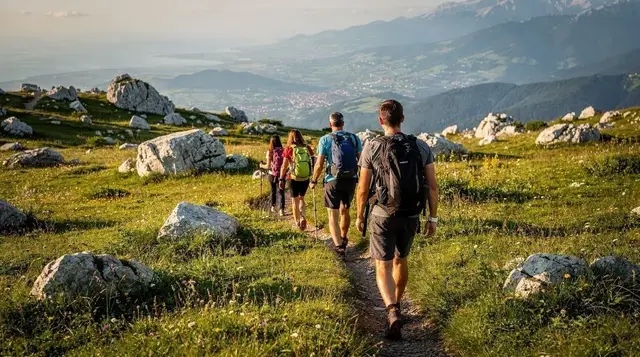
From late spring to early autumn, Igman is one of the easiest outdoor half-days available from Sarajevo. The terrain is rolling rather than steep — pine forest, open meadow, gravel forestry roads — which makes it accessible to a wider range of fitness levels than the higher trails around Bjelašnica or Lukomir. Marked routes cross the plateau past the ski jumps and connect further out towards Umoljani and the edge of the Rakitnica canyon for those wanting a longer day.
Mountain biking follows largely the same network of forestry roads and is popular with Sarajevo locals on weekends; bring your own bike or rent in the city, since there’s no rental point on the mountain itself. The general guide to hiking around Sarajevo sets Igman in context against the other nearby trail options, and the safety guide to hiking with landmines in mind is required reading before any off-road walking in this region — not specific to Igman, but not optional either. The rule is simple: stay on marked trails and forestry roads, respect any yellow or red mine-warning signage without exception, and take a guide for anything beyond the well-trodden routes.
For a longer day that uses Igman as a stepping stone rather than the destination, a combined tour across Igman, Bjelašnica and Umoljani village covers three distinct landscapes — Olympic plateau, alpine ridge, and a stone-built shepherd’s village — in one outing, and a 4x4 route continuing from Igman to Lukomir village and Boračko Lake reaches terrain that would otherwise need a full day of independent driving on unpaved roads.
Cross-country skiing on Igman in winter
Igman’s Nordic pedigree is still usable. From roughly December to March, depending on snowfall, tracks around the former cross-country and biathlon courses are skiable, some groomed, others not, and the plateau’s gentle profile makes it a genuinely different winter experience from the downhill runs at Jahorina or Bjelašnica.
Don’t expect resort infrastructure: equipment rental is limited and inconsistent season to season, so this suits visitors who already cross-country ski or who book an organised outing rather than showing up expecting a full-service rental counter. The broader guide to skiing near Sarajevo covers where to rent gear and how the season typically runs across all three Olympic mountains.
Winter is also when Sarajevo’s well-documented air quality problem makes the mountains worth the trip on their own merits: the temperature inversion that traps pollution in the Miljacka valley in December and January doesn’t reach the plateau, and the air up here is reliably clearer than in the city centre on the worst smog days.
Igman versus Bjelašnica: same Olympics, different mountain
The two are often mentioned in the same breath, and mixing them up is the single easiest mistake to make when planning. Bjelašnica is the alpine mountain: a cable car, marked downhill runs, a rockier and higher profile topping out well above the tree line, and the site of the men’s downhill events in 1984. Igman is Nordic: lower, forested, rolling rather than steep, built for ski jumping, cross-country and biathlon, with no cable car and no lift infrastructure of any kind today.
| Igman | Bjelašnica | |
|---|---|---|
| 1984 events | Ski jumping, cross-country, biathlon | Alpine skiing (men) |
| Terrain | Forested plateau, gentle | Rocky, alpine, above the tree line |
| Lifts today | None | Cable car and ski lifts |
| Summer activity | Hiking, mountain biking | Hiking, via ferrata, alpine scenery |
| Winter activity | Cross-country skiing | Downhill skiing |
| Travel time from Sarajevo | 35–45 minutes | 45 minutes–1 hour |
If you only have time for one, the choice comes down to what you want: Igman for a short, easy outing with the ski jump ruins and siege-road history included, Bjelašnica for a bigger alpine day out, including the cable car and views over the whole Sarajevo canton. Many visitors do both on the same guided route, since the two mountains sit close enough together to combine without much extra driving — see the summer guide to Bjelašnica for how that side compares in more detail.
Getting to Igman
There’s no direct public transport onto the plateau, which makes Igman one of the few sites in this guide better suited to a car, taxi, or organised tour than to trams and buses. By car, the route runs through Ilidža and the suburb of Hrasnica, past the turn-off for the Tunnel of Hope, and up onto the mountain road; allow 35 to 45 minutes from central Sarajevo depending on traffic and season. Roads are paved to the main plateau but can be icy or snow-covered in winter, when a rental car without winter tyres is a genuine liability rather than a formality — see driving in Bosnia for what to check before renting.
Without a car, the practical options are a taxi (agree a return fare and a pickup time before setting off, since there’s no rank on the mountain) or a guided tour, several of which combine Igman with the Tunnel of Hope, Bjelašnica or Umoljani in a single half-day or full-day itinerary. a guided cycling tour that includes entry to the Tunnel of Hope is a good option for anyone who’d rather cover the ground on two wheels than by car.
Where Igman fits in a longer Sarajevo trip
For a first visit to Sarajevo, Igman is very much a second- or third-day addition rather than a headline stop — see Sarajevo in two days or Sarajevo in three days for how it slots in once the old town and the main siege sites in the centre are covered. It pairs naturally with a day built around the Tunnel of Hope, since both sit on the same wartime supply route and can be visited back to back. For visitors building a nature-focused week rather than a city-focused one, Igman also fits into the wider Bosnia nature week itinerary alongside Lukomir, Bjelašnica and the national parks further south.
Practical notes
Bring cash rather than cards: there are no facilities on the plateau itself, and any food or coffee stop will be in Hrasnica or Ilidža on the way up or back, where small kafanas take KM only. There’s no entrance fee for the ski jump site or the plateau in general, so the main cost of an independent visit is fuel or a taxi fare; a guided half-day tour typically runs somewhat higher but includes transport, commentary and usually a stop at the Tunnel of Hope as well.
Phone signal is patchy in the forested sections and largely fine on the open plateau. Layer up regardless of season — the plateau sits noticeably cooler and windier than the city centre even in summer, and winter visits without proper footwear on an icy road are a common and avoidable way to end a day badly.
Visiting Igman: frequently asked questions
How do I get to Igman from Sarajevo?
By car via Ilidža and Hrasnica, roughly 35–45 minutes. There’s no direct public bus to the plateau, so most independent visitors drive, taxi, or join a guided tour that also stops at the Tunnel of Hope or Bjelašnica.
Can I still see the 1984 Olympic ski jumps?
Yes. The two ski jump towers on the Malo Polje plateau are abandoned, fenced in places and covered in graffiti, but visible and reachable on foot or by car. There’s no entry fee and no facilities on site.
Is Igman the same as Bjelašnica?
No. They’re neighbouring Olympic mountains but different in character: Bjelašnica is the alpine resort with a cable car and steep runs, while Igman is lower, gentler, and was built for ski jumping, cross-country skiing and biathlon.
Is it safe to hike on Igman?
Stick to marked trails and roads. Parts of the wider Igman-Bjelašnica area were front-line terrain during the 1992–95 war and mines are still suspected off the beaten paths, so never leave a signed route out of curiosity.
What is the wartime connection between Igman and the Tunnel of Hope?
During the siege, the Igman road across the mountain was, alongside the tunnel under the airport runway, one of the only ways to move people and supplies between besieged Sarajevo and Bosnian-held territory, under intermittent shelling and sniper fire.
Can you cross-country ski on Igman today?
Yes, on groomed and ungroomed tracks around the former biathlon and cross-country venues, typically from December to March depending on snow. Equipment rental is limited, so it suits visitors who already ski or join an organised outing.
Do I need a guide to visit Igman?
Not for the ski jumps and main plateau if you’re driving yourself, but a guide is useful for context on the 1984 Olympics and the siege, and necessary if you want to combine Igman with Lukomir, Umoljani or off-trail hiking.