Why Sarajevo is not a museum
I spent my first two evenings in Sarajevo doing what most people arrive intending to do: reading the plaques on the Latin Bridge, standing in the Tunnel of Hope, working out where the shells fell on the pavement. By the third evening, a bartender in Bascarsija asked, mildly, whether I’d actually seen the city yet. Not the sights. The city.
That question is the reason this page exists.
If it is your first visit, the first-time guide to Sarajevo gives you the practical frame, and the neighbourhoods guide shows how the city divides into districts that each have their own pace. Read together, they make it easier to plan days that are not made only of memorials.
The numbers behind the feeling
Sarajevo has about 275,000 people, inside a canton of roughly 400,000. It is a genuinely young city by regional standards, and the effect is obvious within a day: the staff serving your coffee, the person renting you a bike, the student at the next table are mostly under 40, and mostly comfortable in English. That matters more than it sounds. It means the conversation you have while ordering a bosanska kafa can turn into an actual conversation, about football, about rent, about which café has better cake, rather than staying a transaction.
None of this erases what happened here. The siege of Sarajevo ran for 1,425 days, from 5 April 1992 to 29 February 1996, and it left marks that are still visible on building facades and still present in how people talk about certain years. If you want that history explained properly, with dates and context and without a tour-guide script, that belongs on a different page, and I’ve written a separate piece on how locals actually feel about war tourism here. This one is about something else: what fills the other 23 hours of a Sarajevo day, and every day that isn’t a memorial anniversary.
If you want the other side of the conversation, what locals think about war tourism is the companion read, and the war context for visitors lays out the background. For a few ground rules on how to behave once you are here, see the guide to visiting Sarajevo respectfully. Those who prefer to approach the siege through reading and film can start with siege books and films.
An ordinary evening
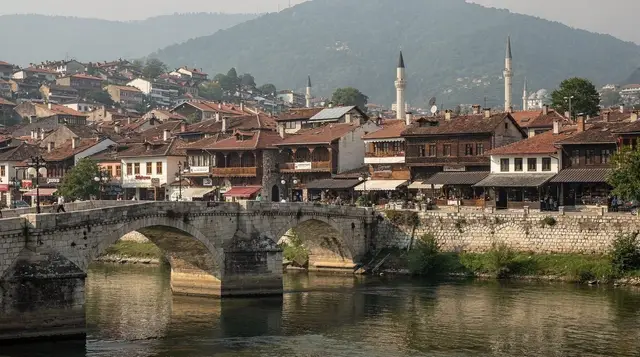
Here is roughly what that looks like. Around six, the terraces along Bascarsija start filling, not with tour groups winding down but with people who work nearby stopping for a coffee before heading home, or not heading home at all. The Sebilj fountain is still the meeting point it’s been since the 19th century, so if you’re waiting for someone, that’s where you stand.
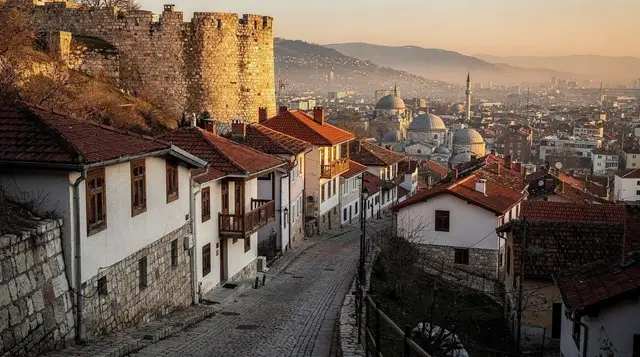
By eight, the crowd shifts uphill. A short walk from the old town, past Ferhadija’s Austro-Hungarian facades, gets you into streets with far fewer visible menus in English, where the bars are simply where people who live in the neighbourhood go. Some evenings there’s live music, nothing staged for tourists, just a band that plays there most Thursdays. Later still, if you ride the cable car up to Trebevic before it closes, or drive up separately, you get the same city from above: lights filling the valley between the hills, the Miljacka a dark line through the middle, and none of it reads as a place defined by what happened to it three decades ago.
I mention the cable car because it was the single best hour I spent working out how Sarajevo actually fits together, geographically and otherwise, and it’s the first thing I’d tell anyone to do before layering on the history. A guided walk through the centre does something similar at street level: I ended up on a general walking tour of Sarajevo’s old town and Austro-Hungarian quarter, and it was as much about coffee culture, markets and everyday architecture as about any single historical event.
If you would rather plan your own evenings, the Bascarsija walking guide covers the old town on foot, and the Sebilj is an easy place to start. The Ferhadija walk takes you through the Austro-Hungarian streets, while bars by neighbourhood and the wider nightlife guide help you find where locals actually drink. The cable car guide explains the ride up to Trebevic, and Bosnian coffee is a good subject to raise with whoever is serving you. Even riding tram line three is a lesson in everyday Sarajevo.
The festival calendar nobody mentions first
What convinced me this wasn’t a museum was the calendar. Bascarsijske noci runs through July, a free, city-organised run of concerts, theatre and film across open-air venues in the old town, and it is aimed squarely at residents, not at anyone passing through. The Sarajevo Film Festival takes over the middle of August, with an open-air screen in the centre that fills every night with people who came for the film, not for a photograph of the crowd. Jazz Fest Sarajevo runs in November, and Sarajevo Winter stretches across February and March. None of these exist because of the siege. They exist because it’s a city with a cultural life that predates 1992 and kept going after it.
For anyone who wants the historical layer without pretending the city stops there, a tour built around the country’s Yugoslav-era arc rather than just the siege years is worth the alternative angle: the tour tracing Yugoslavia’s rise and fall through Sarajevo’s landmarks covers a longer stretch of the 20th century, which puts the 1990s in a context that a single-focus siege tour can’t. And if you do want that single focus done properly and honestly, rather than skipped, the guided Sarajevo siege walking tour is the one I’d point people to; it doesn’t dress the subject up, which is exactly what it should do.
To see how the year fits together, the festivals calendar lists what is on and when, the film festival guide goes deeper on the August screenings, and live music in Sarajevo covers the smaller venues that play year-round.
What actually surprises people
Talk to visitors who arrived expecting a solemn, careful city and left a few days later, and the same three things come up. First, how normal the nightlife is, bars, live music, a genuine going-out culture, not a subdued version of one. Second, how many of the people they met were younger than them and better travelled, with English that came from Netflix and university exchanges rather than a hospitality course. Third, and this is the one people mention almost sheepishly, how much they laughed. Sarajevans joke, including about difficult subjects, in a way that reads as resilience rather than avoidance once you’ve been there a few days.
None of that requires forgetting the 1,425 days, or skipping the museums that document them properly. It just means not mistaking the darkest chapter of a city’s recent history for the whole of its present. Sarajevo in 2026 is a place where a Thursday night out, a film festival queue and a hillside bar with a view all exist a short walk from the sites everyone comes to see, and honestly, most of what makes the city worth a return trip is on that side of the ledger.
If you are still deciding how long to stay, the weekend break itinerary and the two-day itinerary both leave room for ordinary evenings alongside the sights. For a sense of the small, human details that stay with you, the roses underfoot and notes on Bosnian hospitality are good places to continue.
Museum & art tours on GetYourGuide
Verified deep-linked GetYourGuide tours. Book through these links and we earn a small commission at no cost to you.
GetYourGuide does not provide a product photo for this activity — the image shows the meeting point, photographed by us.