Jahorina in summer: chairlift hikes, wildflowers and cool air above Sarajevo
Is Jahorina worth visiting in summer, when there's no snow?
Yes — the summer chairlift runs from June to September, carrying hikers and mountain bikers up to trails around Ognjena Marija at 1,916 m. It's a straightforward half-day trip from Sarajevo, around 30 km and 45 minutes, and noticeably cooler than the city in July and August.
What this page is (and isn’t) about
Jahorina is best known as one of the two ski mountains near Sarajevo, and if that’s what brought you here, go to the Jahorina ski guide or the Jahorina versus Bjelašnica comparison instead — this page has nothing on snow, pistes or ski passes. From June to September, Jahorina runs a different, much quieter operation: a chairlift for hikers and mountain bikers, wildflower meadows below the tree line, a marked path to the summit, and hotel terraces built for a view rather than a lift queue. That’s what’s covered here.
It’s a genuinely easy trip from Sarajevo: about 30 km and 45 minutes by road via Pale, which puts it firmly in day-trip range even for a half-day out. If you’re weighing it against other nearby mountains, see hiking around Sarajevo for the wider picture.
Why go up in summer
Sarajevo sits in a bowl of a valley, and that geography, so useful for keeping winter smog trapped in December and January, works the opposite way in July and August: the city holds heat. Daytime temperatures of 30-35°C are routine in high summer, with little air movement in the streets of Baščaršija or along the Miljacka. Jahorina’s summit area, close to 1,900 m, is a different climate entirely — often 10°C or more cooler than the valley floor, with a breeze that rarely lets up.
That gap is the whole appeal. Sarajevans go up on hot weekends for exactly this reason, and a weekday visit from a visiting itinerary gets the same relief with none of the crowd. If you’re building out a longer stay and want the full seasonal picture, Sarajevo in summer and best time to visit Sarajevo cover how the city itself behaves across the year.
Getting there
There’s no tram, train or dedicated public bus service to Jahorina — that’s a winter-only shuttle arrangement, and it doesn’t operate in summer. Your options are a rental car (see car rental in Sarajevo and, more generally, driving in Bosnia), a taxi arranged for the return trip, or a guided tour that bundles transport with the walk itself, which removes the logistics question entirely:
a guided eco-walk on Jahorina that includes transport from SarajevoThe drive itself is straightforward: out of Sarajevo towards Pale, then up the mountain road. Budget 45 minutes each way outside rush hour, a little more if you’re leaving the city during the morning school run.
The summer chairlift
Jahorina’s chairlift network exists primarily for skiers, but one or more lifts stay in service through the summer months, roughly June to September, carrying hikers and mountain bikers up to the mid or upper station rather than making them walk the ski runs on foot. Operating hours are shorter than in winter and can shift with the season, so check the board at the base station on arrival rather than assuming a fixed timetable.
Expect a return ticket to fall somewhere in the region of 15-25 KM (roughly 8-13 EUR) — treat that as a starting expectation rather than a fixed price, since operators adjust rates between seasons, and confirm the current fare at the ticket window. It’s not expensive by the standards of Alpine lift tickets, and for hikers it turns what would otherwise be a long, unshaded climb up an open piste into a ten-minute ride with a view.
Walking to Ognjena Marija
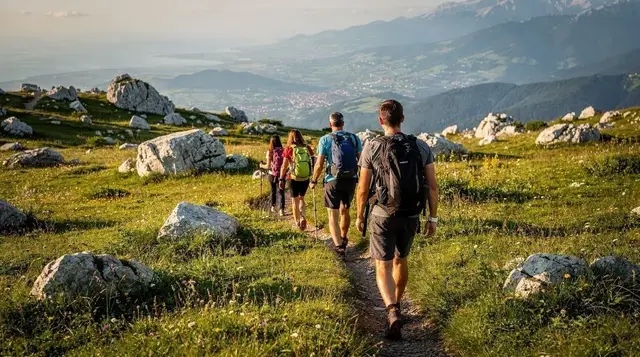
Ognjena Marija, at 1,916 m, is Jahorina’s high point and the natural target for a summer visit. From the upper chairlift station it’s a moderate walk of around an hour, on a path that’s clearly marked and doesn’t require technical scrambling — sturdy shoes and a bit of fitness are enough, not mountaineering gear.
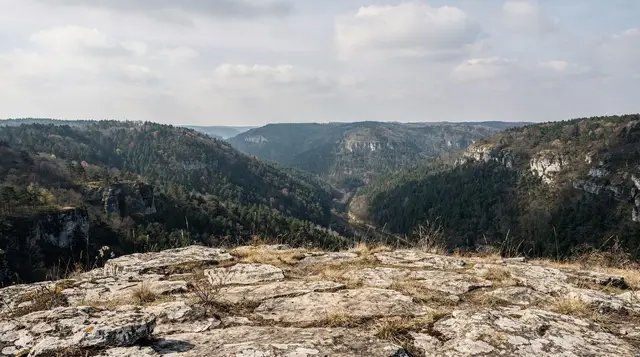
The terrain along the way is open grassland rather than forest for most of the route, which means the summit view builds gradually instead of arriving all at once behind a tree line. On a clear day, the payoff is real: Bjelašnica’s ridge to the south-west, and on the best days a hazy suggestion of peaks further into Montenegro. There’s little shade on the upper slopes, so this is a hat-and-water walk even on a mild day, and one worth timing for morning or late afternoon light rather than the flat glare of midday.
For a guided version that adds context on the mountain’s ecology and history along the way:
a guided eco-walk covering Jahorina’s trails and the route to Ognjena MarijaHikers who want a longer day than the summit walk alone sometimes combine it with a route towards the highlands further south — see Highlands Path guided hike with lunch below for a longer-format option that includes a meal stop.
a full-day highlands hike with lunch included, run from SarajevoWildflower meadows, June to September
The window that makes Jahorina worth a repeat summer visit rather than a one-off is the wildflower season. From June through into September, the open meadows below and around the summit fill in stages — early summer brings a denser, more varied bloom, with the display thinning and drying out as the season goes on into August. Nothing here is manicured or signposted as a “flower trail” in the way some Alpine resorts market it; it’s simply what an unfarmed subalpine meadow does on its own each year, and it’s most obvious off the main chairlift line, on the quieter paths radiating from the upper station.
This is also where the case for a weekday visit is strongest. Weekends bring Sarajevo families up for the cooler air and the hotel terraces below; a weekday morning on the same meadows can be close to empty.
Downhill mountain biking
Jahorina runs a modest downhill mountain biking operation in summer, using marked descents that follow sections of the winter ski pistes, with the chairlift carrying bikes up so riders don’t have to climb. It’s not comparable in scale to the big Alpine bike parks — expect a handful of marked runs rather than a sprawling trail network — but the descents are genuine downhill terrain, not a gentle fire-road cruise, and the lift access is what makes repeat runs practical in an afternoon.
Bike and helmet rental is available at the base area in season; bring or hire body armour if you’re riding anything beyond the easier lines, since the surface on the steeper sections is loose in places. If mountain biking is the main draw of your trip rather than a single afternoon add-on, it’s worth checking current trail status directly with the resort before committing a whole day, as maintenance and opening dates can shift year to year.
Cyclists who’d rather stay on tarmac and gravel than ride a piste can find gentler options detailed in cycling around Sarajevo, and climbers looking for something more technical than a bike run should see via ferrata and climbing in Bosnia — Jahorina’s own via ferrata routes at nearby Bukovik are bookable directly:
a guided via ferrata route on Bukovik, near JahorinaTerraces, food and staying over
Most of Jahorina’s hotels, built up for the ski season, keep their restaurants and terraces open through summer, and this is genuinely one of the better reasons to make a half-day of it rather than a quick there-and-back. A terrace table facing the valley, ordered with a plate of grilled meat or a simple mountain lunch and a cold Sarajevsko beer, is a pleasant way to close out a hike, and prices are broadly in line with a mid-range Sarajevo restaurant rather than resort-inflated. Table service can be slow when a coach group arrives at once; a weekday visit avoids that as reliably as it avoids the trail crowds.
Staying overnight is an option if you want to catch the mountain at sunrise or sunset, when the valley genuinely does look its best, but most visitors treat Jahorina as a half-day or full-day trip from Sarajevo rather than a base — accommodation in the city itself is more useful for reaching everything else, and where to stay in Sarajevo covers that question in full.
The 1984 Olympics, briefly
Jahorina hosted the women’s alpine skiing events at the 1984 Winter Olympics, and some infrastructure from that era is still visible around the former downhill course. It’s worth knowing as you walk past a weathered structure and wonder what it was, but it isn’t the reason to come up in summer, and this page won’t dwell on it — the fuller Olympic story, including Bjelašnica, Igman and the Trebević bobsleigh track, is covered on its own page: Sarajevo’s 1984 Olympics legacy.
Jahorina in summer at a glance
| What | Detail |
|---|---|
| Distance from Sarajevo | About 30 km, 45 minutes by car |
| Summer chairlift season | Roughly June to September |
| Chairlift return fare | Around 15-25 KM (about 8-13 EUR), check current price on arrival |
| Summit | Ognjena Marija, 1,916 m |
| Walk to summit from upper station | About 1 hour, moderate, marked path |
| Best months for wildflowers | June to early August |
| Quietest days | Weekdays; weekends bring Sarajevo day-trippers |
| Public transport | None in summer; car, taxi, or guided tour with transport |
Combining Jahorina with the rest of the highlands
Jahorina sits within reach of Bosnia’s other high country, and several operators run it as one stop within a longer mountain day rather than an isolated trip. If you’re weighing a wider highlands itinerary, the stone village of Lukomir — the country’s highest inhabited settlement — and the Bjelašnica and Umoljani day trip both pair naturally with a Jahorina morning, especially with a 4x4 or guided transfer handling the unpaved sections.
For hikers rather than 4x4 passengers, the same village is reachable on foot from the Bjelašnica plateau — see the Lukomir hike guide and the direct booking option below.
Whichever combination you choose, note that landmines remain a real and unresolved hazard in parts of rural Bosnia and Herzegovina away from marked paths and frequented areas. Jahorina’s chairlift, ski pistes and the marked route to Ognjena Marija are all safe, well-used ground — but that’s precisely because they’re marked and frequented. Don’t leave a signed trail here or anywhere in the highlands out of curiosity about a shortcut or a view; take a guide for anything off the known routes.
Frequently asked questions about visiting Jahorina in summer
Is Jahorina open in summer, or only for skiing?
Jahorina runs a full summer season alongside its winter one. The chairlift to the upper station operates from roughly June to September for hikers and mountain bikers, and most hotels stay open with restaurants and terraces serving through the season.
How do I get to Jahorina from Sarajevo?
It’s about 30 km and 45 minutes by car, via Pale. There’s no direct public tram or train; a rental car, taxi, or a guided tour that includes transport is the practical way to get there in summer, since the winter ski shuttles don’t run.
What is Ognjena Marija and how hard is the walk to it?
Ognjena Marija is Jahorina’s summit, at 1,916 m. From the top chairlift station it’s a moderate hour or so on foot on a marked path, with a genuine payoff: on a clear day you can see across to Bjelašnica and, further off, into Montenegro.
Can I go mountain biking on Jahorina in summer?
Yes, on marked downhill runs that follow parts of the ski pistes, with bikes carried up on the chairlift. It’s not a bike park on the scale of the Alps, but the descents are real and the chairlift access removes the climb.
How much cooler is Jahorina than Sarajevo in summer?
Sarajevo regularly hits 30-35°C in July and August. At around 1,900 m, Jahorina’s summit air is markedly cooler, often 10°C or more below the valley, which is the main reason locals go up on hot weekends.
Are the old 1984 Olympic venues still there?
Some structures remain, most visibly around the former women’s downhill course, but they’re a historical footnote here rather than the point of a summer visit — this page is about walking and the summit view, not the Olympic history, which is covered separately.
Is Jahorina crowded in summer?
Not really. Weekends see Sarajevo families up for the cooler air and the hotel terraces, but on a weekday the chairlift and trails are quiet — a different atmosphere from the packed winter slopes.
Do I need to be an experienced hiker to visit?
No. The chairlift does the climbing for you, and the path to Ognjena Marija from the upper station is a moderate, well-marked walk rather than a mountaineering route. Anyone reasonably fit in normal walking shoes can manage it.
Skiing & winter sports experiences on GetYourGuide
Verified deep-linked GetYourGuide tours. Book through these links and we earn a small commission at no cost to you.
GetYourGuide does not provide a product photo for this activity — the image shows the meeting point, photographed by us.