Via ferrata and climbing near Lukomir
Can I do via ferrata and climbing in the Rakitnica canyon as a day trip from Sarajevo?
Yes, but the logistics are heavier than the distance suggests: Lukomir is 50 km from Sarajevo but 1.5 hours on unpaved piste, and the canyon routes themselves need a certified guide and several hours on the rock. Most visitors book a guided day tour that combines the drive, the via ferrata or climb, and the walk through Lukomir into one organised outing.
Climbing where the front line used to run
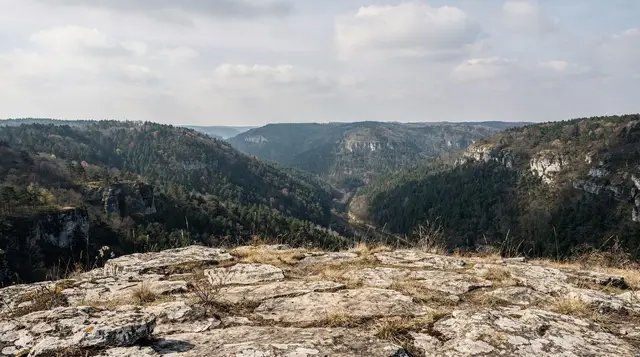
The Rakitnica canyon cuts a deep, narrow gorge between two mountains, Bjelasnica and Visocica, a short but rough drive from Sarajevo. It is one of the few places within day-trip range of the capital where via ferrata routes and technical climbing exist alongside genuine wilderness, not a manicured adventure park. The canyon walls rise steeply above the Rakitnica river, and the nearest village, Lukomir, sits at roughly 1,469 m — the highest inhabited settlement in Bosnia and Herzegovina.
That combination of remoteness and difficulty is the whole appeal, and also the reason this is not a casual booking. The access road is 50 km of mostly unpaved piste, about 1.5 hours from Sarajevo, and the mountains on both sides of the canyon were close to the confrontation line during the 1992–1996 war. Mine clearance in this part of the country is not complete. None of that should stop a properly guided visit, but it does mean the usual rules of independent hiking and scrambling do not apply here. This guide covers what the climbing and via ferrata actually involve, why a guide is close to mandatory rather than a nice-to-have, and how to fit a route into a Sarajevo-based trip honestly.
The canyon and the village that anchors it
Lukomir is reached from Sarajevo via Bjelasnica, climbing onto the high plateau before dropping toward Umoljani and the last stretch of track. The village itself is worth the trip regardless of climbing plans — stone houses under wooden shingle roofs, a handful of families who still summer there with sheep, and views straight down into the Rakitnica canyon. Snow can cut the village off for part of the winter, and by late autumn most residents have already moved down to lower villages for the cold months.
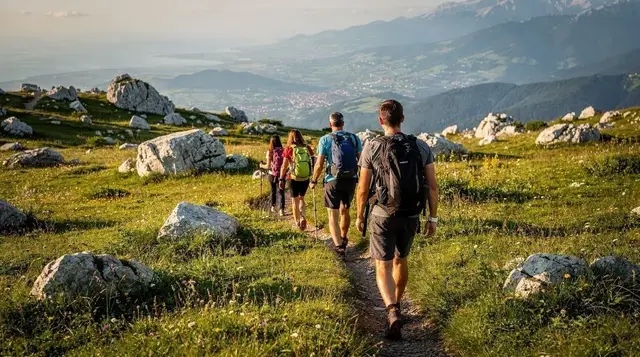
From Lukomir, marked paths drop into the gorge toward the climbing and via ferrata sectors. The elevation change is significant and the terrain underfoot is loose in places, so this is not a stroll appended to a photo stop. A dedicated write-up on the Rakitnica canyon trek and the broader Lukomir hike guide both cover the walking side in more depth; this page focuses on what happens once ropes come out.
| From Sarajevo | Distance | Drive time |
|---|---|---|
| Bjelasnica | 30 km | 45 min |
| Umoljani | 40 km | 1 h |
| Lukomir | 50 km | 1.5 h (piste) |
| Rakitnica canyon floor | 50 km + hike | 1.5 h + 45–60 min on foot |
Why a guide is not optional here
Bosnia’s landmine legacy is not evenly distributed, and Sarajevo itself is a safe city with low crime and no meaningful risk to a visitor walking its streets. The mountains around Bjelasnica and Visocica are a different category of ground: this massif sat close to front lines during the siege, and mines and unexploded ordnance are still recorded or suspected across parts of it. Clearance work continues, but it is not finished, and there is no way for a visitor to tell cleared ground from uncleared ground by eye.
The practical rule is simple and non-negotiable: stay on marked paths and tracks that are in regular use, take seriously any yellow or red warning marker, and never improvise a shortcut to reach a viewpoint, a climbing sector, or a photo angle. This applies even to routes that look obviously safe from a road. For anything in the Rakitnica canyon beyond the village tracks — reaching a climbing wall, scrambling down toward the river, or linking sectors along the gorge — a local guide who knows the cleared corridors is the only responsible way in. A dedicated landmine safety while hiking in Bosnia guide sets out the wider picture if you are planning any independent walking beyond this canyon.
What the climbing and via ferrata actually involve
Via ferrata — protected climbing along a fixed cable, using a harness and a lanyard rather than a rope managed by a partner — suits visitors who want exposure and a physical challenge without needing prior rock-climbing experience. Sections in and around the canyon are graded from relatively straightforward ladders and cable traverses to steeper, more sustained pitches with real air underneath. A guide reads the group and picks the line accordingly rather than sending everyone up the hardest option.
Technical climbing in the gorge is a different proposition: bolted or gear-protected routes on the canyon walls, aimed at people who already climb or who want a guided introduction with instruction built in. This is not a wall you turn up to and start on your own — routes are unmarked from a car park, approach paths cross ground that needs local knowledge, and rescue access in a narrow canyon is slow. Climbing gear rental covering the wider Neretva canyon region gives a sense of what outfitters typically supply — harness, rope, protection — though for Rakitnica specifically, gear is usually bundled into the guided outing rather than rented separately.
What distinguishes both activities from Bjelasnica’s other adventure options is engagement: this is not something consumed while sitting in a vehicle or under a canopy. A paragliding flight near Sarajevo or a jeep safari across Bjelasnica delivers the mountain to you as a passenger. Via ferrata and climbing ask something back — grip strength, comfort with exposure, and the stamina to hike in and out under your own power. That is the trade-off worth understanding before booking: more physically demanding, more technical, and considerably more memorable for it.
Difficulty, fitness and who this suits
| Activity | Typical difficulty | Fitness needed | Guide required |
|---|---|---|---|
| Via ferrata (easier sectors) | Beginner–intermediate | Moderate, comfortable with heights | Yes |
| Via ferrata (harder sectors) | Intermediate–advanced | Good upper-body and grip strength | Yes |
| Guided rock climbing | Beginner instruction to advanced routes | Varies by route chosen | Yes |
| Canyon approach hike | Moderate–strenuous | Solid hiking fitness, sure footing | Recommended |
None of these activities need previous experience for the introductory options, but all of them need a reasonable level of fitness — the approach to and from the canyon floor involves real elevation change on uneven ground, before any rope work starts. Anyone with a fear of heights that goes beyond ordinary nervousness should be honest with the guide before booking a via ferrata sector; there is usually a gentler line available, but not always an easy way to back out mid-route.
Getting there and the day-trip question
The piste road beyond Umoljani is the main logistical obstacle. It is unpaved for the final stretch to Lukomir, rutted and loose in places, and manageable in a standard rental car in dry summer conditions but genuinely rough after rain. Most visitors who are not confident driving unsealed mountain roads book a guided transfer, which also solves the navigation — there is little signage once the tarmac ends.
Whether this works as a single day from Sarajevo depends on how much you want to fit in. A realistic itinerary is: leave early, drive roughly 1.5 hours to Lukomir, walk down into the canyon, spend two to four hours on a via ferrata route or a guided climb, walk back out, and drive back — a full day rather than a half-day add-on.
A guided hike to Lukomir from Sarajevo covers the village and the approach and is the natural base to build a climbing day around, since it already handles the transport and the terrain briefing. Trying to combine this with anything else in the same day — Mostar, the Skakavac waterfall, or a ski resort visit — is not realistic given the drive time alone; treat it as its own day.
Other via ferrata and climbing in Bosnia
Rakitnica is not the only option in the country, and comparing it clarifies what makes it distinct. Near Mostar, a shorter and more accessible route runs up Hum hill overlooking the city — closer to a car park, more compact, and easy to slot into a Mostar day trip from Sarajevo as a single add-on activity. The via ferrata on Hum above Mostar suits visitors who want the sensation of protected climbing without committing a full day or a rough piste road.
The Neretva canyon around Konjic offers another cluster of climbing and gear rental options, again more road-accessible than Rakitnica. And for a different kind of technical adventure entirely, the the North-West of the country around Bihac has whitewater rather than rock — a guided kayak safari on the Una river is the equivalent physically engaged activity for people who prefer water to a rock face. None of these substitute for Rakitnica’s specific draw, which is the combination of a remote canyon, a genuinely high mountain village, and a route that very few visitors to Bosnia ever reach.
Season, weather and what to bring
Late May through September is the workable window. Outside it, the piste to Lukomir can be snow-covered, waterlogged, or simply impassable, and the village itself empties out once the last families move down for winter. Even within season, rock routes are weather-dependent — a guide may reschedule around rain, since wet limestone and cable hardware are both worse in the wet.
Bring proper walking boots with ankle support; footwear is almost never included in a rental package. A layered top half works better than one heavy jacket, since the canyon floor and the exposed plateau above it can differ noticeably in temperature. Take more water than feels necessary — there is no shop once you leave Umoljani — and cash in convertible marks, since nothing along this route takes cards. A basic first-aid kit and a fully charged phone are sensible, though signal in the canyon itself is patchy at best.
Rakitnica canyon climbing: frequently asked questions
Is via ferrata near Lukomir suitable for beginners?
Some sections are graded for first-timers with a guide supplying harness, lanyard and helmet, but the canyon setting is exposed and the approach path is rough. A guide will assess your fitness and match the route rather than putting a complete novice on the hardest line.
Do I need my own climbing gear?
No. Climbing gear rental for the Neretva canyon area covers harnesses, ropes and protection for guided routes, and via ferrata outfits supply their own kit as standard. Bring proper walking boots yourself; footwear is rarely included.
Can I do this as a day trip from Sarajevo?
It is possible but tight: the piste to Lukomir alone takes about 1.5 hours each way, so a full day covers the drive, the village, and one route rather than a leisurely programme. A guided tour that starts early and handles the driving is the realistic way to fit it into a single day.
Is the area safe given the landmine risk?
The Rakitnica canyon and the wider Bjelasnica-Visocica massif sit on ground that was close to the confrontation line during the war, and mine clearance here is incomplete. The rule is absolute: never leave marked paths, respect yellow and red warning signs, and use a guide for any access beyond the known village tracks.
What is the difference between climbing here and the via ferrata near Mostar?
The Hum via ferrata above Mostar is a shorter, more accessible route close to a city, aimed at visitors adding one activity to a Mostar day. The Rakitnica canyon route is remoter, reached by piste road, and pairs climbing with a genuine hike into Lukomir rather than a quick add-on.
When is the best season to climb in the Rakitnica canyon?
Late May to September is the reliable window; the piste road can be snow-covered or waterlogged outside that period and Lukomir’s last families only stay through summer. Rock and rope activities are weather-dependent, so guides build in a fallback date during shoulder months.
How rough is the road to Lukomir?
It is an unpaved mountain piste for the final stretch, roughly 1.5 hours from Sarajevo for 50 km, with ruts, loose stone and no barrier in places. A standard rental car can usually manage it in dry conditions, but a guided 4x4 transfer removes the risk and the navigation.
Do I need to book in advance?
Yes. Guides, ropes and vehicles for this route are limited, and the operator needs to check group size, fitness and weather before confirming a date, so booking a few days ahead is safer than turning up in Sarajevo and expecting a same-day slot.
For the wider hiking context around this massif, see hiking around Sarajevo and the Bjelasnica summer guide; for other guided adventure options within reach of the capital, the adventure sports category page and best day trips from Sarajevo cover the full range.
Adventure & outdoor activities on GetYourGuide
Verified deep-linked GetYourGuide tours. Book through these links and we earn a small commission at no cost to you.
GetYourGuide does not provide a product photo for this activity — the image shows the meeting point, photographed by us.