The Sarajevo Brewery and the city's beer scene
What is the Sarajevo Brewery and can you visit it?
Sarajevska pivara is a working brewery on the edge of Baščaršija that has brewed since 1864 and drew on its own wells to supply the city with water during the 1992–96 siege, when the mains ran dry. It still brews Sarajevsko, the country's best-selling beer, and takes group visits by prior arrangement rather than running a daily public tour.
A brewery that never really stopped
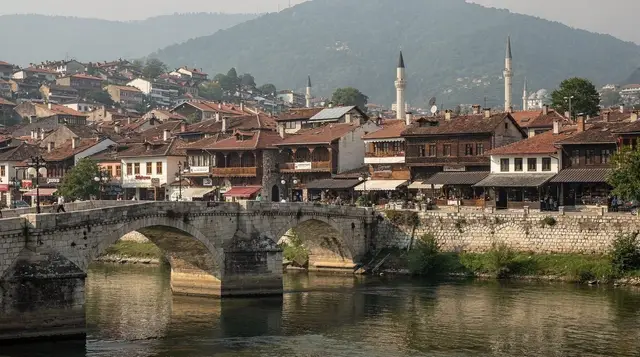
Walk the short slope up from the Miljacka toward Bistrik and the red-brick bulk of Sarajevska pivara appears above the rooftops, chimney and all, looking more like a piece of industrial Vienna than anything else in the old town. It has good reason to: the brewery was founded in 1864, while Sarajevo was still under Ottoman administration, and the buildings standing today were largely raised after 1878, once Austro-Hungarian administration took over Bosnia and brought its own building style with it.
The result is a working factory that also reads as a heritage building, tucked between Baščaršija and the lower slopes of Trebević, and it has been brewing on the same site, without a break, for more than 160 years.
That last point is not a marketing line. It includes the years of the 1992–96 siege, when almost everything else in the city stopped.
The wells that kept the city going
Sarajevska pivara sits over natural underground wells that predate the brewery itself — one of the reasons a beer works chose this exact spot in the first place. During the siege, when shelling and cut infrastructure left much of Sarajevo without running water for long stretches, the brewery’s own wells kept producing, and residents were able to queue there to fill bottles and containers. It stood alongside the pumping station at Vrelo Bosne as one of the few reliable water points in a city where fetching water at all was often dangerous, exposed work along streets covered by snipers.
That fact deserves to be stated plainly and left there. It is not a curiosity to dress up for a photo, and this page will not treat it as one. Readers who want the fuller context of those years — how the siege worked, what daily life meant, where the front lines ran — are better served by a dedicated page such as the siege tour guide or the walk along Sniper Alley, both of which handle the subject at proper length. Here, the brewery’s role is one line in the story of the city’s water, not the subject of the page.
Sarajevsko, the everyday beer
What actually comes out of those wells and the brewhouse today is Sarajevsko, the country’s best-selling beer and the default option on almost every drinks menu in Bosnia and Herzegovina. The standard version is a pale lager — light, easy-drinking, modestly hopped, built for volume rather than complexity. A darker Sarajevsko Tamno sits alongside it on most menus, and in the last few years the brewery has added seasonal and stronger variants to the range, though the plain lager remains what most people order without thinking about it.
Prices are consistent enough that they are worth stating as a rule of thumb rather than city by city:
| Where | Draught Sarajevsko | Bottled Sarajevsko |
|---|---|---|
| Ordinary bar or restaurant | 3–5 KM (1.50–2.50 EUR) | 2.50–4 KM |
| Shop or kiosk | — | 1.50–2.50 KM |
| Tourist-facing café, Baščaršija | 4–6 KM | 3–5 KM |
| Hotel bar | 6–9 KM | 5–7 KM |
Given the fixed exchange rate of 1.95583 KM to the euro, none of this requires a calculator: halve the KM figure and you have euros, near enough. It also puts Sarajevsko firmly at the cheap end of what a beer costs anywhere in this part of Europe — one of several small, honest reasons Sarajevo runs noticeably cheaper day to day than Croatia across the border.
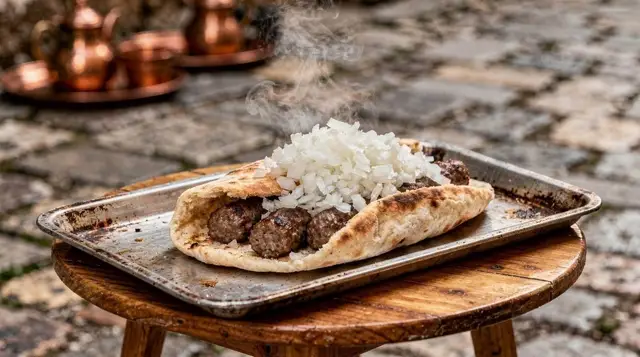
The beer turns up everywhere food does. It is the default pairing with a plate of ćevapi, it sits on the table at most burek counters that also sell drinks, and it is poured without ceremony at the great majority of places listed in any general Sarajevo food guide.
Can you actually visit the brewery?
Sarajevska pivara is a working industrial site, not a purpose-built visitor attraction, and that shapes what a visit looks like. There is no ticket desk with fixed opening hours and a self-guided route through the brewhouse in the way a modern brewery-tourism operation might run one. Instead, visits happen in groups, arranged in advance, either directly with the brewery or through a local guide or operator who has a standing arrangement with them. Access depends on that day’s production schedule, so a booking confirmed a few days ahead is worth far more than turning up and hoping.
Because of that, most visitors experience the brewery from the outside — the building itself is worth a look on any walk between Baščaršija and Bistrik — rather than on an interior tour. There is no dedicated public taproom in the sense that a Western craft brewery would run one, with a bar built for casual walk-ins and flights of samples. What there is instead is a city where the beer itself is everywhere, poured cold within a few minutes’ walk in almost any direction.
For visitors who want to combine a look at the brewery’s setting with something more active, a couple of tours weave through the same part of town without making the brewery itself the point. A walking route up through the steep mahala neighbourhoods above the old town, climbing past traditional Ottoman-era houses to views back down over the brewery’s chimney and the Miljacka valley gives a sense of how the site sits in the wider geography of the city — resting exactly where the valley narrows and the springs rise close to the surface.
Since that underground water is the whole reason the brewery is where it is, a half-day outing out to the Stojčevac Roman bridge and the Vrelo Bosne springs on the edge of Ilidža, where the same water table reaches daylight makes a reasonable pairing for anyone curious about where the city’s water actually comes from.
Where to drink it in the city
Sarajevsko needs no hunting down. It is on draught at the great majority of cafés and restaurant terraces around Baščaršija and along Ferhadija, at essentially every ćevabdžinica in the city, and in the bars covered by a general nightlife guide or a bars-by-neighbourhood rundown. It is also the beer served at most places with live music in the evening, covered separately in the live music guide.
For a lower-key evening than a bar crawl, a guided picnic set up on a hillside above the city, with a choice of wine or Sarajevsko beer and a spread of snacks laid out as the sun goes down over the valley is a fairly relaxed way to try the local beer with a view rather than in a bar. It is not the only way to drink well in Sarajevo on a budget — a proper restaurants-by-budget guide covers where a beer and a full meal together stay cheap, and the The cost of a day in Sarajevo, item by item piece puts a beer or two into a realistic daily spend.
The new microbreweries, in contrast
Alongside the 160-year-old institution, a small independent craft beer scene has taken shape in Sarajevo over roughly the past decade. It is nothing like the scale of the old brewery: a handful of small-batch taprooms and bars, run on a fraction of the volume, pouring pale ales, IPAs and other styles that never appear on Sarajevska pivara’s own list. Opening hours tend to be narrower and evening-focused, and the atmosphere is closer to a small independent bar than to an industrial visit — closer, in spirit, to what a first-time visitor from a country with an established craft scene might expect, and different again from the mass-market lager that built the city’s drinking habits in the first place.
The contrast is worth keeping in mind rather than blurring the two together. Sarajevska pivara is a 19th-century industrial institution that happened to matter enormously during the worst years of the 20th century; the newer breweries are a recent, small, deliberately different addition to the same city’s drinking options. Both are true at once, and neither cancels the other out.
Getting there and combining it with the rest of the old town
The brewery sits close enough to the historic core that it fits naturally into an ordinary walk rather than requiring a special trip. Anyone spending a first day in the city along the lines of Sarajevo in one day or working through a fuller two-day itinerary will likely pass near it without detouring, particularly on a loop that also takes in the Baščaršija walking guide route through the old bazaar. From the brewery it is a short walk down to the river and across into the market streets, or up into the hillside neighbourhoods for the views mentioned above.
No booking, ticket, or special arrangement is needed to see the building from the outside and register what it is and what it has meant to the city. A proper look inside, on the other hand, means arranging a group visit in advance — and accepting that, unlike a purpose-built brewery-tourism operation elsewhere in Europe, this one runs on its own schedule, not a visitor’s.
Sarajevo Brewery and Sarajevsko beer: FAQ
How old is the Sarajevo Brewery?
Sarajevska pivara was founded in 1864, under Ottoman administration, making it one of the oldest continuously operating breweries in the Balkans. The brewhouse and cellars visible today were built up under the later Austro-Hungarian administration, after 1878, and the site has brewed beer without a break ever since, war years included.
Did the brewery really supply water during the siege?
Yes. Sarajevska pivara sits over natural wells that predate the brewery itself, and when the city’s mains were cut during the 1992–96 siege, the brewery kept its own water flowing and let residents queue to fill containers there, alongside the pumping station at Vrelo Bosne. It is stated here as a fact of the siege, not as a promotional detail.
How much does a beer cost in Sarajevo?
A draught Sarajevsko in an ordinary bar or restaurant runs roughly 3 to 5 KM (about 1.50–2.50 EUR). Bottled beer from a shop or kiosk is cheaper, usually under 3 KM, and prices climb a little in Baščaršija’s more touristed cafés and in hotel bars.
Can you tour the Sarajevo Brewery?
The brewery is a working industrial site rather than a visitor attraction, so there is no standing daily tour with fixed hours and a ticket desk. Group visits are arranged in advance directly with the brewery or through a local operator, and it is worth confirming a booking before turning up, since access depends on production schedules that day.
Is there a taproom or shop at the brewery?
There is no dedicated public taproom in the Western brewpub sense. Sarajevsko is sold everywhere in the city instead — bars, restaurants, shops and kiosks — so most visitors end up drinking it a short walk from the brewery rather than on site.
What does Sarajevsko beer taste like?
The everyday Sarajevsko is a straightforward pale lager, light-bodied and modestly hopped, built for drinking cold in quantity rather than for tasting notes. The brewery also produces a darker Sarajevsko Tamno and, in recent years, a handful of seasonal and stronger variants sold alongside the standard lager.
Are there craft breweries in Sarajevo?
A small independent craft beer scene has grown up in the city over roughly the past decade, running in parallel to the historic brewery rather than competing with it directly. Expect a handful of small-batch taprooms and bars pouring pale ales and IPAs rather than a large industry, and opening hours that are narrower than at an ordinary bar.
Where can I try Sarajevsko in the city centre?
Any café or restaurant terrace around Baščaršija or along Ferhadija will pour it on draught, and it is on the menu at essentially every ćevabdžinica in the city. It travels well with a plate of ćevapi, which is how most Sarajevans actually drink it.
Sarajevo food & drink tours on GetYourGuide
Verified deep-linked GetYourGuide tours. Book through these links and we earn a small commission at no cost to you.
GetYourGuide does not provide a product photo for this activity — the image shows the meeting point, photographed by us.