Solo travel in Sarajevo
Is Sarajevo a good city for solo travel?
Yes. The centre is compact, walkable and low on street crime, trams and trolleybuses are simple to use without a ticket machine or an app, and Baščaršija's hostels put solo travellers in easy reach of each other. The one place solo doesn't work is hiking off marked trails, where old minefields make a guide or an organised group non-negotiable.
Why Sarajevo is an easy city to visit alone
Sarajevo sits in a narrow valley along the Miljacka, which means the parts a visitor actually wants — Baščaršija, Ferhadija, Marijin Dvor, the riverside boulevard — are strung along one line you can walk end to end in under an hour. There’s no sprawl to navigate alone, no confusing transfer system, and no need to coordinate anything with anyone. For a full run at the centre before you settle into a routine, the three-day guide covers the same ground this page assumes you already know.
Street crime against visitors is genuinely rare here — see the general safety guide for the fuller picture — and the city’s one real hazard, old landmines in the countryside, has nothing to do with walking around town. That distinction matters for how you plan a solo trip: worry less about the city, plan more carefully around anything that takes you into open country.
Getting around without a companion
You don’t need anyone else to make sense of Sarajevo’s transport. The tram network is the oldest continuously operating urban tram system in Europe, running since 1885, and its six lines cover almost everything you’ll want along the valley floor. A ticket costs around 1.80 KM (roughly €0.90) bought at a kiosk before boarding, a little more if you buy from the driver, and you punch it yourself in the little composter machine once aboard — no app, no card to register, no language barrier beyond pointing at the machine.
Trolleybuses climb into the hillside neighbourhoods the trams don’t reach. The full mechanics, including which line goes where, are in the public transport guide and the tram-specific guide.
Two things trip up solo travellers more than the transport itself. First, the airport: SJJ is about 12 km out, 20–25 minutes by taxi at roughly 20–25 KM on the meter, or reachable by bus and tram with one change — the airport transfer guide lays out both without assuming you’re splitting a taxi with anyone. Second, the two bus stations: Sarajevo’s main station on the Federation side serves Mostar, Zagreb and Split, while Istočno Sarajevo (Lukavica), on the Republika Srpska side, serves Belgrade and Trebinje. Buying the wrong ticket at the wrong station is an easy mistake with no travel companion to catch it — check which one before you book.
Where to sleep, and who you’ll meet there
Baščaršija’s hostels do more work for a solo traveller than almost anything else in the city. They’re walking distance from the Sebilj fountain, most run a free walking tour that leaves most mornings, and the shared kitchens and rooftop terraces put you next to other people travelling alone without any effort on your part.
You don’t need to book an organised tour to end up with company for dinner; you need to book a bed in the old town. The where-to-stay guide breaks down neighbourhoods and price bands; for solo travel specifically, staying inside or right on the edge of Baščaršija rather than further out in Marijin Dvor is worth the small premium for how much easier it makes the social side of the trip.
A private apartment runs 60–110 KM a night, a hostel bed 20–35 KM — both are cheap enough that budget isn’t really the reason to choose one over the other. The reason is company: an apartment is quieter and more private, a hostel puts you in the room with the conversation.
Walking at night: Baščaršija and Marijin Dvor
Baščaršija stays lit, occupied and genuinely pleasant to walk well into the evening — the ćevapi counters and coffee houses keep it busy long after the souvenir stalls close, and it’s the one part of the city where walking alone at 11pm doesn’t feel like a decision. Marijin Dvor, the newer commercial centre around the bus and train stations, quietens down more at night but doesn’t carry any particular reputation for trouble; it’s simply less alive after dark than the old town. Ordinary city habits apply in both — know your route back to where you’re staying, and be more careful of the currency exchange counters overcharging than of anyone following you.
None of this is a substitute for the fuller safety guide, which covers scams, ATMs and the handful of things worth knowing before you land; this page only adds what’s specific to walking around alone after dark, which is: it’s fine.
Eating alone, the easy way
Sarajevo’s food culture is built for solo eating in a way some cities aren’t. Ćevapi counters serve you ten grilled sausages in a somun with raw onion, standing or at a shared table, and nobody expects conversation. Burek bakeries are a five-minute stop, not a sit-down meal. Coffee houses in Baščaršija exist for exactly the thing you’d do alone anyway — a bosanska kafa in its copper džezva, a piece of rahat lokum, twenty minutes with a book.
Sit-down restaurants take single diners without comment. The food guide and the best ćevapi guide go into where specifically; from a solo-travel angle, the honest answer is that almost nowhere in the city treats a table for one as unusual.
If eating with company matters more to you than eating well, a food tour solves both at once — worth checking against the wider comparison in food tours compared before booking one specifically for the social side.
When the city fills up — and works even better alone
Two dates change the character of solo travel in Sarajevo. The Sarajevo Film Festival in mid-August draws an audience that comes for the programme, not in pre-formed groups, which means queues for screenings and packed hostel common rooms full of people who arrived exactly as alone as you did. Jazz Fest in November does the same on a smaller scale. Both are covered in the festival guide; the practical note for solo travellers is to book accommodation earlier than you would for a quiet week, since Baščaršija’s hostel beds go first.
A guided walk through the city’s layered history is also a reliable way to meet people without relying on a hostel common room. A few hours on a small-group tour tracing the 1992–96 siege puts you with other travellers who are there for the same reason you are, and the guide handles the context so you’re not piecing it together from a plaque. For a gentler introduction to how the city’s neighbourhoods actually work day to day, a walking route through Sarajevo’s older residential mahalas covers ground most visitors, solo or not, never see on their own.
The one place solo travel doesn’t work: off-trail hiking
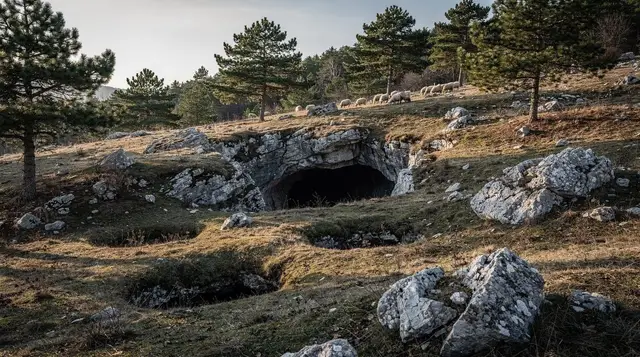
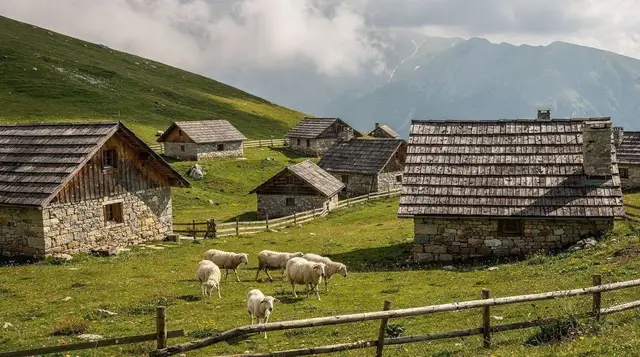
This is the point worth being blunt about. Bosnia and Herzegovina still has suspected landmines across parts of the countryside, a legacy of the 1990s war that hasn’t gone away just because the fighting has. It is not a reason to avoid nature around Sarajevo — it’s a reason to be specific about where you walk. Marked, well-used trails close to the city are not a concern. Lukomir, the country’s highest inhabited village, and the Rakitnica canyon below it, along with the primary forest of Perućica inside Sutjeska National Park, are exactly the kind of remote terrain where going alone and off-trail is a genuinely bad idea, not an abstract precaution — Perućica in particular can only be entered with a park ranger.
The landmine safety guide sets out the rules in full; this page’s version of that rule is simpler: for anything past a city-edge trail, go with a guide or an organised small group, not alone. The general hiking around Sarajevo guide and the Lukomir hike guide both flag exactly which routes are safe solo and which aren’t.
A cycling day out to the Tunnel of Hope and back sidesteps the issue entirely, since it stays on roads and marked paths the whole way: a guided bike route that includes entry to the wartime tunnel museum gets you the same landscape without any of the off-trail judgment calls.
Day trips: alone, or worth joining a group for
Most day trips from Sarajevo are entirely manageable solo by train or bus — Mostar in particular has a public train service that’s one of the more scenic rides in Europe, at around 12 KM each way, no group required. Where a group trip earns its cost isn’t safety, it’s logistics: sites like Kravice or Blagaj aren’t well connected by public transport on a single day, and a shared minivan solves that more cheaply than a solo taxi would. The day trips without a car guide lays out which destinations are easy alone and which are better joined; best day trips from Sarajevo covers the full list.
For something further out that layers in Jewish, Ottoman and wartime history in one route, a guided tour of Sarajevo’s Jewish heritage sites is a solid half-day option that doesn’t require any transport planning at all — you’re picked up and returned, which for a solo traveller without a rental car is often the whole appeal.
Money, SIM cards and the boring essentials
None of this is solo-specific, but it matters more when there’s no one to remind you. Bring cash: cards work in central Sarajevo but villages, buses and markets outside the centre expect KM in hand, and there’s no ATM at Lukomir or Kravice. Avoid Euronet machines and decline the on-screen currency conversion (DCC) at any ATM — always choose to be charged in KM. A local SIM card is worth the ten minutes it takes at the airport or a Baščaršija phone shop; solo travel leans harder on maps and messaging than travelling with someone who remembers the way.
The money and currency guide, visa and entry rules and a few Bosnian phrases — dobar dan, hvala, koliko košta — round out what’s genuinely useful before you land, and the budget guide is worth a look since Sarajevo runs noticeably cheaper than Croatia across the board, which for a solo traveller paying full price on everything (no splitting rooms or taxis) makes a real difference.
Questions solo travellers ask about Sarajevo
Is Sarajevo safe for solo travellers, including women?
Sarajevo has low rates of street crime and violent crime against visitors is rare. Solo women walk the centre, use trams and eat out alone without particular incident; normal city sense applies around Marijin Dvor’s bus and train station late at night, as it would in any capital.
Can I get around Sarajevo without a car or a group?
Yes. Six tram lines run the length of the Miljacka valley, trolleybuses reach the hillside neighbourhoods, and a ticket bought at a kiosk costs around 1.80 KM, a little more on board. You compost it yourself once you’re on.
Where do solo travellers meet other travellers in Sarajevo?
The hostels clustered around Baščaršija are the natural meeting point: shared kitchens, rooftop terraces and free walking tours that leave from the Sebilj fountain most mornings. You don’t need to book a group tour to end up with company by dinner.
Is it safe to walk in Baščaršija or Marijin Dvor at night?
Both are fine on foot after dark by Sarajevo’s normal standards. Baščaršija stays lit and busy well into the evening; Marijin Dvor is quieter at night but not a place with a particular reputation for trouble. Keep the usual habits: know your route back, don’t flash cash at the exchange counters.
Can I go hiking alone around Sarajevo?
Not off marked trails. Parts of the country still carry suspected landmines from the 1990s, and Lukomir, the Rakitnica canyon and Sutjeska’s Perućica forest are exactly the kind of terrain where a wrong turn matters. Stick to signed paths near the city, and book a guide or a small-group trip for anything further out.
Is eating alone normal in Sarajevo?
Completely. Ćevapi counters, burek bakeries and coffee houses are built around quick solo visits, and nobody blinks at a single diner at a sit-down restaurant either. A bosanska kafa and a newspaper at a Baščaršija café is a local pastime, not a tourist workaround.
What time of year is busiest for solo travellers?
The Sarajevo Film Festival in mid-August and Jazz Fest in November both fill the hostels with people travelling alone, since both draw an audience that comes for the programme rather than in pre-formed groups. Expect to book accommodation earlier for both.
Trip-planning essentials on GetYourGuide
Verified deep-linked GetYourGuide tours. Book through these links and we earn a small commission at no cost to you.
GetYourGuide does not provide a product photo for this activity — the image shows the meeting point, photographed by us.