Jeep safari from Sarajevo: Bjelašnica, Lukomir and the Rakitnica canyon
How does a Bjelašnica-Lukomir jeep safari work?
A 4x4 with a driver-guide takes you from Sarajevo up the unpaved pistes of Bjelašnica to the abandoned 1984 Olympic ski infrastructure, then on to Lukomir, the highest permanently inhabited village in Bosnia and Herzegovina, sometimes continuing to Umoljani and the rim of the Rakitnica canyon. It runs as a half-day or full-day trip, in a shared group vehicle or a private one, and needs no hiking fitness at all.
What a Bjelašnica jeep safari actually covers
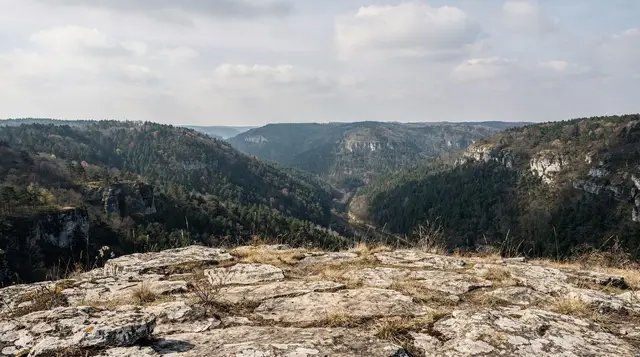
“Jeep safari” is the loose label Sarajevo tour operators use for any guided 4x4 trip into the surrounding mountains, and it covers more than one route. The version this page is about follows the corridor south of the city onto Bjelašnica, up past the ruins of its 1984 Olympic ski infrastructure, across the high plateau, and down into Lukomir, Bosnia and Herzegovina’s highest permanently inhabited village at roughly 1,469 metres. Some itineraries add Umoljani and a stop above the Rakitnica canyon, the deep gorge that cuts below Lukomir’s fields.
The appeal is straightforward. This is some of the most dramatic high country within reach of Sarajevo, and it takes a genuinely rough, unpaved piste to reach it. A jeep safari removes the two obstacles that put most visitors off doing it independently: the driving itself, on a track that is unfamiliar, unsignposted in places, and occasionally washed out after heavy rain, and the physical effort of a hike, which the Lukomir hike guide covers in full for anyone who wants to walk it instead. In a jeep, you are a passenger. The driver, usually a local who has run this route for years, deals with the ruts, the fords, and the navigation, and you deal with looking out of the window.
It is worth being precise about what “jeep safari” means as a bookable product, because the phrase is used loosely enough in Sarajevo to cause confusion. One well-known trip sold under that name actually runs to the Prača canyon, a different valley east of the city where semi-wild horses graze, rather than to Bjelašnica and Lukomir. If your target is specifically Lukomir and the Bjelašnica plateau, check the route before you book, not just the label.
The route in practice
The drive out of Sarajevo climbs quickly. Within half an hour you leave paved roads behind on the approach to the old Olympic zone, where the rusted towers of abandoned chairlifts and the crumbling starting huts of the 1984 men’s alpine skiing venue still stand on the slopes, a quieter and less-visited counterpart to the graffiti-covered bobsleigh track on Trebević that gets most of the attention back in the city. Vehicles pause here on most itineraries; it is a strange, slightly melancholy stop, concrete platforms and steel skeletons on an otherwise empty pasture.
From there the track climbs onto the open plateau, where the terrain flattens into rolling grazing land dotted with katun herders’ huts, and the surface turns fully unpaved: loose stone, ruts cut by seasonal meltwater, and the odd ford. This is the stretch that makes a 4x4 the sensible choice rather than a rental hatchback. Lukomir itself sits at the plateau’s far edge, a cluster of stone houses with wood-shingle roofs, still partly occupied through the summer grazing season and largely emptied out by the first heavy snow. Most safaris stop for an hour or more here — long enough for coffee or a simple lunch at one of the village’s small guesthouses, and a walk to the rim where the ground drops abruptly into the Rakitnica canyon below.
Fuller itineraries loop back via Umoljani, a lower and more accessible village on the same high ground, or run a short additional leg along the edge of the Rakitnica canyon itself, which the Rakitnica canyon trek guide covers for those who want to go deeper on foot with a guide another day. Sarajevo sits at roughly 500 metres; Bjelašnica’s plateau and Lukomir are well over 1,400, so expect a noticeably cooler, windier day at the top even in July, and bring a layer regardless of the forecast in the valley.
How long it actually takes
Treat “jeep safari” as two different products depending on how far the itinerary goes, and confirm which one you are booking before you commit a day to it.
| Version | What’s included | Typical duration |
|---|---|---|
| Half-day, Bjelašnica only | Olympic ruins, plateau viewpoints, no Lukomir | 3–4 hours |
| Full day, Bjelašnica + Lukomir | Olympic ruins, plateau, Lukomir village, lunch stop | 6–8 hours |
| Full day, extended | Adds Umoljani and/or the Rakitnica canyon rim | 7–9 hours |
Pickup is usually from central Sarajevo hotels, which adds a little time at both ends beyond the driving figures above. Because the piste beyond the plateau is slow going by design — this is not a road you cover quickly, and drivers keep speeds down for good reason — the distance on a map understates how long the last stretch takes. Budget the whole day if Lukomir is on the itinerary, rather than treating it as a quick add-on to something else.
Price: shared group versus a private vehicle
Prices vary by operator and group size, but the shape of the choice is consistent: a seat in a shared vehicle is cheaper per person if you are one or two travellers, while a private 4x4 becomes the better value once there are three or four of you, since it is usually quoted as a flat rate for the vehicle.
| Option | Typical price | Notes |
|---|---|---|
| Shared group, half-day (Bjelašnica only) | ~70–90 KM per person (~36–46 EUR) | Fixed departure times, fixed itinerary |
| Shared group, full day (to Lukomir) | ~110–150 KM per person (~56–77 EUR) | Usually includes the coffee or lunch stop |
| Private vehicle, full day, up to 4 people | ~350–450 KM total (~180–230 EUR) | Flexible timing and stops, cheaper per person once full |
As with most fixed-price arrangements at altitude, remember the currency logic that applies everywhere in the country: quotes are in KM, the mark convertible pegged at 1 EUR = 1.95583 KM, and settling in KM avoids the poor exchange rates some operators apply if you offer euros in cash. Lunch or coffee bought locally in Lukomir is separate from the tour price and, like everywhere outside central Sarajevo, is cash-only.
The mines rule, and why this is one of the safer ways up
Bosnia and Herzegovina still has land suspected to hold unexploded landmines from the 1990s war, and the high ground around Bjelašnica and the Rakitnica canyon is part of that reality, not an exception to it. The rule for anyone travelling in rural or mountain Bosnia is absolute and worth repeating here specifically: never leave marked paths, tracks, or areas in regular use, respect any yellow or red warning signs without exception, and never improvise a shortcut across open ground, however harmless the grass looks. The landmine safety guide for hiking in Bosnia sets out the detail for anyone heading further into this terrain on foot.
This is precisely what makes a jeep safari one of the more reliable ways to see this landscape rather than a compromise. The vehicle and the driver stay on tracks that are driven regularly, known to be clear, and used by herders, other tour operators, and the village’s own residents. You are not choosing a jeep safari instead of “the real thing” for safety reasons — you are choosing a route that has already been vetted by daily use, with a guide who knows exactly where the track runs and where it doesn’t.
The one thing this does not license is getting out and wandering off the immediate area around a stop to get a better photo. Stick to where the vehicle parks and where other visitors are visibly walking, and treat any urge to explore a promising side path as a reason to ask the driver first, not after.
Jeep safari versus quad, hike, and other ways up
Several very different products cover overlapping ground on Bjelašnica, and the right one depends on how much effort you want the day to involve.
a full-day 4x4 tour across Igman and Bjelašnica to Umoljani is the closest match to the no-effort version of this trip described above: chauffeured, comfortable, and covering the plateau villages without asking anything physical of you. For the same corridor with more involvement, a quad-bike trip up to Bjelašnica and Lukomir follows essentially the same track, but you ride it yourself, exposed to weather, dust, and a fair amount of vibration over the rougher sections — a step up in effort and a step up in the sense of actually covering the ground rather than watching it pass.
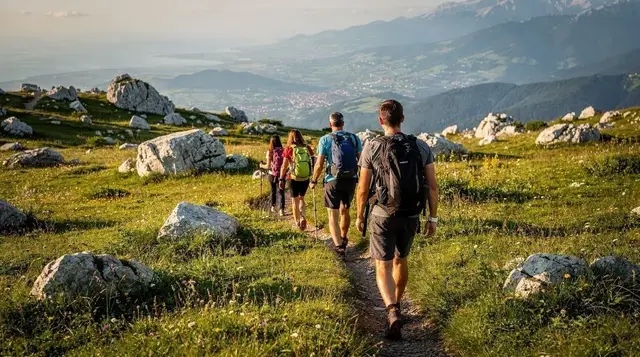
For travellers who want the same destination on foot, with the effort that implies, a guided hike to Lukomir takes considerably longer and demands a reasonable level of fitness, but rewards it with a slower, quieter approach to the village that no vehicle route offers; see the Lukomir hike guide for what that day actually involves.
None of this overlaps meaningfully with cycling around Sarajevo or via ferrata and climbing in Bosnia, both of which are separate activities on different terrain closer to the city. If the deciding factor is simply how much physical effort a day on Bjelašnica should involve, the jeep safari sits at the comfortable end, the quad tour in the middle, and the hike at the demanding end, all reaching broadly the same high ground.
What to bring
Even in summer, the plateau runs noticeably cooler and windier than Sarajevo, so a jacket earns its place in the vehicle even on a hot day in the city. Sturdy shoes matter more than technical hiking boots, since most of the walking is short stretches around parking spots and through Lukomir itself rather than sustained trail walking. Cash in KM covers lunch, coffee, or anything bought from Lukomir’s small guesthouses, none of which take cards. Sunscreen and a hat are worth packing regardless of season, since there is little shade on the open plateau, and a basic camera or phone charge is sensible given how much of the day is spent stopping for views.
Booking practicalities and season
Jeep safaris to Lukomir run from roughly late May through October, when the piste is clear of snow and the village guesthouses are open for the grazing season; outside that window the route is typically closed or shortened to lower Bjelašnica only, so confirm the exact itinerary if you are booking in shoulder season. Departures are usually from central Sarajevo, with hotel pickup included on most shared-group products. Given how much of the value of this trip depends on weather and visibility at altitude, checking the forecast the night before and asking the operator about likely conditions is worth the two minutes it takes, particularly in spring and autumn when cloud can sit low over the plateau for days at a time.
For travellers weighing this against other Bjelašnica options, the Bjelašnica summer guide and the Bjelašnica and Umoljani day trip guide cover the wider set of ways to spend a day up here, including those that don’t involve a vehicle at all, while the hiking around Sarajevo guide sets this route in the context of the region’s other walking options.
Jeep safari to Bjelašnica and Lukomir: common questions
How long does a Bjelašnica-Lukomir jeep safari take?
A half-day trip that stays on Bjelašnica and the old Olympic pistes takes around three to four hours from pickup to drop-off. Reaching Lukomir, and adding Umoljani or the Rakitnica canyon rim, makes it a full day, typically six to eight hours including a stop for lunch or coffee in the village.
How much does it cost per person?
A seat in a shared group vehicle for the full route runs roughly 110 to 150 KM (about 56 to 77 EUR) per person for a full day, less for a Bjelašnica-only half-day. A private 4x4 for up to four people is usually quoted as a flat fee, often 350 to 450 KM (about 180 to 230 EUR) for the vehicle and driver, which works out cheaper per person than the shared price once the vehicle is full.
Is the road to Lukomir paved?
No. The last stretch above the Bjelašnica plateau is an unpaved mountain piste, roughly 50 kilometres and about an hour and a half from Sarajevo. It is passable in an ordinary rental car in dry summer conditions if driven carefully, but a 4x4 with a driver who knows the ruts, the snow patches that linger into June, and the unmarked junctions is the comfortable and reliable option, especially outside high summer.
Is it safe to leave the vehicle and walk around?
Yes, on the tracks and in Lukomir village itself, where herders and hikers move freely. The wider hills of Bjelašnica and the Rakitnica canyon rim still carry landmine risk away from marked paths and known routes, which is exactly why a jeep safari with a local driver-guide who sticks to established tracks is one of the more reliable ways to see this terrain. Never wander off-piste on your own initiative, however inviting a ridge or a shortcut looks.
Do I need to be fit or have any experience?
No. This is the point of a jeep safari compared with hiking or a quad tour to the same villages: you sit in the vehicle, the driver handles the terrain, and the physical effort is close to zero. It suits families, older travellers, and anyone short on time who still wants to see the high pastures and Lukomir without walking for hours.
What is the difference between a jeep safari and the quad tour to the same village?
Both reach Bjelašnica and Lukomir on the same unpaved corridor, but a quad tour has you riding an off-road vehicle yourself, exposed to weather and dust, which takes some coordination and a bit of stamina. A jeep or 4x4 safari is chauffeured: you are a passenger the whole way, which makes it the more comfortable and more accessible option of the two.
Can I do this in winter?
Not reliably. The Lukomir piste is usually snowbound from late autumn to late spring and is not maintained for tourist traffic in winter. Jeep safaris to Lukomir run from roughly late May to October; outside that window, operators either cancel, shorten the route to lower Bjelašnica, or reschedule around conditions.
Adventure & outdoor activities on GetYourGuide
Verified deep-linked GetYourGuide tours. Book through these links and we earn a small commission at no cost to you.
GetYourGuide does not provide a product photo for this activity — the image shows the meeting point, photographed by us.